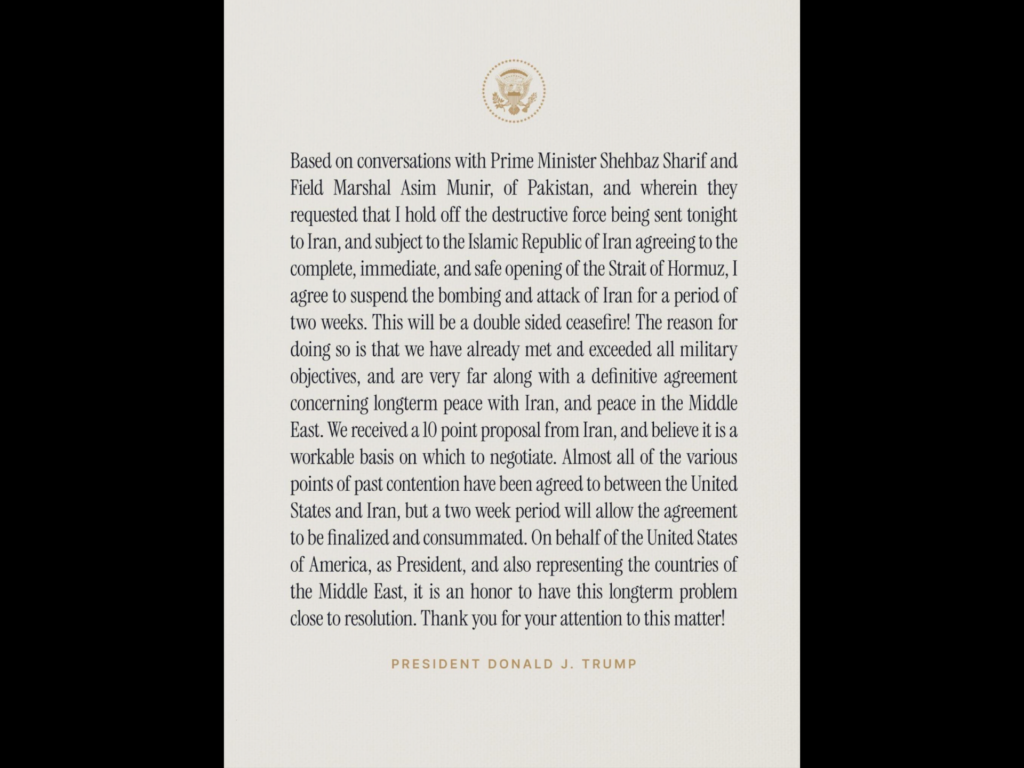
In a significant development in international relations, the White House has officially confirmed that the United States has agreed to a two-week suspension of all bombing and military attacks targeting Iran. This decision marks a temporary halt in hostilities, signaling a potential diplomatic opening or a strategic pause in the heightened tensions between the two nations.
The announcement came amidst ongoing concerns about escalating conflict in the region and growing international calls for de-escalation. By agreeing to suspend strikes for two weeks, the U.S. administration aims to reduce immediate threats of violence, possibly paving the way for dialogue and negotiations.
Details regarding the specific terms of the suspension have not been fully disclosed. However, the move is seen as part of broader efforts to stabilize the region and prevent further military confrontation. This suspension period could serve as an opportunity for both parties to engage in constructive discussions or to address underlying issues without resorting to force.
The decision to pause strikes may also reflect increasing global pressure on the U.S. to reconsider its approach to Iran, balancing security concerns with diplomatic engagement. Analysts suggest this move could lead to more sustained peace efforts if followed by substantive talks and mutual concessions.
For the people of the region and the international community, the two-week suspension provides a moment of respite in a historically volatile relationship. It also underscores the complexities of foreign policy decisions involving Iran and the delicate balance of power in the Middle East.
As the suspension period progresses, all eyes will be on developments in Washington and Tehran. Observers anticipate statements from Iranian officials and reactions from allied countries, which will be crucial indicators of the suspension’s impact and the future trajectory of U.S.-Iran relations.
The White House’s confirmation of this temporary suspension highlights a cautious optimism amidst uncertainty, reflecting the ongoing challenges and opportunities in managing international conflicts through tactical pauses and diplomatic efforts.