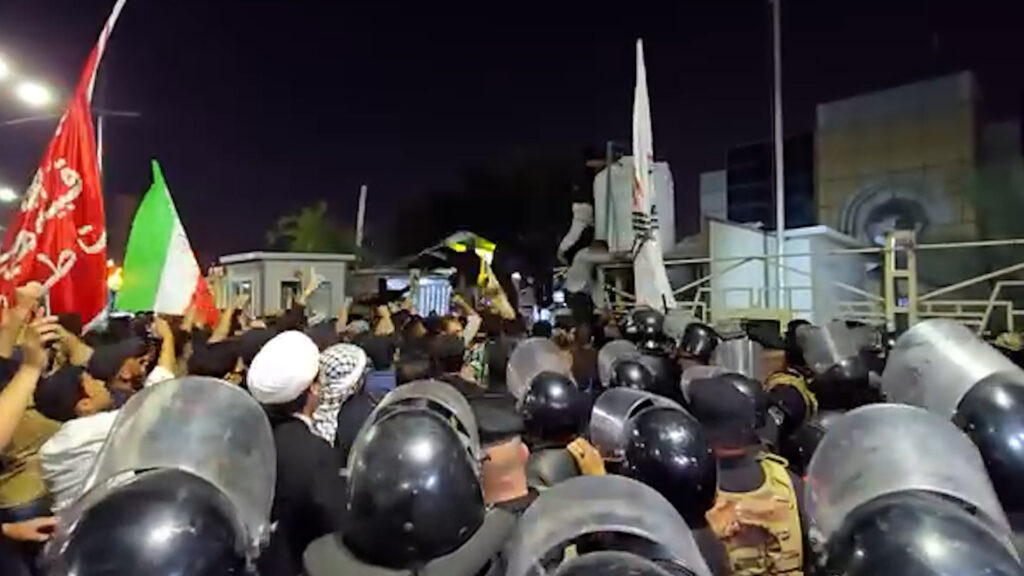
In a significant escalation of tensions, crowds of angry protesters in Iraq’s southern city of Basra stormed the Kuwaiti consulate building. The demonstration was sparked by a deadly rocket attack that led to heightened emotions and outrage among local residents.
The protesters, gathered in large numbers, expressed their fury and demands for accountability in response to the violence that had claimed lives. Eyewitnesses described scenes of chaos and intense confrontations as the crowds swarmed the diplomatic premises.
This recent incident adds to the fragile security situation in Iraq, where foreign diplomatic missions have often been targets amid ongoing political instability and militia activity. The Kuwaiti consulate, situated in Basra, has become a focal point for grievances linked to the rocket attack, which is still under investigation by local authorities.
Local law enforcement struggled to contain the demonstrators, who were intent on delivering a strong message to both Kuwaiti officials and Iraqi authorities. Security officials have condemned the attack and vowed to enhance measures to protect diplomatic missions and prevent such incidents in the future.
The rocket attack, whose origins remain unclear, has triggered diplomatic concern, with calls for calm and restraint from international observers. Neighboring countries, including Kuwait, have voiced their condemnation of the attack and urged for peaceful dialogue to resolve disputes.
This event underscores the volatile dynamics within Iraq, where sectarian divisions and regional proxy conflicts often manifest in violent episodes affecting both civilians and foreign entities. The storming of the consulate highlights the deep frustrations held by segments of the Iraqi population and the challenges facing the government in maintaining order.
In response, both Iraqi and Kuwaiti officials have reportedly begun discussions to strengthen cooperation on security and intelligence-sharing to prevent further escalations. Diplomatic efforts aim to stabilize relations and ensure the safety of missions and personnel.
The situation remains fluid, and developments are being closely monitored by the international community. Security experts warn that without addressing the root causes of violence and improving governance, such incidents may continue to threaten Iraq’s fragile peace and its foreign relations.
As investigations proceed, local leaders and community groups have called for peaceful protests and dialogue to address grievances, hoping to avoid further violence and restore stability in the region.
This protest serves as a stark reminder of the ongoing challenges Iraq faces in balancing internal security and international diplomacy amid a complex and often hostile environment.