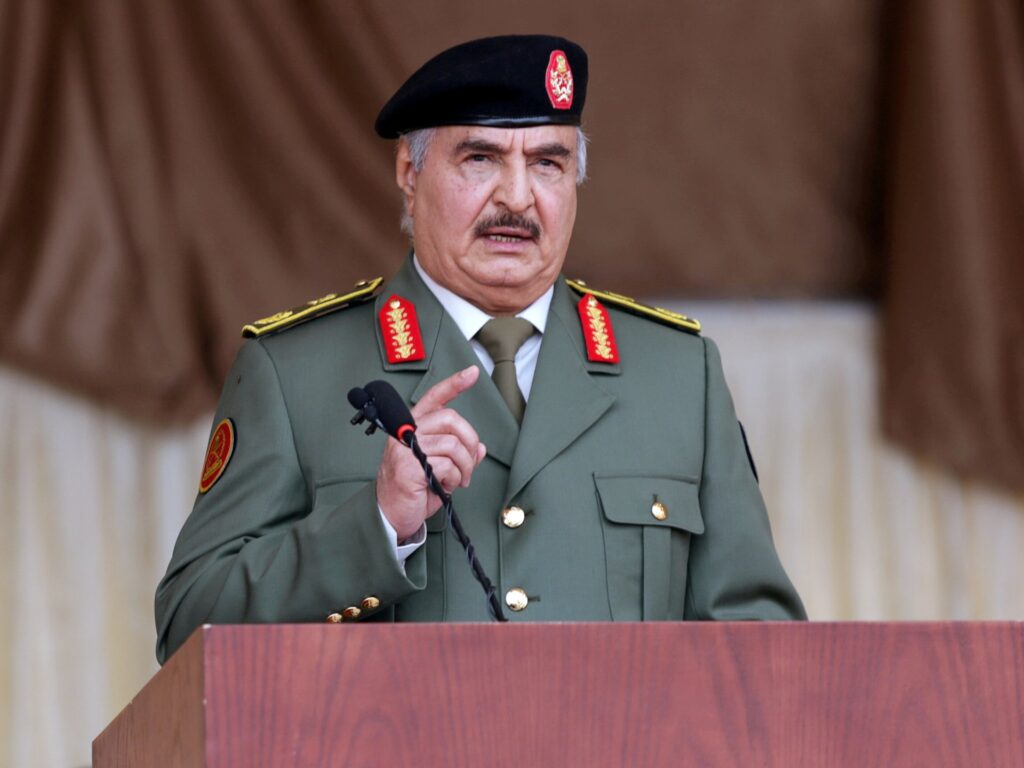
A recent report has revealed that a Libyan financier played a pivotal role in enabling loans worth approximately $300 million to fund Khalifa Haftar’s offensive on Tripoli. The offensive, aimed at seizing control of Libya’s capital, escalated the conflict but also left a significant financial burden on the Libyan public.
According to the investigation, the financier helped secure substantial loans used to support military operations and logistical needs during the offensive. However, this influx of funds came at a great cost to ordinary Libyans, many of whom are now grappling with the fallout of unpaid debts and a deteriorating economic situation.
The report highlights that despite the massive scale of financing and the evident consequences faced by the population, key individuals involved in orchestrating and facilitating these loans have yet to face any form of accountability or repercussions. The lack of consequences has raised concerns about governance, transparency, and justice in Libya’s ongoing conflict.
This financial entanglement underscores the complexities of Libya’s civil war, where political and military ambitions are deeply intertwined with economic manipulation. The burden of unpaid loans not only hampers Libya’s fragile economy but also exacerbates the humanitarian crisis faced by its citizens.
Experts warn that unless measures are taken to address the financial irregularities and ensure accountability, Libya’s path to stability will remain obstructed. The international community and Libyan authorities are urged to investigate the financing networks behind the conflict and to support efforts that protect the population from further economic harm.
In sum, while the financial support enabled Haftar’s offensive, the resulting debt crisis falls heavily on the Libyan public, with little to no consequences for those who profited or facilitated the loans. This dynamic adds another layer of complexity to Libya’s struggle for peace and prosperity.