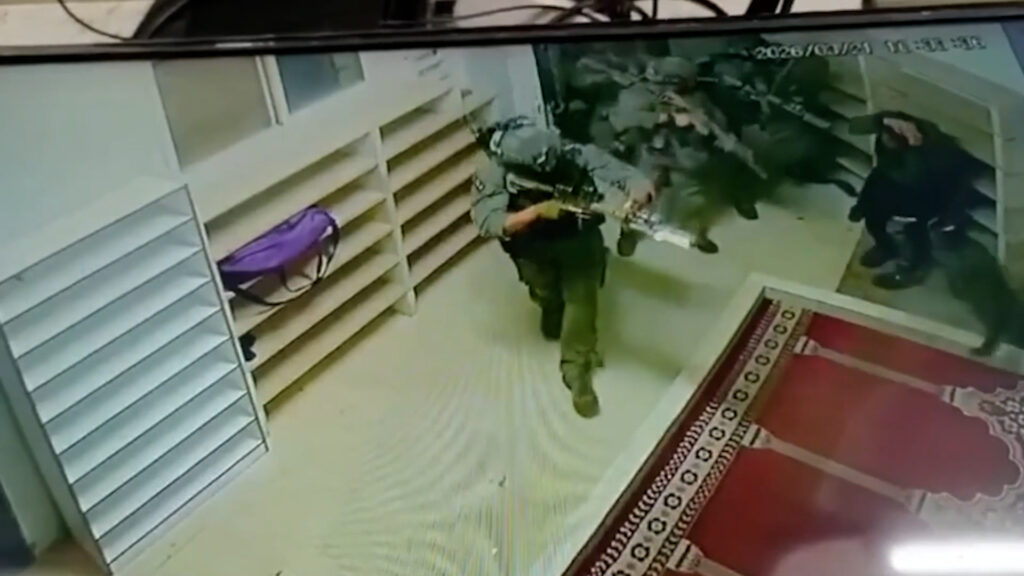
Recently, distressing CCTV footage has surfaced online showing an Israeli Defense Forces (IDF) military dog attacking a Palestinian worshipper as he was exiting a mosque. The incident has sparked widespread concern and has drawn significant attention from human rights groups and the international community.
The video captures a tense moment outside the mosque, where the military dog appears to aggressively target the man, who is seen trying to make his way out peacefully. Eyewitnesses report that the dog was part of a military patrol, and the attack was sudden, causing alarm among bystanders.
This footage has resulted in protests and calls for investigations into the conduct of the IDF during operations in Palestinian territories. Human rights organizations have condemned the use of military dogs in civilian areas, especially in places of worship, deeming it intimidating and inappropriate.
The IDF has yet to release an official statement regarding the incident. Meanwhile, activists are demanding transparency, accountability, and stricter rules on military engagements in civilian spaces.
The incident adds to the ongoing tensions and underscores the fragile situation in the region where military presence and actions are under constant scrutiny. Mosques hold deep cultural and religious significance for Palestinians, and any violent act occurring within or near them is likely to inflame community sentiments.
International observers have called for restraint from all sides and emphasized the importance of protecting places of worship and civilians amidst conflict. The footage is a stark reminder of the complex and sensitive nature of military operations in such contested areas.
As the situation develops, various groups are urging for peace and dialogue to prevent further escalation. The role of military animals, their training, and deployment protocols might also come under review following this incident. This event is likely to fuel further debates about military conduct, human rights, and the ongoing Israeli-Palestinian conflict.