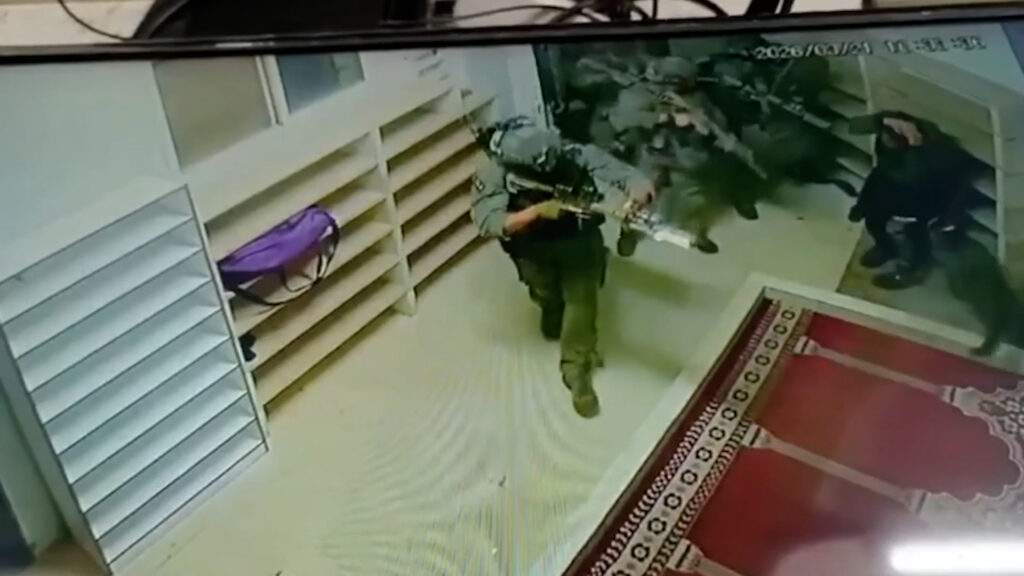
Controversy has erupted following the circulation of CCTV footage that captures an Israeli military dog attacking a Palestinian man inside a mosque. The video, which has been widely shared on social media platforms, shows the disturbing moment when the dog lunges at the worshipper as he is leaving the mosque.
The incident has sparked outrage among Palestinians and human rights advocates, who condemn the use of aggressive military tactics in sensitive religious sites. The footage portrays tension in the region and raises questions about the conduct of military forces during operations near places of worship.
Observers note that the presence of military dogs in mosques is highly controversial, as these locations are traditionally considered sanctuaries for peaceful prayer and reflection. The violent encounter captured on the footage has led to calls for investigations into the protocols followed by the Israeli military in occupied areas.
According to witnesses, the Palestinian man was exiting the mosque peacefully when the dog suddenly attacked him without provocation. The severity of the attack remains unclear, but the images have heightened emotions and underscored the fraught nature of Israeli-Palestinian interactions.
Military officials have yet to release a formal statement regarding the incident. Human rights organizations are urging transparency and accountability, emphasizing the need to protect civilians and respect religious spaces.
This event highlights the broader context of ongoing conflict and mistrust in the region. It also draws attention to the sometimes aggressive measures employed in security operations that impact everyday lives, especially in contested ethnoreligious areas.
The Israeli-Palestinian conflict continues to see episodes of violence and contentious actions that exacerbate divisions. Incidents like the one recorded by CCTV fuel tensions and complicate efforts towards peace and mutual understanding.
International observers and peace advocates have condemned the use of force inside places of worship and appeal for restraint to prevent further escalation. They stress the importance of respecting human rights and religious freedom to foster stability.
As investigations proceed, communities affected by such incidents hope for justice and preventive measures to avoid recurrence. The case serves as a reminder of the delicate balance required when maintaining security and respecting the sanctity of religious sites in conflict zones.
The footage also raises concerns about the broader implications for civil rights and the treatment of minorities under military occupation. It calls for a reevaluation of current security policies to ensure they adhere to international laws and human rights standards.
Ultimately, the incident inside the mosque underscores the urgency for dialogue and diplomatic efforts that address root causes of conflict, protect human dignity, and pave the way for lasting peace in the region.