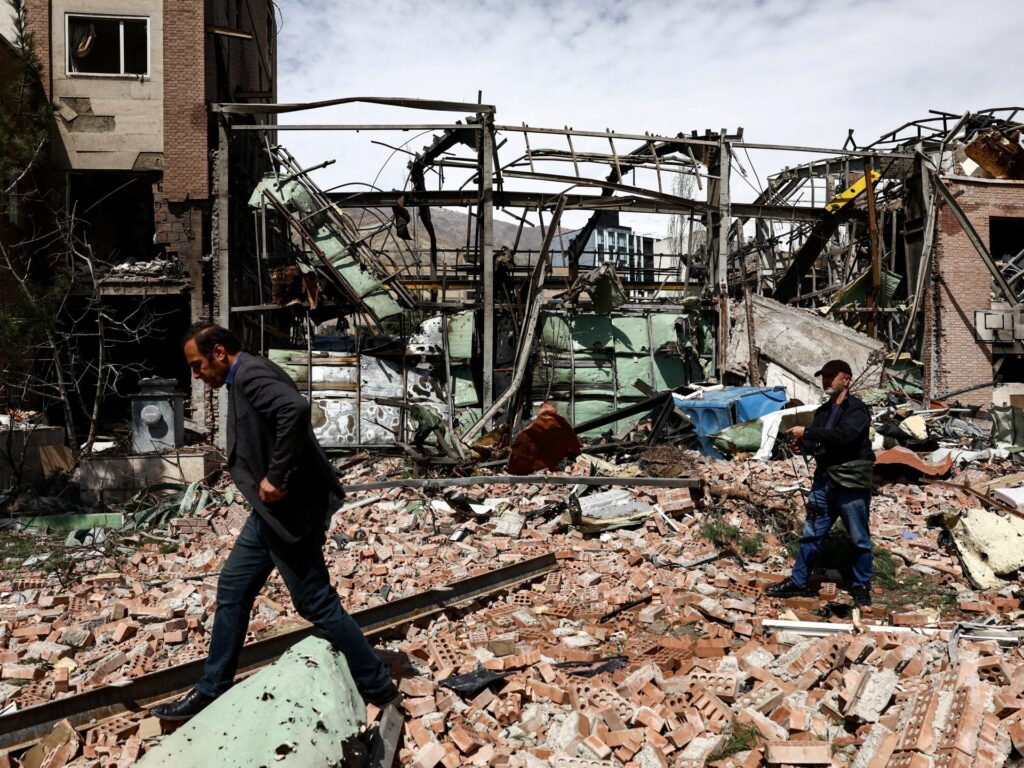
In a forceful response to the recent attack on Tehran University, an Iranian minister sharply criticized the United States and Israel, accusing them of belonging to the ‘Stone Age.’ This statement came amidst heightened tensions and longstanding animosities between Iran and these nations. The attack on Tehran University has sparked widespread condemnation within Iran, with officials vowing to respond firmly to what they consider acts of aggression.
The Iranian government has long suspected US and Israeli involvement in various regional conflicts and incidents within its borders. The recent strike on the university, an important educational and cultural institution, was viewed as a blatant attempt to destabilize Iranian society and undermine its sovereignty.
The minister’s use of the term ‘Stone Age’ was a pointed rebuke, implying that the policies or tactics employed by the US and Israel are outdated, primitive, or barbaric compared to Iran’s vision for the future. This rhetoric reflects the entrenched hostility and ideological divides that have shaped diplomatic relations in the Middle East for decades.
Iranian officials also emphasized their determination to protect their academic institutions and citizens from foreign interference and violence. Security measures at major universities have reportedly been heightened, and investigations into the attack are underway to identify the perpetrators and their backers.
International observers have expressed concern over the escalation of inflammatory language and retaliatory actions, warning that it could further destabilize an already volatile region. Calls for dialogue and de-escalation continue, but the deep mistrust between Tehran and its Western and Israeli adversaries complicates prospects for peaceful resolution.
This incident follows a series of confrontations that have strained Iran’s relations with the United States and Israel. Both countries have accused Tehran of supporting militant groups and pursuing nuclear ambitions, while Iran denies such allegations and insists on its right to self-defense and sovereignty.
The attack on Tehran University is symbolic, striking at the heart of Iran’s educational and intellectual community. It underscores the broader geopolitical struggle playing out in the region, where universities and civilian spaces sometimes become targets amid proxy conflicts.
As investigations proceed, the international community watches closely for Iran’s next moves and the responses from the US and Israel. The heightened rhetoric and the physical attack signify that tensions remain high and that diplomatic avenues need urgent reinforcement to avoid further conflict.
The situation highlights the fragile nature of peace and security in the Middle East, where history, politics, and ideology intersect with violence and mistrust. Stakeholders continue to call for restraint, emphasizing that dialogue and mutual respect are essential for long-term stability.