The ongoing conflict in Ukraine has not only drawn global attention but has also had a profound impact on warfare tactics and weaponry usage in other regions, particularly Myanmar. Recent developments indicate that Russian weapons and military strategies, extensively used in Ukraine, are now shaping the dynamics of Myanmar’s civil war.
Myanmar’s civil war, a complex and long-standing conflict, has witnessed an infusion of Russian military hardware and tactics that are reminiscent of those employed in Ukraine. Russian aircraft are prominently used by Myanmar’s military forces, providing them with enhanced aerial capabilities. These aircraft not only support ground operations but also serve as a key element in controlling contested territories.
One of the most significant and disturbing tactics adopted in Myanmar is the use of large waves of conscripts in “meat assaults,” a strategy made infamous in Ukraine for its high human cost. This approach involves sending masses of poorly trained and equipped soldiers into battle with the expectation of overwhelming the enemy through sheer numbers, often at extreme cost to human life. Such tactics underscore the brutal nature of the conflict and the desperation of forces relying on manpower over more precise methods.
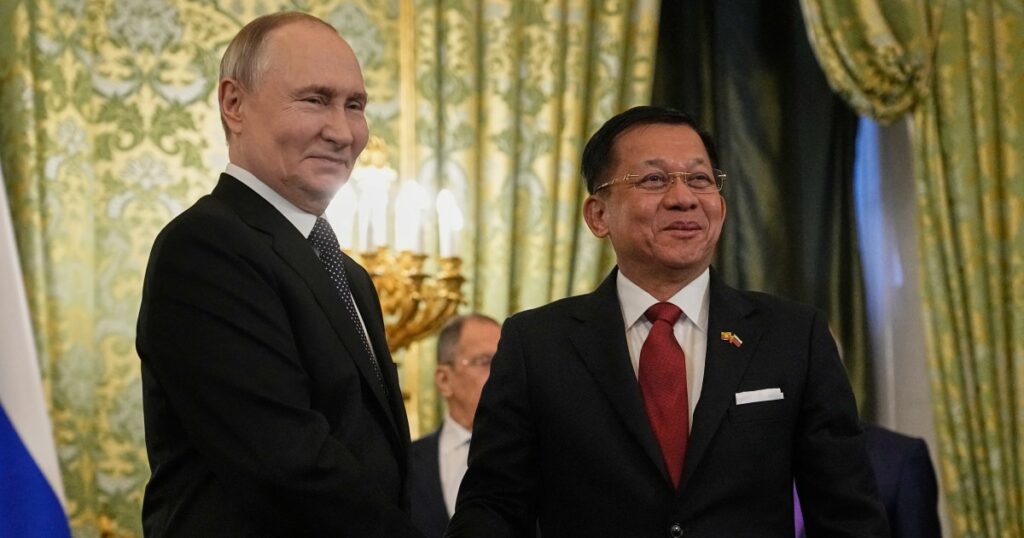
The role of Russian influence in Myanmar extends beyond equipment and battlefield tactics. It includes training and strategic advice, contributing to the adaptation of warfare methods that prioritize aggressive pushes and attrition strategies. This influence complicates the civil war by intensifying violence and increasing casualties.
Human rights organizations have expressed concern over the adoption of these tactics, highlighting the devastating impact on civilian populations and the potential for widespread human suffering. The use of conscripted soldiers in high-risk assaults exposes vulnerable individuals to severe harm and raises significant ethical questions.
The international community has been closely monitoring the situation, noting the transnational nature of military influence as Russia’s military industry and strategic approaches extend beyond its borders. The lessons learned and the methods trialed in Ukraine are now being tested in other conflicts, such as in Myanmar, with equally harsh consequences.
This development signals a worrying trend in global conflicts where the proliferation of advanced weaponry and harsh military tactics from powerful states like Russia emboldens authoritarian regimes and entrenches civil wars. The case of Myanmar illustrates how external influence can escalate an already complex internal conflict into a more deadly and prolonged war.
As Myanmar continues to grapple with its internal strife, the importation of Russian military technology and strategies may shape the course of the war for years to come. Observers and policymakers must consider the implications of such influences and work towards mitigating the human cost of these heightened military confrontations.
In summary, the blending of Russian weapons and brutal tactics seen in Ukraine is increasingly evident in Myanmar’s civil war, underscoring the global repercussions of conflicts and the interconnected nature of modern warfare. This underscores the urgent need for international dialogue and intervention to prevent further loss of life and to promote peaceful resolutions in conflict zones worldwide.