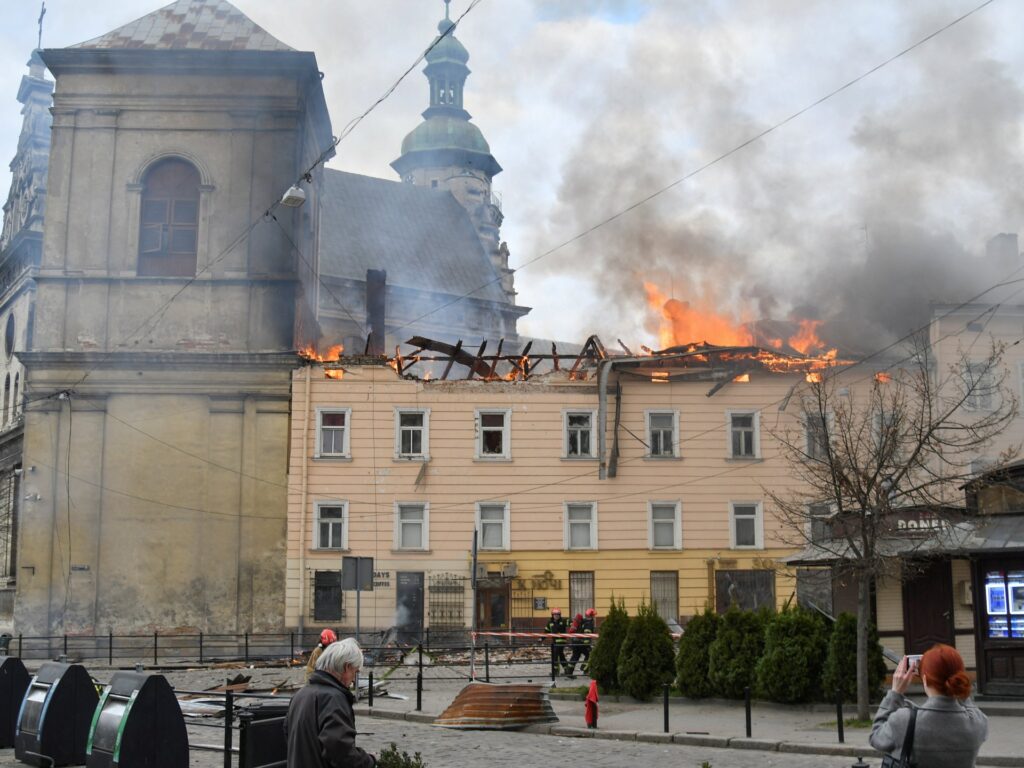
In a significant escalation of hostilities, Russia has launched a massive drone offensive against Ukraine, firing a staggering 948 drones in a single day. This aggressive action marks a new phase in the ongoing conflict, underscoring the intensity and scale of military engagement in the region.
The unprecedented volume of drone attacks has placed immense pressure on Ukraine’s defense systems, challenging the country’s ability to respond effectively and protect its population. Ukrainian President Volodymyr Zelenskyy has publicly expressed grave concerns about the country’s dwindling missile supplies, which are crucial for intercepting incoming threats such as the drones.
President Zelenskyy highlighted that Kyiv is facing a significant deficit in missiles needed for defense, a shortage that jeopardizes Ukraine’s capability to counteract the aerial onslaught. He attributed part of this challenge to the shifting priorities of Western allies, particularly the United States, which has been focusing considerable attention on its evolving strategic interests, including the situation in the Middle East and its stance towards Iran.
The drone barrage represents a tactical evolution in Russia’s approach to the conflict, utilizing unmanned aerial vehicles in unprecedented quantities to overwhelm Ukrainian air defenses. Experts note that such a volume of drones deployed simultaneously is a demonstration of Russia’s increasing reliance on asymmetric warfare tactics to offset Ukraine’s robust conventional defense capabilities.
The offensive began with Russia deploying waves of drones aimed at key Ukrainian infrastructure, military positions, and logistical hubs. The attacks have caused significant disruptions, with some drones reportedly penetrating deep into Ukrainian territory before being neutralized.
International response has been swift, with Western nations condemning Russia’s use of drones in a manner that exacerbates civilian suffering and destabilizes the region. Many are calling for increased military aid to Ukraine, focusing on replenishing missile stockpiles and enhancing anti-drone technology to better resist these sophisticated attacks.
Ukrainian forces have been working tirelessly to counter the drone waves, employing a mix of electronic warfare, ground-based air defenses, and fighter aircraft. However, the sheer volume and speed of the attacks strain these defensive measures, revealing vulnerabilities that Russia appears intent on exploiting.
The strategic implications of Russia’s drone offensive are profound. It signifies a shift towards more technology-driven tactics in warfare, with drones serving as force multipliers that can deliver significant damage while minimizing the risk to personnel. This evolution could redefine future engagements in the region and beyond.
As the conflict continues, the international community faces pressing questions about the efficacy of current military support for Ukraine and the need to adapt to new forms of warfare. President Zelenskyy’s warnings highlight a critical juncture where timely and adequate support could influence the conflict’s trajectory.
In summary, Russia’s launch of 948 drones marks a dramatic escalation in the conflict with Ukraine, revealing both the vulnerabilities in Ukraine’s current defense posture and the shifting priorities of international allies. The situation calls for urgent attention to ensure that Ukraine can sustain its defensive capabilities and protect its sovereignty against increasingly sophisticated threats.