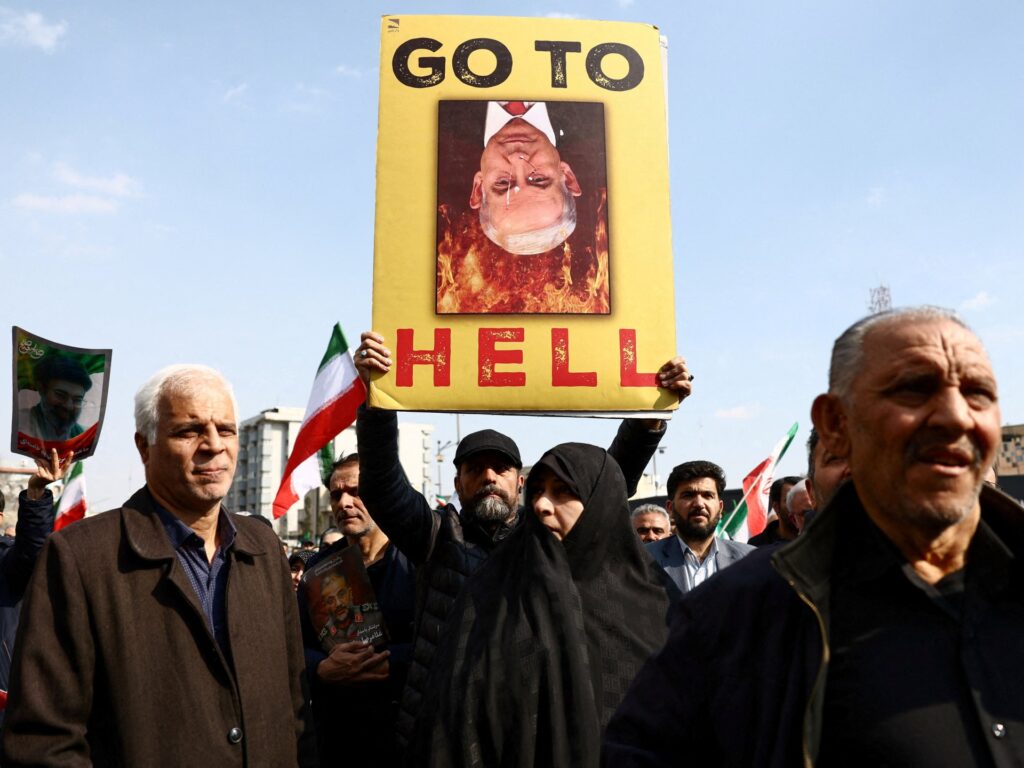
Iran has announced the appointment of Mohammad Bagher Zolghadr, a former commander of the Islamic Revolutionary Guard Corps (IRGC), as the new chief of the Supreme National Security Council. This appointment follows the recent death of Ali Larijani, the previous security chief, who was killed in an attack attributed to US-Israeli forces.
Zolghadr’s selection marks a significant moment for Iran’s national security leadership, given his extensive military background and his prominent role within the IRGC. The Supreme National Security Council is a key government body responsible for coordinating Iran’s security and foreign policy strategies, especially in response to international tensions and threats.
Ali Larijani, Iran’s former security chief, was a high-profile figure involved in shaping Iran’s security policies over the years. His death in a US-Israeli strike has heightened tensions in the region and underscored the ongoing conflict dynamics involving Iran, the United States, and Israel.
Mohammad Bagher Zolghadr brings decades of experience from his tenure in the IRGC, an influential branch of Iran’s military charged with protecting the country’s Islamic system. His leadership is expected to influence Iran’s security apparatus and foreign relations moving forward, particularly amid continuing regional instability.
The appointment also reflects Iran’s commitment to maintaining strong national security governance despite external pressures and attacks. Zolghadr’s role will likely involve addressing the challenges posed by foreign interventions and managing internal security concerns.
Observers note that this leadership transition could signal shifts in Iran’s strategic approach, potentially affecting diplomatic and military calculations within the Middle East. The implications of Zolghadr’s leadership will be closely monitored by international actors given the volatile nature of regional politics.
In summary, Mohammad Bagher Zolghadr’s appointment as the chief of the Supreme National Security Council is a pivotal development for Iran’s national security framework. It represents a continuation of firm military leadership following the loss of Ali Larijani and highlights Iran’s resolve to navigate complex international challenges through experienced and strategic governance.