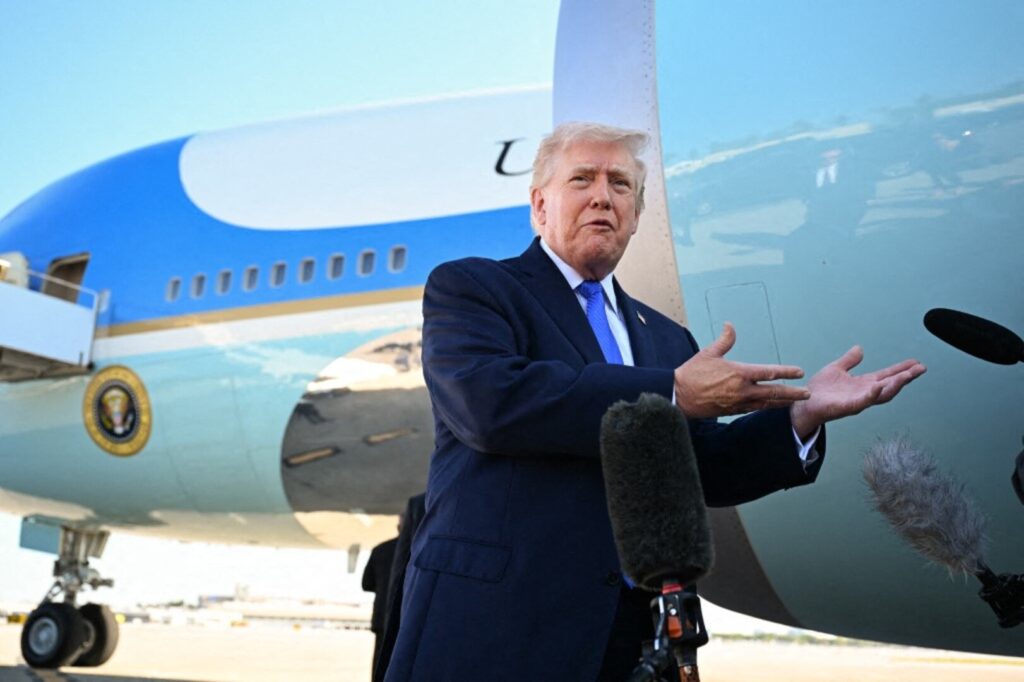
WEST PALM BEACH, FLORIDA - MARCH 23: U.S. President Donald Trump speaks to reporters before boarding Air Force One at Palm Beach International Airport on March 23, 2026 in West Palm Beach, Florida. President Trump is traveling to Tennessee before returning to Washington. Roberto Schmidt/Getty Images/AFP (Photo by ROBERTO SCHMIDT / GETTY IMAGES NORTH AMERICA / Getty Images via AFP)
In a recent development, President Donald Trump addressed reporters following his announcement that planned US military attacks targeting Iran’s energy infrastructure have been postponed. This decision marks a significant moment in the escalating tensions between the United States and Iran.
President Trump spoke to the press to clarify and provide insight into the reasons behind the delay. Analysts note that the initial plans for strikes were part of a broader strategy to respond to perceived threats from Tehran, particularly concerning its energy sector, which plays a crucial role in Iran’s economy and geopolitical influence.
The postponement has raised questions about Washington’s next moves and what factors contributed to the change in timing. Some reports suggest that intelligence analysis, international diplomatic pressures, or attempts to avoid immediate escalation could have influenced the decision.
Trump emphasized the administration’s commitment to protecting U.S. interests while attempting to avoid unnecessary conflict, highlighting the complex balancing act involved in dealing with Iran.
The announcement came amid heightened regional instability and ongoing discussions about Iran’s nuclear ambitions and its role in Middle Eastern geopolitics. The delay in attacks offers a window for continued diplomatic efforts or reassessment of the military approach.
International reactions were mixed, with some allies expressing cautious relief and others remaining cautious about the potential for future confrontations.
The president’s remarks indicate a willingness to reconsider military action in favor of alternative approaches, though he stopped short of ruling out eventual strikes.
This development is likely to have reverberations across diplomatic channels and could impact global energy markets given Iran’s significant role as an oil producer.
As the situation evolves, all eyes remain on Washington and Tehran to see how this delay might influence long-term U.S.-Iran relations and regional stability.