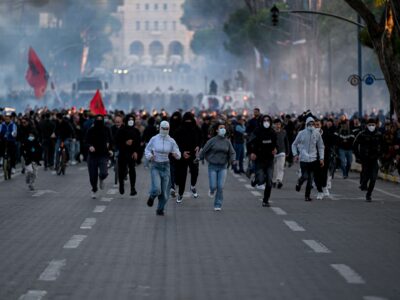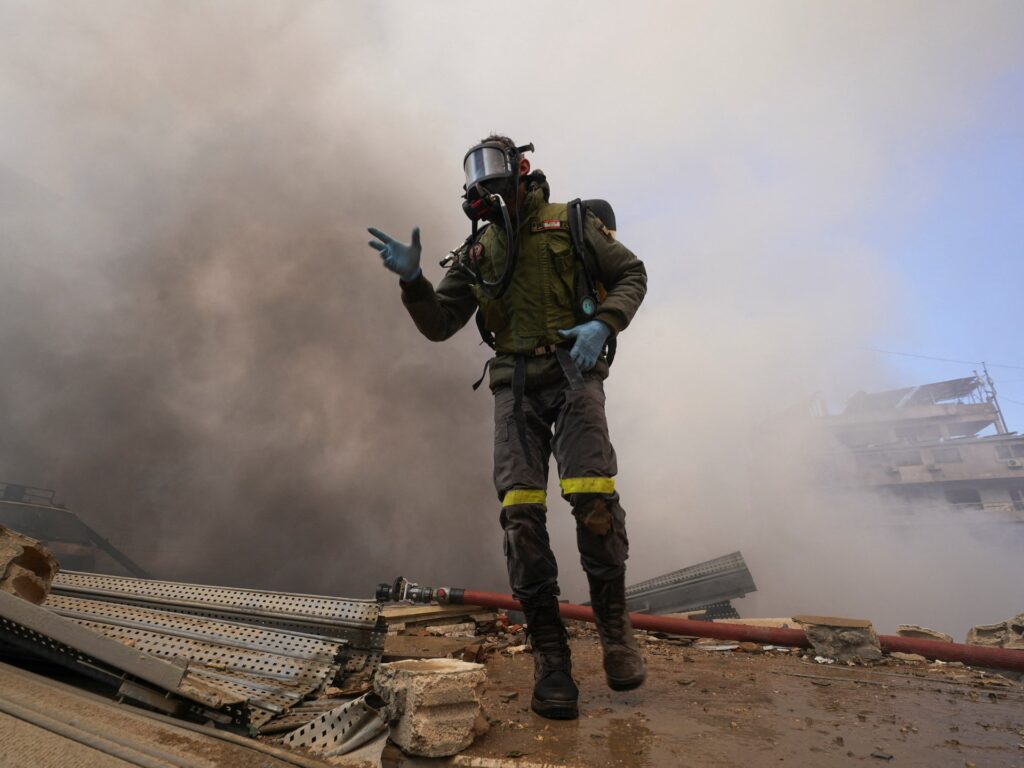
In a tense escalation of cross-border hostilities, Israeli forces launched strikes in Beirut’s southern suburbs, a region known for Hezbollah’s strong presence. The air was thick with plumes of smoke rising over the area, reflecting the intensity of the bombardment by Israel. This military action came in response to Hezbollah’s use of drones targeting Israeli territory, marking a significant surge in violence between the two adversaries.
The conflict unfolded as Hezbollah deployed unmanned aerial vehicles aiming to breach Israeli airspace, an offensive move signaling a shift in the persistent tensions between Israel and Lebanon. The Israeli Defense Forces (IDF) responded swiftly to the drone incursions, targeting positions in Beirut believed to be associated with Hezbollah’s operations.
Residents of the southern suburbs of Beirut reported chaotic scenes, with sirens blaring and families taking cover from the airstrikes that shook neighborhoods. The strikes aimed at disabling the infrastructure that supports Hezbollah’s military capability, highlighting Israel’s intent to hamper the militant group’s ability to sustain drone attacks and other forms of aggression.
The escalation underscores the fragile security situation along the Israel-Lebanon border, where skirmishes and exchanges of fire have been recurrent but rarely of this scale. Since Hezbollah is a prominent political and militant force in Lebanon, the strikes risk not only military consequences but also significant political repercussions within Lebanon and the broader Middle East region.
International observers have called for restraint, warning that a broader conflict could erupt if tensions continue to spiral. The United Nations and various diplomatic entities are reportedly monitoring the situation closely, advocating for a return to dialogue and peaceful resolution.
The Israeli government has emphasized its right to defend its citizens against any form of aggression, while Hezbollah has vowed to continue its resistance efforts, intensifying concerns over possible further confrontations.
This incident serves as a stark reminder of the persistent instability in the region, where decades-old conflicts remain unresolved, and flashpoints can rapidly escalate into broader violence. The coming days will be crucial in determining whether this recent surge of hostility can be contained or if it will lead to more extensive conflict affecting the entire Middle East.