Skip to content
June 11, 2026
  • Facebook
  • Twitter
  • Instagram
  • Youtube
  • tiktok
MILLENNIUM NEWS 24/7

MILLENNIUM NEWS 24/7

Bridging The Community’s World Wide

  • Home
  • IP TV LIVE
  • U.S.News
  • LOCAL ELECTION
  • State News
    • Alabama
    • Alaska
    • Arizona
    • Arkansas
    • California
    • Colorado
    • Connecticut
    • Delaware
    • Florida
    • Georgia
    • Hawaii
    • Idaho
    • Illinois
    • Indiana
    • Iowa
    • Kansas
    • Kentucky
    • Louisiana
    • Maryland
    • Massachusetts
    • Michigan
    • Maine
    • Minnesota
    • Mississippi
    • Missouri
    • Montana
    • Nebraska
    • Nevada
    • New Hampshire
    • New Jersey
    • New Mexico
    • New York
    • North Carolina
    • North Dakota
    • Oregon
    • Pennsylvania
    • Rhode Island
    • South Carolina
    • South Dakota
    • Tennessee
    • Texas
    • Virginia
    • Washington
    • West Virginia
    • U.S. Virgin Islands
  • Politics
  • World News
  • Sports
  • Entertainment
  • Weather
  • Business
  • Health News
  • Urban Cultural Programs
  • ADVERTISEMENT
  • About Us
  • Contact us
Live TV

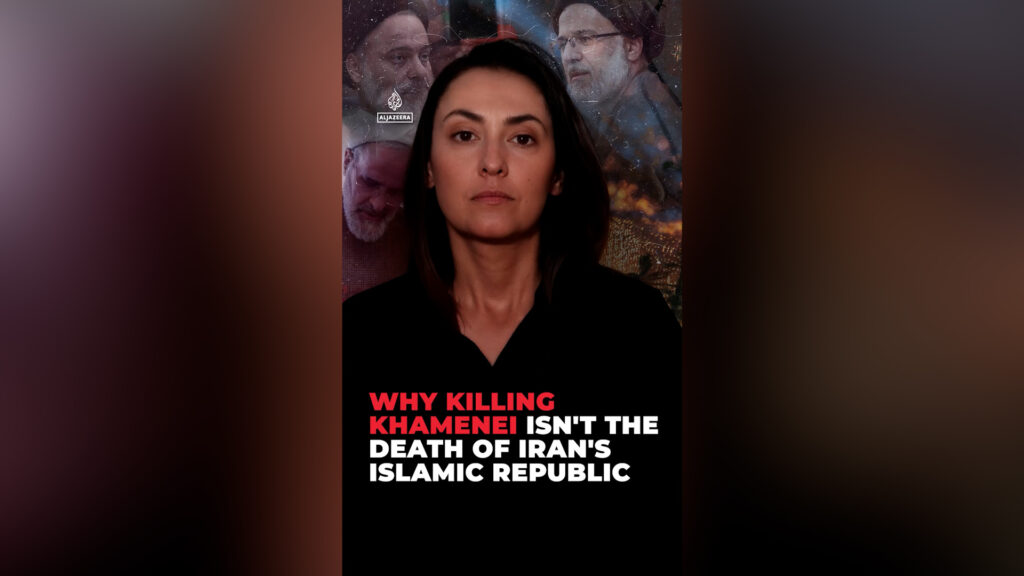
Why Killing Khamenei Isn’t the Death of Iran’s Islamic Republic

The recent killing of Iran’s Supreme Leader Ayatollah Ali Khamenei by U.S. officials has been hailed by some in the West as a decisive blow that could lead to the collapse of the Islamic Republic. However, the reality is far more complex. While Khamenei is undoubtedly a central figure in Iran’s political system, his death alone is unlikely to spell the end of the Islamic Republic.

The Islamic Republic of Iran is not a one-man system but a robust, deeply entrenched political and religious structure that has developed over four decades. Ayatollah Khamenei became Supreme Leader in 1989, following the death of Ruhollah Khomeini, the founder of the Islamic Republic. Over the years, Khamenei has consolidated immense power, but the system he leads is larger than himself.

Iran’s governance relies on a unique mixture of religious legitimacy, political control, and institutional resilience. The Supreme Leader holds significant authority over the military, judiciary, and media, but a wide network of clerics, Revolutionary Guards, intelligence agencies, and political factions also sustains the regime.

Even if Khamenei were removed, the succession process dictated by Iran’s Assembly of Experts, a body of senior clerics, would swiftly install a new Supreme Leader. This successor would likely be a figure aligned with Khamenei’s policies and ideology, ensuring continuity rather than collapse.

Moreover, the Islamic Republic has thrived on a powerful ideological narrative that merges Shiite Islamic principles with a revolutionary ethos. This narrative is deeply ingrained in the culture and politics of Iran, influencing everything from education to foreign policy. Removing one leader will not erase this narrative or the institutional loyalty it commands.

The regime has also survived significant internal and external pressures, including massive protests, economic sanctions, and diplomatic isolation. These challenges have tested its resilience but have not caused systemic breakdown. The security apparatus, especially the Revolutionary Guards, protects the regime from internal revolt and external threats.

Critics who suggest that the killing marks an end underestimate the adaptability of the Islamic Republic. Historically, the regime has shown an ability to evolve and reform internally when necessary, balancing hardliners and pragmatists to maintain control.

Additionally, Iran’s geopolitical strategies and regional influence contribute to the regime’s durability. Its network of proxies and alliances in the Middle East bolsters its standing and deters external efforts to destabilize it definitively.

Khamenei’s death may create a temporary power vacuum or trigger instability, but the system’s architecture is built to absorb shocks and ensure continuity. The leaders who will follow are likely to maintain the core tenets of the Islamic Republic, preserving both its ideological and political frameworks.

In conclusion, while the killing of Iran’s Supreme Leader is a major event with potential repercussions, it does not represent the immediate death of the Islamic Republic. The regime’s layered and institutionalized nature, its ideological foundations, and its geopolitical resilience all point to a more complex and enduring reality than simply the loss of a single figurehead.
About Author

admin

See author's posts

Post navigation

Previous Iran’s Military Strategy: Evolution and Shifts Post-June 2025 War with Israel
Next Three US Fighter Jets Mistakenly Shot Down Over Kuwait

Related Stories

Minister Condemns Racist Thuggery Amid Renewed Violence in Northern Ireland

Minister Condemns Racist Thuggery Amid Renewed Violence in Northern Ireland

How Puppets Are Helping Women and Children in Gaza Cope with Trauma

How Puppets Are Helping Women and Children in Gaza Cope with Trauma

World Cup Mania Takes Over Mexico City’s Zocalo Square

World Cup Mania Takes Over Mexico City’s Zocalo Square

Entertainment

Gwyneth Paltrow’s Israeli Real Estate Ad Sparks Widespread Outrage 1

Gwyneth Paltrow’s Israeli Real Estate Ad Sparks Widespread Outrage

Pope Leo Welcomed in Barcelona with Traditional Catalan Human Tower 2

Pope Leo Welcomed in Barcelona with Traditional Catalan Human Tower

Lawsuit Challenges Trump’s Planned White House UFC Match 3

Lawsuit Challenges Trump’s Planned White House UFC Match

Outrage over Palestinian ‘Dog Rape’ Joke at Tribeca Film Festival 4

Outrage over Palestinian ‘Dog Rape’ Joke at Tribeca Film Festival

French-Iranian Author Marjane Satrapi Passes Away Reflecting on a Life Touched by Sadness 5

French-Iranian Author Marjane Satrapi Passes Away Reflecting on a Life Touched by Sadness

Marjane Satrapi, Renowned Author of ‘Persepolis,’ Passes Away at 56 6

Marjane Satrapi, Renowned Author of ‘Persepolis,’ Passes Away at 56

Ten Years On, World Remembers Muhammad Ali ‘The Greatest’ 7

Ten Years On, World Remembers Muhammad Ali ‘The Greatest’

Top News

Minister Condemns Racist Thuggery Amid Renewed Violence in Northern Ireland

Minister Condemns Racist Thuggery Amid Renewed Violence in Northern Ireland

How Puppets Are Helping Women and Children in Gaza Cope with Trauma

How Puppets Are Helping Women and Children in Gaza Cope with Trauma

World Cup Mania Takes Over Mexico City’s Zocalo Square

World Cup Mania Takes Over Mexico City’s Zocalo Square

Trump Administration Sanctions Cuba’s National Oil Company, Criticizes Castros

Trump Administration Sanctions Cuba’s National Oil Company, Criticizes Castros

  • Home
  • About Us
  • Facebook
  • Twitter
  • Instagram
  • Youtube
  • tiktok
Editor: Nur M Tofader, Office: 250 Park Avenue, 7th Floor, New York, NY 10177 & Tell: 718 893 0002 (Office), 7188441300, +1212 401 6266, e-mail: Info@millenniuamtv24.com, e-mail: Info@millenniuamnews24.com, Copyright © Millennium News 24/7 | DarkNews by AF themes.