Skip to content
October 17, 2026
  • Facebook
  • Twitter
  • Instagram
  • Youtube
  • tiktok
MILLENNIUM NEWS 24/7

MILLENNIUM NEWS 24/7

Bridging The Community’s World Wide

  • Home
  • IP TV LIVE
  • U.S.News
  • LOCAL ELECTION
  • State News
    • Alabama
    • Alaska
    • Arizona
    • Arkansas
    • California
    • Colorado
    • Connecticut
    • Delaware
    • Florida
    • Georgia
    • Hawaii
    • Idaho
    • Illinois
    • Indiana
    • Iowa
    • Kansas
    • Kentucky
    • Louisiana
    • Maryland
    • Massachusetts
    • Michigan
    • Maine
    • Minnesota
    • Mississippi
    • Missouri
    • Montana
    • Nebraska
    • Nevada
    • New Hampshire
    • New Jersey
    • New Mexico
    • New York
    • North Carolina
    • North Dakota
    • Oregon
    • Pennsylvania
    • Rhode Island
    • South Carolina
    • South Dakota
    • Tennessee
    • Texas
    • Virginia
    • Washington
    • West Virginia
    • U.S. Virgin Islands
  • Politics
  • World News
  • Sports
  • Entertainment
  • Weather
  • Business
  • Health News
  • Urban Cultural Programs
  • ADVERTISEMENT
  • About Us
  • Contact us
Live TV

How Trump’s 2026 Iran War Narrative Mirrors and Distorts the 2003 Iraq Playbook

As geopolitical tensions escalate, the narrative crafted around potential U.S. military action against Iran in 2026 strikingly parallels the controversial lead-up to the 2003 Iraq War. Former President Donald Trump’s strategy employs a combination of conflicting intelligence, heightened homeland terror threat warnings, and domestic political rhetoric that eerily echoes the mechanisms used two decades ago.

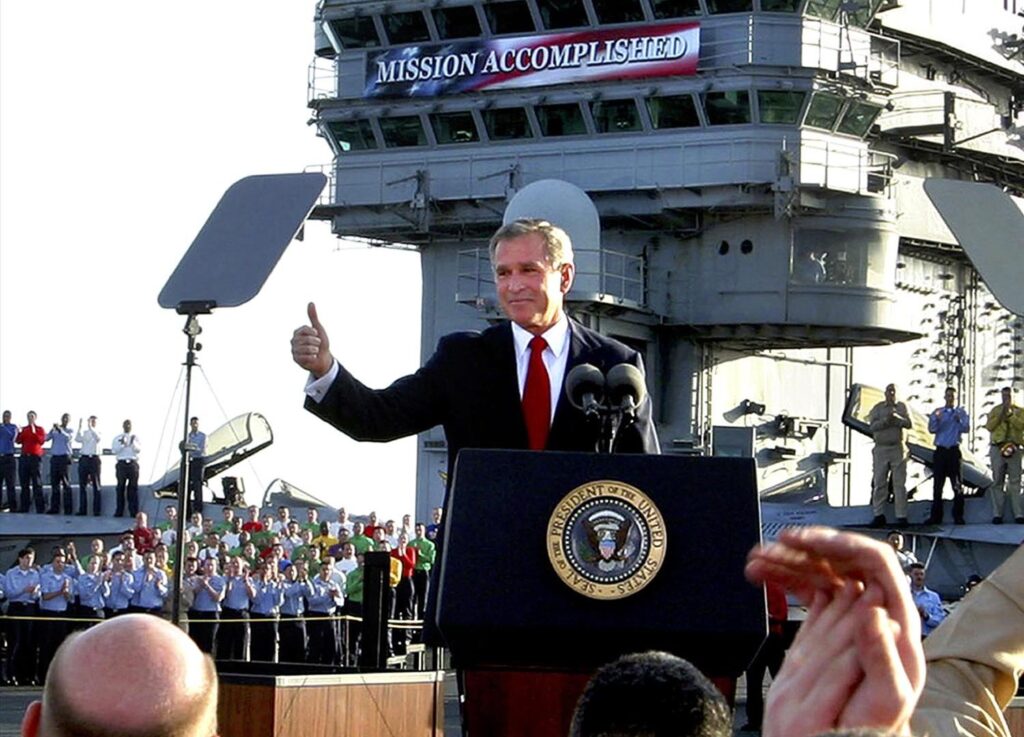
In 2003, the U.S. administration justified the invasion of Iraq largely by asserting the presence of weapons of mass destruction (WMDs) and an imminent threat to national security, despite widespread international doubt and contradictory intelligence assessments. The resulting war led to prolonged conflict, regional destabilization, and deep political ramifications globally.

Today, Trump’s rhetoric and strategic framing regarding Iran follow a similar path. Discussions about Iran’s nuclear program, its regional proxy activities, and purported intentions to harm U.S. interests are coupled with dire warnings of an impending threat to the homeland. This narrative is often based on intelligence that has been questioned or remains classified, creating a gray area of justification reminiscent of the earlier Iraq case.

Critically, Trump’s approach seems designed not only to justify potential military action but also to rally domestic support by invoking fears of terrorism and national security risks. This tactic leverages American anxiety about foreign threats and seeks to position escalation as both necessary and inevitable.

Moreover, the selective presentation and sometimes distortion of intelligence reports highlight how political motives can shape public perception. In 2003, intelligence was manipulated or overstated to secure support for the Iraq invasion; the current situation shows similar tactics in the framing of Iran-related threats.

The parallels extend beyond intelligence and rhetoric; the geopolitical context allows for a nuanced examination. While Iraq was a relatively isolated case, Iran’s situation is embedded within complex regional dynamics involving multiple players, including Russia, China, and Gulf states. This makes any military engagement potentially more unstable and wide-ranging in consequences.

Internationally, skepticism toward the U.S. claims echoes echoes the global response to Iraq in 2003. Many allies and international bodies advocate for diplomacy and caution, warning against unilateral military actions that could exacerbate conflict and humanitarian crises.

In considering domestic political dimensions, Trump’s narrative leverages his base’s perceptions, framing Iran as a clear enemy that threatens American safety, thus garnering political capital through a tough foreign policy stance.

Analysts caution that the 2026 Iran situation demonstrates how history can repeat with dangerous consequences when conflicting intelligence and fear-based rhetoric are used to justify escalation. The lessons from Iraq—about the costs of hasty military decisions and intelligence failures—serve as critical warnings against repeating the same mistakes.

As the world watches, the unfolding story surrounding Iran in 2026 highlights the enduring impact of the Iraq playbook, reminding policymakers and citizens alike to scrutinize the evidence critically and demand transparent, honest discourse before committing to war.

About Author

admin

See author's posts

Post navigation

Previous US-Iran Nuclear Talks Resume in Geneva Amid Rising Tensions
Next Over 1,000 UK Councillors Sign Palestine Solidarity Pledge Ahead of Local Elections

Related Stories

Trump Waives Russia Sanctions as Rift with Zelenskyy Widens

Trump Waives Russia Sanctions as Rift with Zelenskyy Widens

The Israeli Politicians Seeking to Replace Netanyahu: An Overview of Opposition Leaders and Their Stances on Gaza and Conflict

The Israeli Politicians Seeking to Replace Netanyahu: An Overview of Opposition Leaders and Their Stances on Gaza and Conflict

Three Mexicans Sentenced to 158 Years for Killing Australian and US Surfers in 2024

Three Mexicans Sentenced to 158 Years for Killing Australian and US Surfers in 2024

Entertainment

Sally Rooney Boycott in the UK Sparks Student Opinions on Palestine Action Support 1

Sally Rooney Boycott in the UK Sparks Student Opinions on Palestine Action Support

Sally Rooney Books Withdrawn from Sale in the UK Amid Palestine Action Support 2

Sally Rooney Books Withdrawn from Sale in the UK Amid Palestine Action Support

Sally Rooney’s Books Pulled from UK Stores Over Support for Palestine Action 3

Sally Rooney’s Books Pulled from UK Stores Over Support for Palestine Action

Jerry Seinfeld Responds with Dance Amid Pro-Palestine Protester Disruption 4

Jerry Seinfeld Responds with Dance Amid Pro-Palestine Protester Disruption

Ex-Gang Leader Sentenced to 40 Years to Life for Tupac Shakur’s 1996 Murder 5

Ex-Gang Leader Sentenced to 40 Years to Life for Tupac Shakur’s 1996 Murder

Duane ‘Keffe D’ Davis Sentenced to 40 Years in Prison for Tupac Shakur’s 1996 Murder 6

Duane ‘Keffe D’ Davis Sentenced to 40 Years in Prison for Tupac Shakur’s 1996 Murder

Keffe D Sentenced for the Murder of Tupac Shakur: Decades-Long Mystery Finally Solved 7

Keffe D Sentenced for the Murder of Tupac Shakur: Decades-Long Mystery Finally Solved

Top News

Trump Waives Russia Sanctions as Rift with Zelenskyy Widens

Trump Waives Russia Sanctions as Rift with Zelenskyy Widens

The Israeli Politicians Seeking to Replace Netanyahu: An Overview of Opposition Leaders and Their Stances on Gaza and Conflict

The Israeli Politicians Seeking to Replace Netanyahu: An Overview of Opposition Leaders and Their Stances on Gaza and Conflict

Three Mexicans Sentenced to 158 Years for Killing Australian and US Surfers in 2024

Three Mexicans Sentenced to 158 Years for Killing Australian and US Surfers in 2024

Trump Delays Implementation of New Russia Sanctions Amid Diplomatic Developments

Trump Delays Implementation of New Russia Sanctions Amid Diplomatic Developments

  • Home
  • About Us
  • Facebook
  • Twitter
  • Instagram
  • Youtube
  • tiktok
Editor: Nur M Tofader, Office: 250 Park Avenue, 7th Floor, New York, NY 10177 & Tell: 718 893 0002 (Office), 7188441300, +1212 401 6266, e-mail: Info@millenniuamtv24.com, e-mail: Info@millenniuamnews24.com, Copyright © Millennium News 24/7 | DarkNews by AF themes.