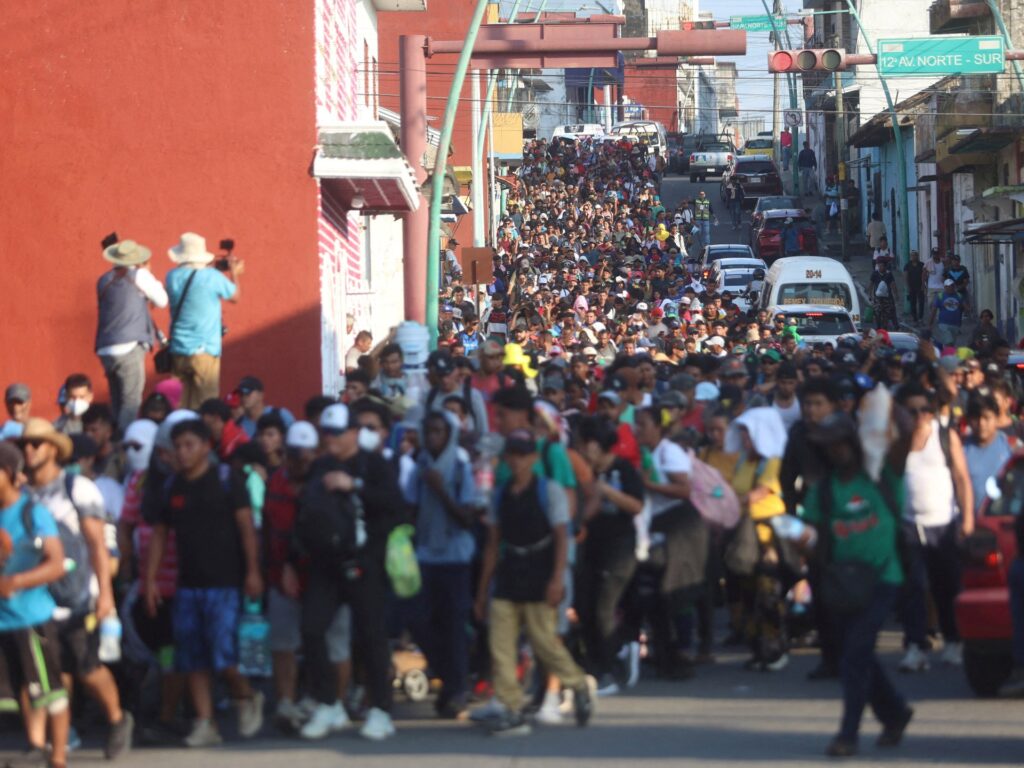
In the aftermath of the recent midterm elections in the United States, a significant caravan of migrants has set out from southern Mexico, making their way northward with hopes of entering the US. This movement has captured the attention of many, as it follows the Democrats’ victory in Congress, which many migrants interpret as a sign of potential changes in US immigration policy.
The caravan, composed of hundreds of migrants, primarily from Central American countries, is driven by a mix of hope and necessity. Many of the migrants face perilous conditions in their home countries, including violence, poverty, and political instability, pushing them to seek asylum or better opportunities in the United States.
Upon arriving in southern Mexico, these migrants have faced significant hardships such as limited access to basic necessities, uncertainty about their journey ahead, and the constant threat of detention. However, the recent Democratic success in the US Congress has infused them with renewed optimism that immigration policies may become more favorable.
Migration experts note that the Democratic win could lead to a more compassionate approach to immigration enforcement, including potential reforms to asylum processing and possibly pathways to citizenship for certain migrants. This has catalyzed a surge in migrant caravans, as word spreads among communities in Central America about the perceived openings in US immigration policies.
Local authorities and humanitarian organizations in Mexico have been preparing to provide aid and shelter to the arriving migrants. Despite limited resources, efforts continue to ensure migrants have access to food, medical care, and legal advice.
The migrant caravan’s journey is fraught with challenges, including navigating multiple national borders, facing potential hostility, and enduring long distances on foot. Nonetheless, the collective spirit among participants often provides strength and mutual support during the journey.
US border officials remain vigilant, with increased personnel and resources deployed along key migration routes. The administration is grappling with balancing border security with humanitarian responsibilities, especially as the caravan’s arrival is anticipated.
Advocacy groups in the US are calling for humane treatment of migrants, urging policymakers to consider the root causes of migration. They emphasize the migrants’ pursuit of safety, stability, and opportunity, calling on the government to uphold international obligations to protect asylum seekers.
The midterm elections have highlighted immigration as a pivotal issue, with debates continuing about the best approach to managing migration flows while maintaining security and compassion. The Democratic control of Congress is seen as a critical factor that could influence legislative priorities related to immigration reform.
For the migrants, the caravan embodies a collective hope that despite the risks, their journey northward might result in a chance to live free from fear and hardship. Their movement underscores the ongoing complexities of immigration in the region and the enduring human stories behind the headlines.
As the caravan progresses, the international community watches closely, aware that the situation presents both challenges and opportunities for cooperation, policy innovation, and humanitarian response.
In conclusion, the migrant caravan from southern Mexico exemplifies the intersection of electoral politics, migration dynamics, and human aspirations. The Democrats’ win in Congress has reignited hope among stranded migrants, setting the stage for continued developments in US immigration policy and the lives of countless individuals seeking a better future.