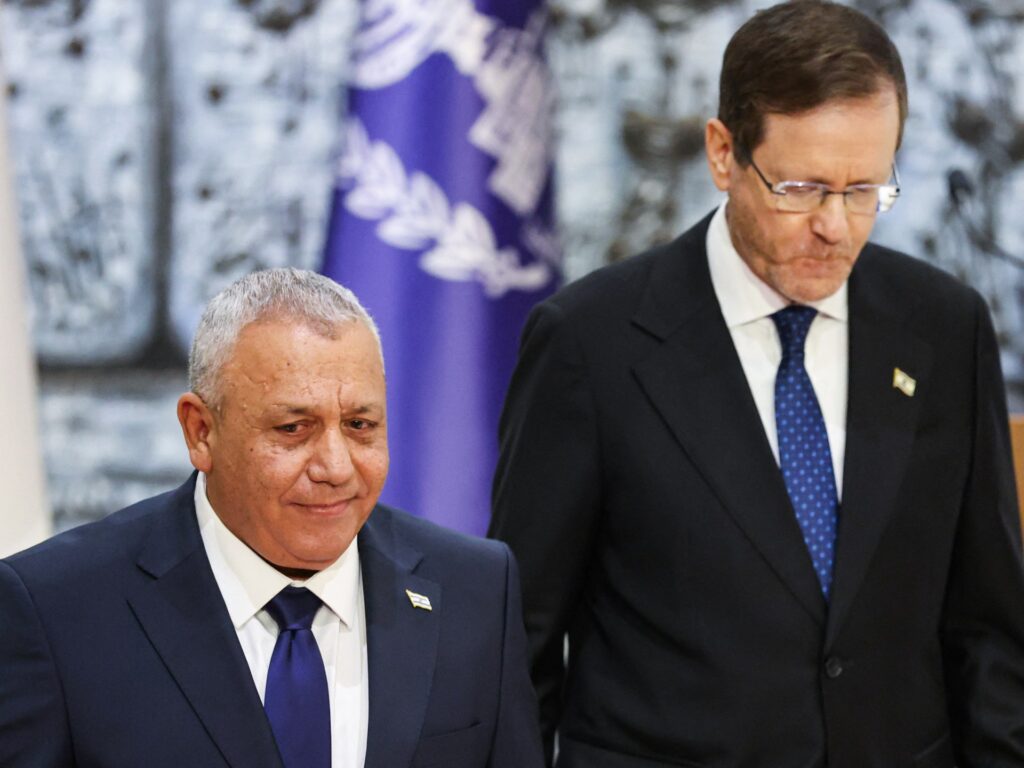
In a significant political development in Israel, Benny Gantz, the opposition leader, has been officially tasked by President Isaac Herzog with forming a new government. This move follows a period of intense political negotiations and uncertainty since the last elections.
Gantz, leader of the Blue and White party, now holds the responsibility to build a coalition that can secure a majority in the Knesset, Israel’s parliament. This task is particularly challenging given the fragmented nature of Israeli politics, where no single party usually secures a clear majority.
One of the notable aspects of this new political scenario is the openness expressed by Benny Gantz regarding the inclusion of Benjamin Netanyahu in the next government. Netanyahu, the former prime minister and leader of the Likud party, has been a dominant figure in Israeli politics for over a decade.
Gantz’s willingness to consider Netanyahu’s participation in the coalition marks a potential turning point. In previous negotiations and elections, Gantz has positioned himself in opposition to Netanyahu, especially concerning policy and governance style.
The president’s decision to entrust Gantz with government formation reflects the complex dynamics and the need for compromise among Israel’s political factions. It also underscores the fragmented electoral results, where parties must negotiate alliances to form a stable government.
Netanyahu’s inclusion in the government could bring experience and continuity amidst the political uncertainty. However, it may also raise concerns among some factions and the public about the direction of the new government.
The coming weeks will be critical as Gantz engages with various parties to build a coalition. His openness to Netanyahu’s involvement suggests a pragmatic approach, prioritizing stability and governance over past rivalries.
Political analysts view this development as a demonstration of the evolving nature of Israeli politics, where former adversaries may find common ground in the face of national challenges.
The task assigned to Gantz comes with a deadline, emphasizing the urgency for Israel to have a functioning government amid ongoing regional and domestic issues.
As negotiations proceed, the key questions remain: Can Gantz form a government with Netanyahu as part of the coalition? Will the Israeli public and political factions accept this arrangement?
This political chapter is a reminder of the delicate balance in Israeli democracy, where coalition-building is essential yet often complex.
For now, all eyes are on Benny Gantz as he navigates the intricate political landscape, seeking alliances and compromise to lead Israel into its next phase of governance.