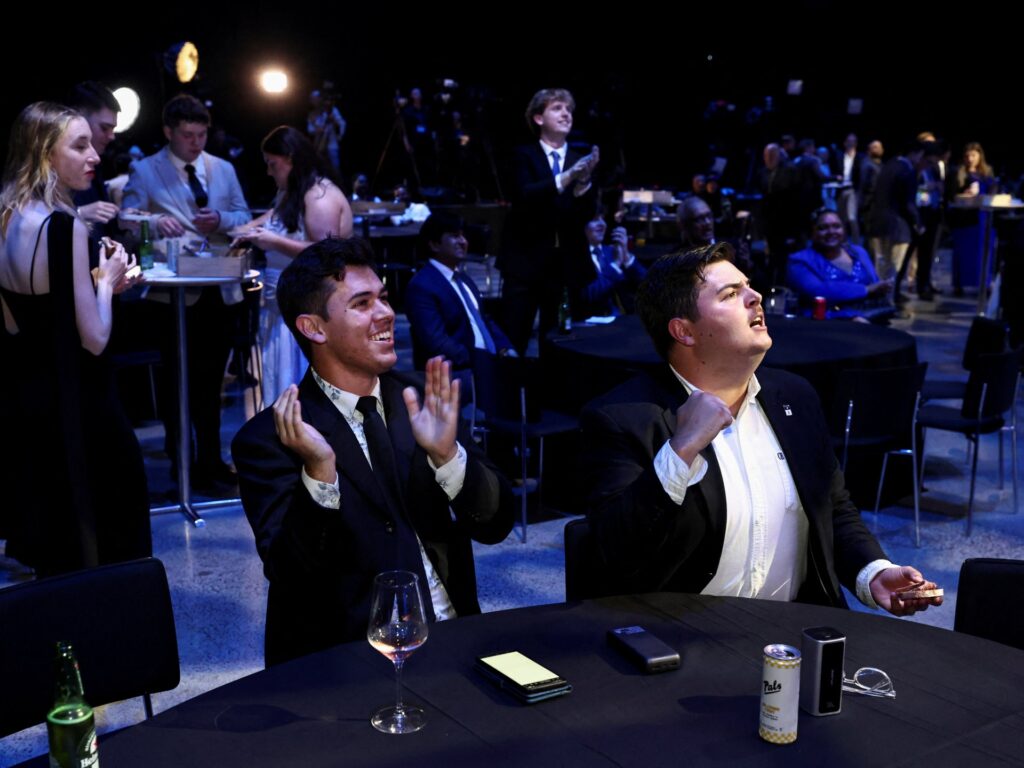
The recent general election in New Zealand has concluded with an extremely close contest between the two dominant political parties: the National Party and the Labour Party. According to the near-complete count, both parties have secured just short of 30 percent of the popular vote, placing them almost even in the electoral race.
This tight margin reflects the country’s divided political landscape, where neither major party has managed to dominate definitively, showcasing a highly competitive democratic environment. The close percentages indicate that voter preferences are nearly evenly split, signaling a potential coalition government or a significant role for smaller parties in the coming parliamentary term.
Historically, New Zealand’s political system, based on the Mixed Member Proportional (MMP) representation, often results in coalition governments. This election is no exception, as the near-equal split between the National Party and Labour Party sets the stage for negotiations and alliances.
The National Party, traditionally center-right, campaigns on economic growth, fiscal conservatism, and law and order, while the Labour Party, center-left, prioritizes social welfare, healthcare, and education policies. Their similar vote shares could indicate a divided electorate with differing views on these policy areas.
Smaller parties and independent candidates are expected to play a crucial role in forming the next government, as neither National nor Labour has reached a clear majority. This could lead to new political dynamics and policy directions depending on which alliances emerge.
Political analysts emphasize that the final composition of the parliament will largely depend on the performance of minor parties and their willingness to cooperate. Key policy issues debated during the campaign, including climate change, housing affordability, and indigenous rights, will likely influence coalition agreements.
Voter turnout this election was reportedly high, reflecting the public’s engagement with critical national issues. The close race underscores New Zealanders’ desire for representative governance that addresses their concerns effectively.
With a near-complete vote count, the electoral authorities are expected to announce official results shortly, which will clarify the parliamentary makeup and the next steps in government formation.
In summary, New Zealand’s 2023 general election has delivered an exceptionally close contest between the National and Labour parties, each garnering close to 30 percent of the popular vote. The outcome highlights a balanced but competitive political climate, necessitating coalition-building and collaboration to govern effectively.