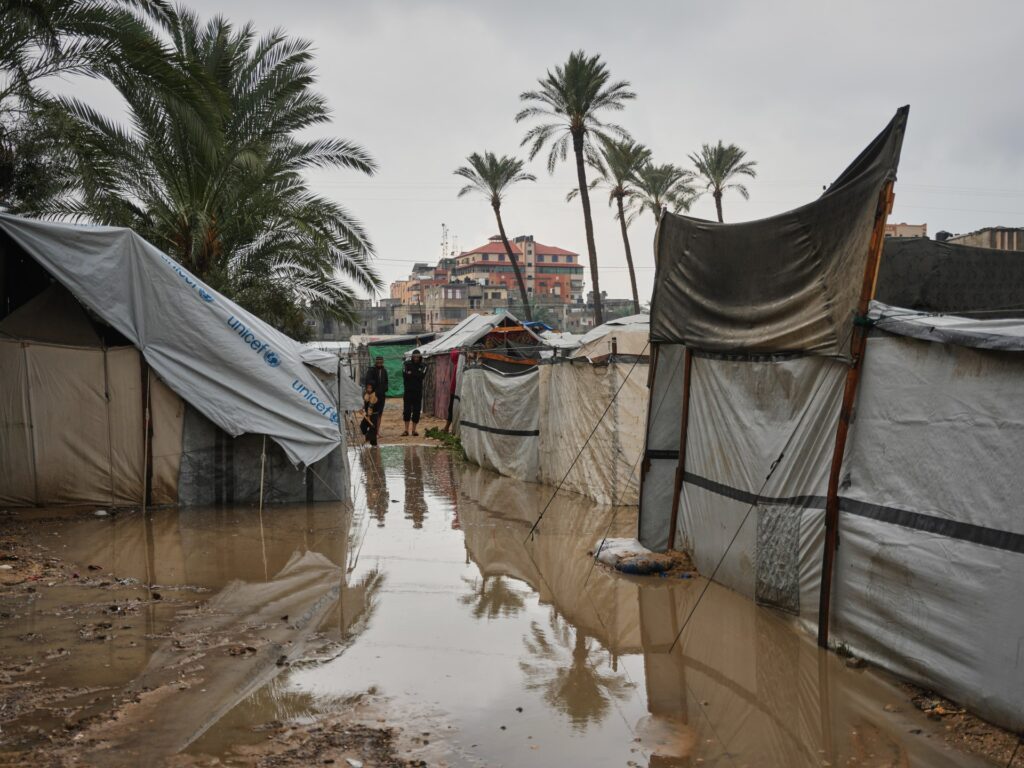
A severe storm swept through Gaza, causing widespread flooding across displacement camps that house thousands of families. The relentless rain inundated tents, exacerbating already dire living conditions in the refugee camps. The Civil Defence authorities reported receiving 1,500 distress calls within just 10 hours as families struggled to cope with the deluge.
The flooding has significantly impacted the displaced population, many of whom were already living in precarious situations due to ongoing conflict and resource shortages. Tents meant for temporary shelter were soaked or damaged, leaving residents vulnerable to hypothermia and waterborne diseases.
Emergency response teams have been stretched thin as they attempt to prioritize the most urgent cases and provide immediate assistance. The floodwaters have impeded access to some areas, complicating relief operations and delaying the delivery of essential supplies.
Officials are calling for urgent humanitarian aid to address the escalating needs of the affected communities. There is a pressing demand for clean water, food, medical supplies, and dry clothing, as well as temporary shelter solutions that can withstand harsh weather conditions.
Health experts warn that prolonged exposure to flooded and unsanitary conditions could lead to outbreaks of illnesses such as cholera, diarrhea, and respiratory infections. Hospitals and clinics in Gaza are bracing for a rise in patients while simultaneously coping with limited resources and infrastructure damage.
The storm also disrupted transportation and communication networks, making it difficult for displaced persons to connect with relatives or access essential services. Many families have been forced to relocate multiple times, deepening their sense of insecurity and trauma.
International aid organizations have mobilized to provide emergency assistance, but access to Gaza remains challenging due to border restrictions and political complexities. Coordination among local authorities, relief agencies, and community leaders is crucial to ensure effective distribution of aid and support.
The flooding incident highlights the vulnerability of displaced populations living in camps and the urgent need for durable solutions to their plight. Experts emphasize the importance of long-term planning to improve infrastructure resilience and disaster preparedness in these fragile settings.
As the storm passes, efforts continue to assess the extent of the damage and to support families in rebuilding their lives. The community’s resilience, combined with timely aid, will be key to overcoming this additional hardship amid an already harsh environment.
Overall, the flooding in Gaza’s displacement camps underscores the intersection of environmental challenges and humanitarian crises, calling for a comprehensive response that addresses immediate needs and fosters sustainable recovery.