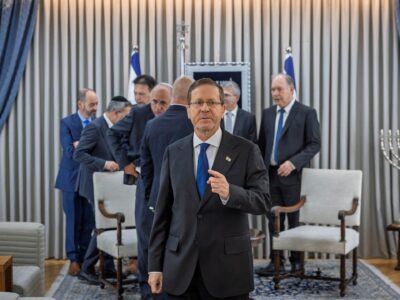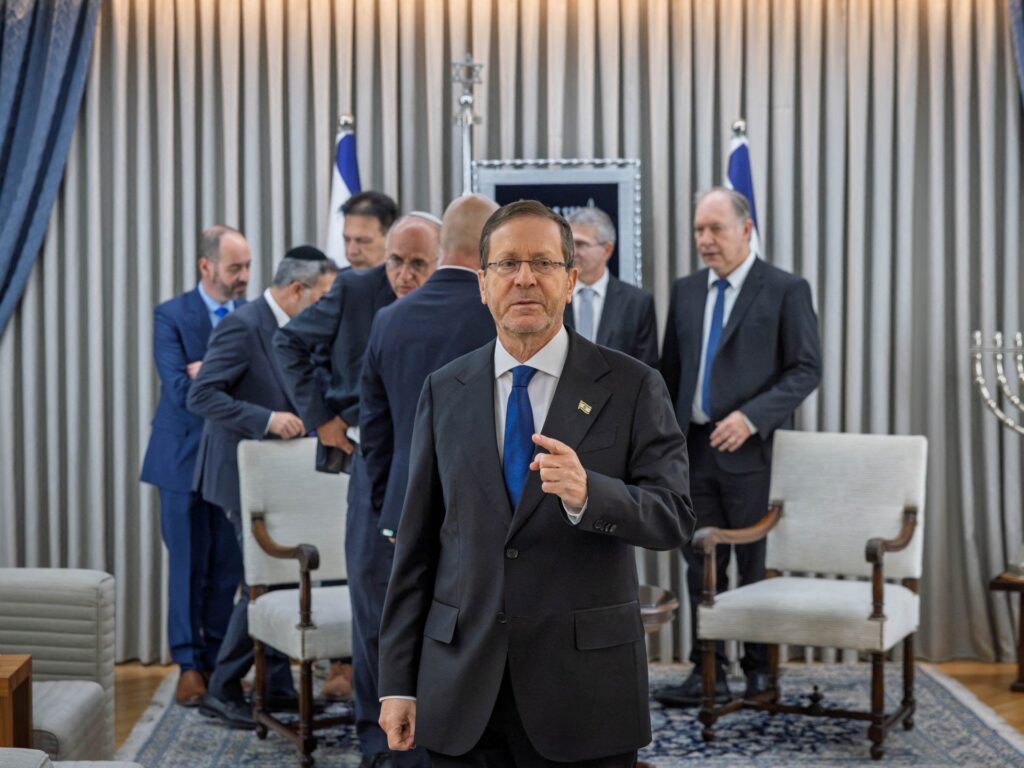
Israel is currently facing a significant political impasse as President Isaac Herzog confronts a pivotal decision in the wake of difficulties forming a stable government. The political landscape has become increasingly complex, with Benny Gantz’s bloc joining forces with Arab-led parties in a concerted effort to oust current Prime Minister Benjamin Netanyahu. This coalition aims to disrupt Netanyahu’s long-standing hold on Israeli leadership by establishing a new government framework that reflects a broader spectrum of political viewpoints.
However, the challenge remains formidable. Despite these efforts, the inability of Gantz’s coalition and Arab parties to successfully form a government leaves the country at a crossroads. Failure to build a functional coalition could result in Netanyahu remaining in power by default, effectively prolonging his tenure despite opposition movements.
President Herzog’s role is critical in this scenario. As the head of state, Herzog must weigh his options carefully to ensure political stability and continuity of governance. He has the constitutional authority to task the leader with the best chance of forming a government to try to do so, but the fractured nature of the Knesset complicates this mandate.
The recent election results indicated a deeply divided electorate, with no single party achieving a clear majority. The alliance between Gantz’s center-left Blue and White party and Arab-led factions signifies an unprecedented collaboration, aiming to reshape the political status quo. Yet, this coalition’s diversity also poses challenges in aligning policies and priorities among members with differing agendas.
Netanyahu, leader of the right-wing Likud party, continues to leverage his extensive political experience and loyal support base. His potential to remain in power without a formal government formation underscores the fragile nature of Israel’s political system during this period.
The situation highlights the broader issues of political fragmentation and the struggle for representation that Israel faces today. Herzog’s decision will not only affect the immediate political future but could set precedents for how such stalemates are handled going forward.
Observers emphasize the importance of dialogue and compromise in overcoming the current deadlock. International stakeholders are also watching closely, given Israel’s strategic significance in regional and global geopolitics.
In conclusion, President Herzog’s upcoming decision stands at the heart of Israel’s efforts to break the political deadlock. Whether through empowering a new coalition or defaulting to Netanyahu’s continued leadership, the path forward is fraught with challenges that reflect the complex and evolving dynamics of Israeli politics.