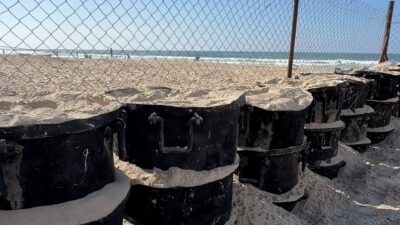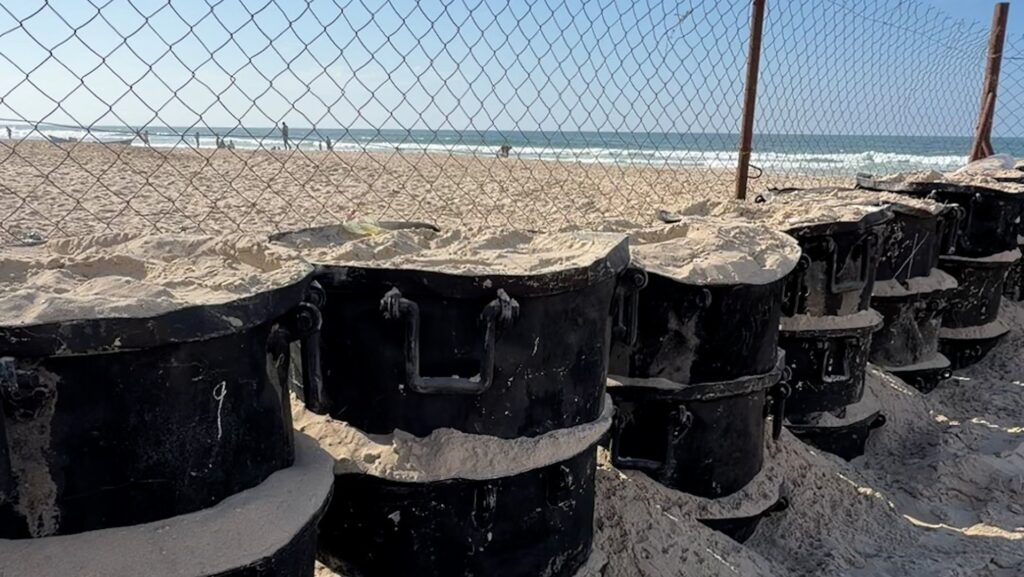
As the winter season approaches, the residents of Gaza are confronting the perennial challenge of flooding with remarkable innovation. In a resourceful and environmentally conscious effort, Palestinians in Gaza have begun repurposing damaged and discarded cooking pots to construct makeshift seawalls aimed at protecting their homes and neighborhoods from the encroaching winter waters.
This inventive approach stems from the urgent necessity to bolster their defenses against flooding. Gaza’s coastal location, combined with the challenges of under-resourced infrastructure and ongoing conflict, leaves the area vulnerable to the effects of seasonal storms and rising sea levels. With limited access to conventional building materials and financial constraints, the community’s use of discarded cookware represents both a symbol of resilience and practical ingenuity.
The process involves collecting damaged pots that are no longer fit for kitchen use but remain structurally sound enough to serve as physical barriers. These pots are then strategically stacked and embedded along vulnerable shorelines to help absorb and deflect the force of incoming waves and prevent seawater from inundating homes and farmlands.
Local residents and community groups have rallied together to organize collection drives, encouraging households to contribute their unusable cooking pots to the cause. This communal effort not only helps gather necessary materials but also fosters a spirit of collaboration and mutual support during difficult times.
Experts highlight the multifaceted benefits of this approach. Besides providing immediate coastal protection, it mitigates waste by recycling items that would otherwise add to the already significant garbage problem in Gaza. The seawalls, while temporary, exemplify sustainable practices by maximizing the utility of available resources.
However, challenges remain. The makeshift seawalls are not a permanent solution, and with climate change intensifying weather patterns, more robust infrastructure investments will be required in the long term. Nonetheless, Gaza’s initiative reflects a community’s determination to adapt creatively in the face of adversity.
International aid organizations have taken note of this grassroots effort, considering ways to support such local initiatives while addressing broader infrastructural needs. The use of discarded cooking pots as seawalls may inspire other vulnerable coastal communities around the world to explore similar low-cost, sustainable protective measures.
As winter looms, the people of Gaza demonstrate that even in the most challenging circumstances, innovation and community action can lead to effective solutions. By turning what was once considered waste into a bulwark against the sea, they offer a powerful example of human ingenuity and resilience.