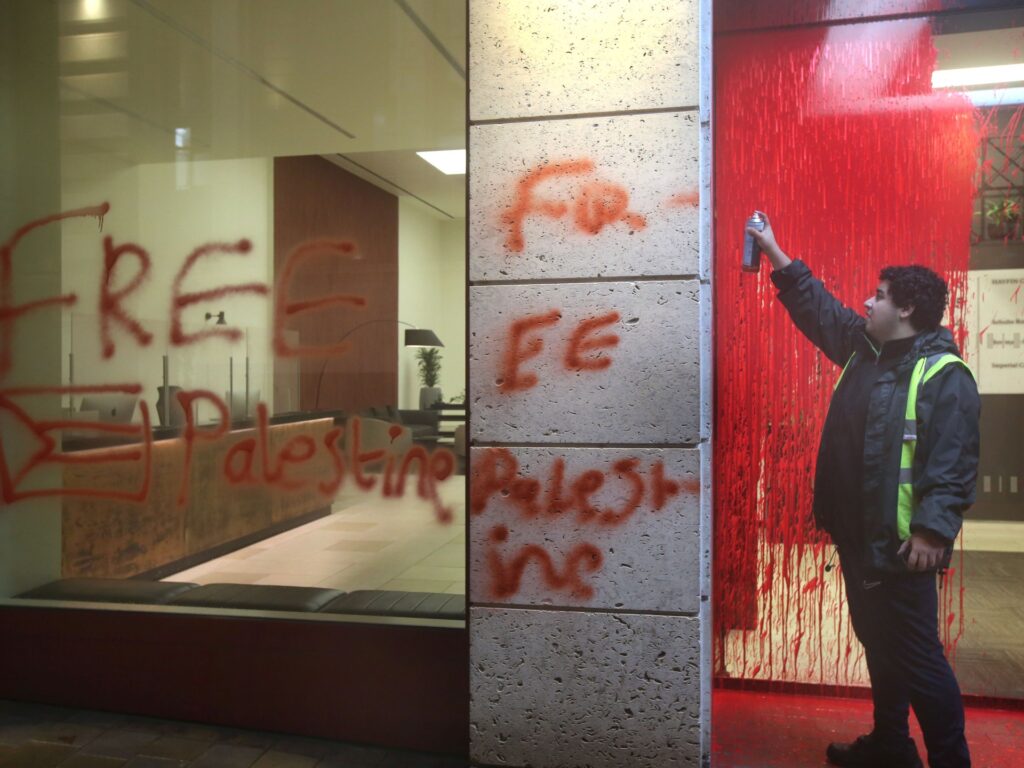
The UK-based Palestine Action group, known for its militant approach in targeting Israel’s military interests, has increasingly inspired and activated similar movements across the globe, extending its reach far beyond British shores. Founded amid the backdrop of heightened tensions and ongoing conflict in the Middle East, Palestine Action initially focused its efforts on the United Kingdom, particularly targeting companies and institutions supporting Israel’s defense capabilities.
The group’s tactics include direct action protests, sabotage, and targeted disruptions aimed at firms and facilities that they identify as contributing to the Israeli war machine. These high-profile actions have grabbed significant media attention, polarizing opinion both locally and internationally.
Despite being banned by the UK government, which labeled the group as extremist, Palestine Action’s ideology and methods have inspired activists in several countries, including Italy and Canada. In Italy, new adherents have adopted similar direct action strategies, staging protests and interventions against companies believed to be involved in the arms trade with Israel.
Canadian activists, influenced by the UK group, have also organized solidarity actions, bringing the Palestine Action message to North America and connecting local struggles against militarization with a global movement advocating for Palestinian rights.
This globalization of Palestine Action reflects a broader trend in activist networks where ideas and tactics cross borders rapidly in the digital age. Social media platforms have played a crucial role in disseminating the group’s philosophy, training resources, and live-action updates, enabling rapid replication of actions globally.
Critics argue that the group’s methods are too extreme and potentially counterproductive, accusing them of promoting divisiveness and inciting violence. Supporters, however, herald Palestine Action as a necessary and courageous front-line force campaigning against what they see as unjust military aggression and complicity by Western companies.
The spread of Palestine Action beyond the UK highlights the complexity of modern activist movements and the enduring global engagement with the Israeli-Palestinian conflict. As these international cells continue to mobilize, authorities in multiple countries are monitoring the situation closely, balancing between maintaining public order and respecting the right to protest.
In sum, the UK’s Palestine Action group, through its unapologetically confrontational style and clear anti-militarist stance, has ignited a transnational movement aimed at challenging the arms trade and promoting Palestinian solidarity worldwide. Whether this wave of activism will lead to significant political change or simply provoke further divisions remains a pivotal question in the ongoing debate surrounding Middle East politics and international activism.