Israel is currently experiencing a significant political deadlock after recent elections, with no clear majority emerging for either of the main blocs. This stalemate has placed the country’s future leadership, particularly that of Benjamin Netanyahu, in a precarious position. The complex political landscape means that neither the right-wing bloc, typically backed by Netanyahu, nor the opposition has secured the necessary seats to form a stable government.
At the heart of the deadlock are the Arab and ultra-Orthodox parties, whose support has become crucial in determining the next government. These parties, often with diverse and sometimes conflicting agendas, now hold the balance of power. Arab parties, which historically have been marginalized in coalition talks, are gaining unprecedented influence. Meanwhile, ultra-Orthodox factions remain key traditional players in Israel’s political coalitions.
Netanyahu, Israel’s longest-serving prime minister, finds himself in a vulnerable position despite his extensive political experience. His ability to negotiate and form alliances with these smaller parties will be decisive in shaping the government’s future. However, these negotiations are complicated by ideological divides, policy disagreements, and recent political tensions.
The political deadlock has intensified discussions about Israel’s electoral system and governance structures. Some analysts argue that structural reforms might be necessary to prevent future stalemates and ensure more stable governments. Others emphasize the importance of compromise and coalition-building skills in the country’s fractious political arena.
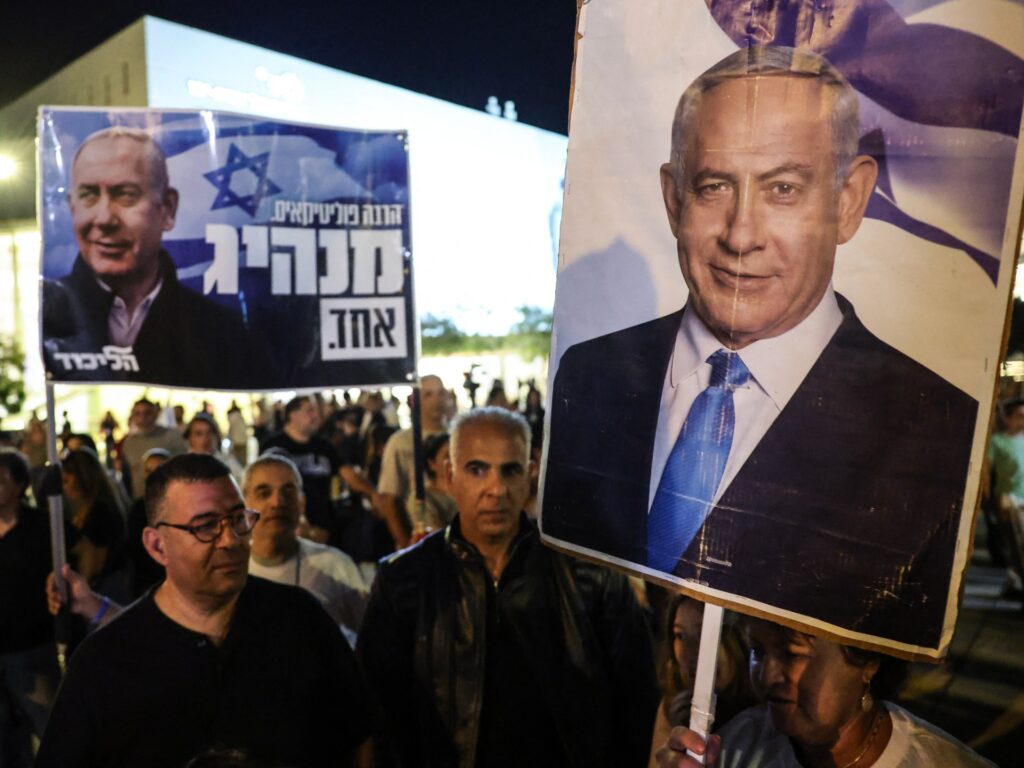
Public opinion is also sharply divided. Supporters of Netanyahu see him as a strong leader capable of maintaining Israel’s security and advancing its interests. Conversely, critics argue that prolonged deadlock is damaging the nation’s global standing and domestic coherence.
The stakes are high. A prolonged government formation crisis could lead to further elections, economic uncertainties, and missed opportunities for policy advancement. The international community is watching closely, given Israel’s strategic importance in the Middle East and beyond.
In summary, Israel’s current political impasse underscores the complexities of its multiparty system, the changing role of Arab and ultra-Orthodox parties, and the uncertain future of Benjamin Netanyahu’s leadership. How this stalemate resolves will not only shape the country’s domestic policies but also impact regional dynamics and international relations.