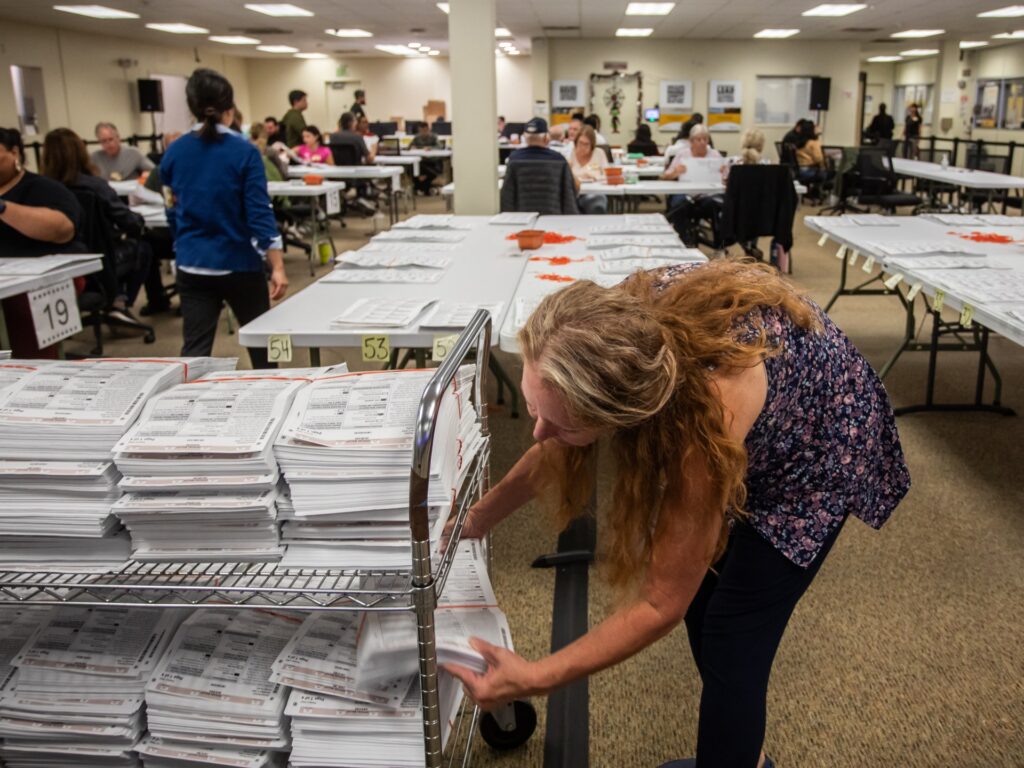
In a significant decision, the United States Supreme Court declined to intervene in a dispute involving the counting of certain ballots in California. The Court rejected a request from former President Donald Trump and his administration to set aside ballots cast by individuals whom the Trump administration alleged were not US citizens. This ruling allows California election officials to continue counting ballots of voters that the Trump administration claimed should be disqualified due to questions about their citizenship status.
The case arose from concerns raised by Trump’s team following the recent elections, focusing on the integrity of the voter rolls and the eligibility of certain electorate members. The Trump administration argued that the presence of ballots from potentially ineligible voters could affect election outcomes and sought to have those ballots excluded from final tallies.
However, the Supreme Court’s refusal to block the counting emphasizes the judiciary’s role in upholding election processes when disputes arise. The Court’s action signals deference to state election authorities and their management of voter eligibility and ballot counting procedures, especially in a state as large and politically significant as California.
California has long been noted for its rigorous voter registration and verification systems, but the Trump administration claimed those systems were insufficient to prevent noncitizen registration and voting. The Supreme Court’s decision effectively supports California’s approach and its officials’ decisions, reinforcing the state’s electoral integrity against the backdrop of such allegations.
Legal experts suggest the ruling will likely have far-reaching implications, setting a precedent on how courts address similar challenges in future elections. The decision underscores a cautious approach to disenfranchising voters based on contentious claims of citizenship.
Advocates for voting rights praised the ruling, viewing it as a protection of eligible voters’ participation and an affirmation of states’ rights to conduct elections. Conversely, supporters of the Trump administration’s position expressed disappointment, citing concerns over election security and voter fraud.
The Supreme Court’s action was taken without elaboration, typical of emergency relief denials. This means the lower courts’ rulings permitting the counting of these ballots remain in place.
This development occurs amid ongoing nationwide debates about election integrity and the balance between preventing fraud and ensuring broad participation in the democratic process. The Supreme Court’s stance here signals a notable judicial perspective favoring the counting of ballots unless there is clear and compelling evidence to exclude them.
As California continues its vote tallying, this ruling may influence not only statewide results but also national perceptions of election legitimacy. It reflects the complex interplay between law, politics, and public trust in democratic institutions.
The outcome of this case may also shape future legal strategies for challenging election results and the parameters of judicial intervention in electoral disputes. For now, California moves forward with counting ballots, with the Supreme Court effectively affirming the legitimacy of this process despite claims raised at the highest level of government.