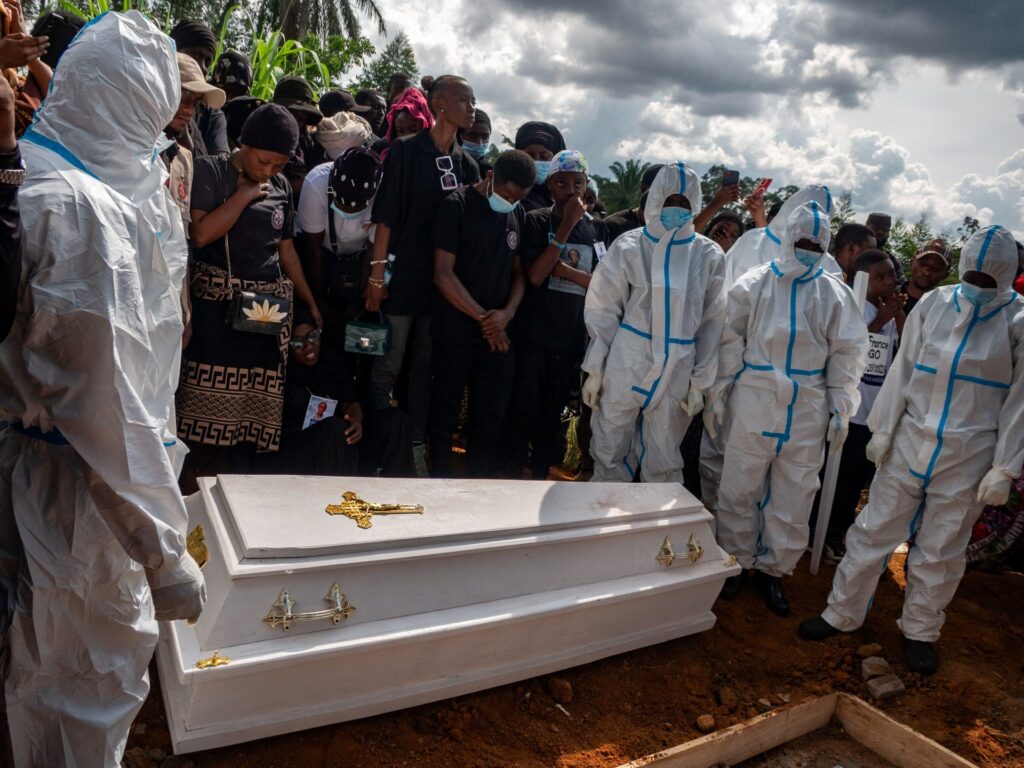
The Democratic Republic of Congo (DR Congo) is currently grappling with a severe Ebola outbreak that has tragically claimed more than 5,300 lives. This significant health crisis is marked by the spread of the Bundibugyo strain of the Ebola virus, which, until recently, had been primarily confined to certain regions within Central Africa.
The outbreak has escalated to a critical public health emergency as the virus has now extended beyond DR Congo’s borders, reaching neighboring countries Kenya and Uganda. This cross-border transmission has heightened concerns among health authorities and governments in the region, leading to coordinated efforts to contain the spread and provide medical support to affected communities.
In responding to the outbreak, African health officials and international partners have intensified surveillance, vaccination, and treatment strategies. However, the virus’s highly infectious nature and the challenges of rural healthcare infrastructure continue to impede containment efforts.
Additionally, Nigeria has reported suspected cases of the Bundibugyo strain; however, preliminary tests on two individuals have returned negative results, providing some relief amid the outbreak. The Nigerian health system remains vigilant, prepared to act quickly should any confirmed cases emerge.
The Bundibugyo strain of Ebola is known for causing severe hemorrhagic fever in affected individuals, with symptoms including high fever, bleeding, organ failure, and often death if untreated. The mortality rate varies by outbreak but remains distressingly high, underscoring the urgency of medical intervention and research.
Ebola outbreaks have historically been sporadic yet devastating in Central Africa, often concentrated in remote villages with limited healthcare access. This current surge in cases particularly emphasizes the need for robust public health infrastructure, improved disease surveillance, and community education on preventing transmission.
The World Health Organization (WHO) and the Centers for Disease Control and Prevention (CDC) are actively involved in supporting affected countries. Efforts include deploying medical teams, improving diagnostic capacity, and facilitating the distribution of experimental vaccines, some of which have shown promise in curbing the virus’s spread.
Community engagement remains critical. Public health campaigns are focused on educating citizens about Ebola transmission—primarily through contact with bodily fluids of infected individuals or contaminated materials—and encouraging early medical consultation for suspected symptoms.
Travel advisories have been issued for affected regions, with authorities urging travelers to exercise caution and adhere to health protocols to minimize spread. At border crossings, health screenings are being intensified to detect cases early and prevent further transmission.
This outbreak also highlights the ongoing challenges faced by countries with fragile healthcare systems in managing sudden infectious disease crises. International aid and funding are crucial in bolstering response capacity, supplying medical resources, and supporting frontline healthcare workers.
In summary, the Ebola outbreak in DR Congo, driven by the Bundibugyo strain, has resulted in over 5,300 fatalities and is spreading to neighboring countries Kenya and Uganda. Vigilant monitoring in Nigeria has so far yielded negative test results for suspected cases. As regional and global health authorities collaborate to contain the virus, ongoing public health measures, international support, and community cooperation remain vital in addressing this unprecedented challenge.