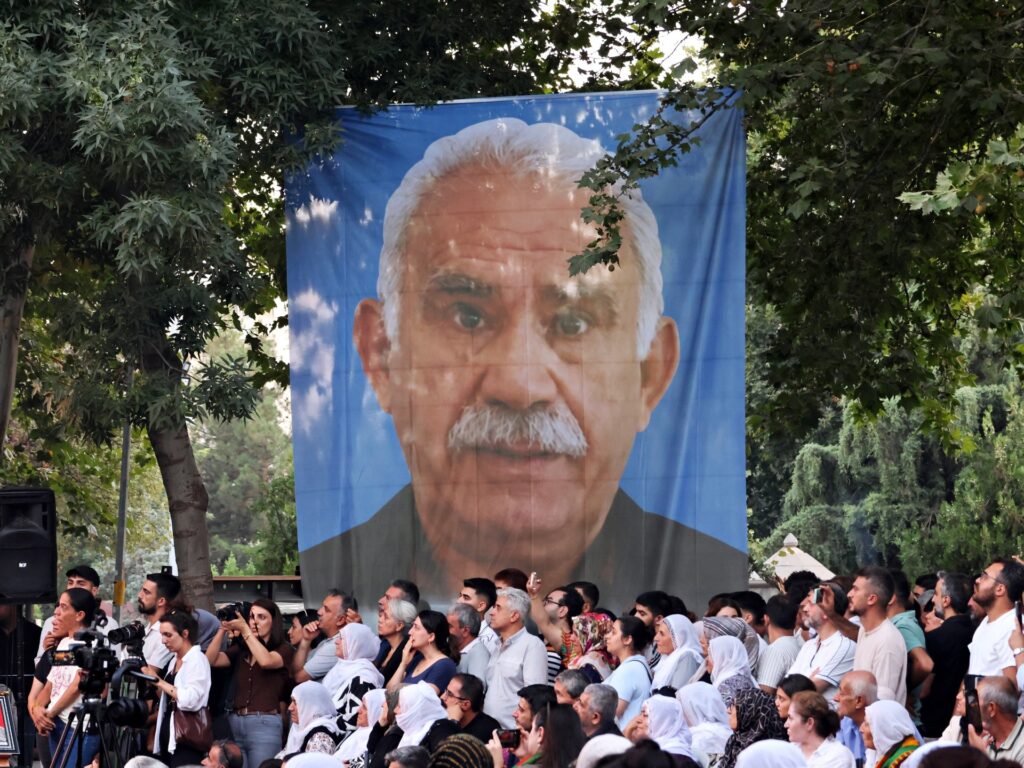
Abdullah Ocalan, the imprisoned founder of the Kurdistan Workers’ Party (PKK), has been relocated to a new section within the island prison in Turkey where he is serving his sentence. This move has attracted significant attention amid ongoing demands from Kurdish groups and advocates for the improvement of Ocalan’s prison conditions.
Ocalan has been held in isolation for many years on an island prison off the coast of Turkey, and his treatment has been a focal point of tension between the Turkish government and Kurdish activists. The improvement of his detention conditions has been a key demand in efforts to end the long-standing conflict between the PKK, a militant Kurdish organization, and the Turkish state.
The PKK-Turkey conflict has persisted for decades, marked by cycles of violence, ceasefires, and intermittent peace talks. Kurdish representatives and supporters argue that better conditions for Ocalan could pave the way for renewed dialogue and possibly a resolution to the conflict that has claimed thousands of lives.
Officials have not provided detailed information regarding the specific conditions of the new section of the prison or the rationale behind Ocalan’s transfer. However, Kurdish political figures have expressed cautious optimism that this change might signal an opening for greater engagement on Kurdish issues.
The situation remains closely monitored by international observers who recognize the significance of Ocalan’s incarceration status in the broader context of Turkey’s internal security and ethnic relations. Many hope that progressive steps regarding his treatment could contribute to peace and stability in the historically volatile region.
This development underscores the complex dynamics at play in the PKK-Turkey conflict, highlighting how individual cases such as Ocalan’s imprisonment continue to influence broader political and social landscapes. The move also comes amidst wider discussions on human rights and minority protections within Turkey, which remain contentious and politically sensitive subjects.
As the Kurdish community keeps a vigilant watch on Ocalan’s situation, the international community advocates for measures that uphold human rights standards. The intersection of justice, peace negotiations, and prisoner treatment remains a critical factor shaping the future prospects of both Kurds and Turks alike.
In essence, Abdullah Ocalan’s transfer to a new section of his prison serves as a symbol of the ongoing struggles and hopes tied to the Kurdish question in Turkey. Whether this change will foster constructive dialogue and ultimately contribute to the cessation of hostilities remains to be seen, but it undoubtedly marks a noteworthy moment in this deeply entrenched conflict.