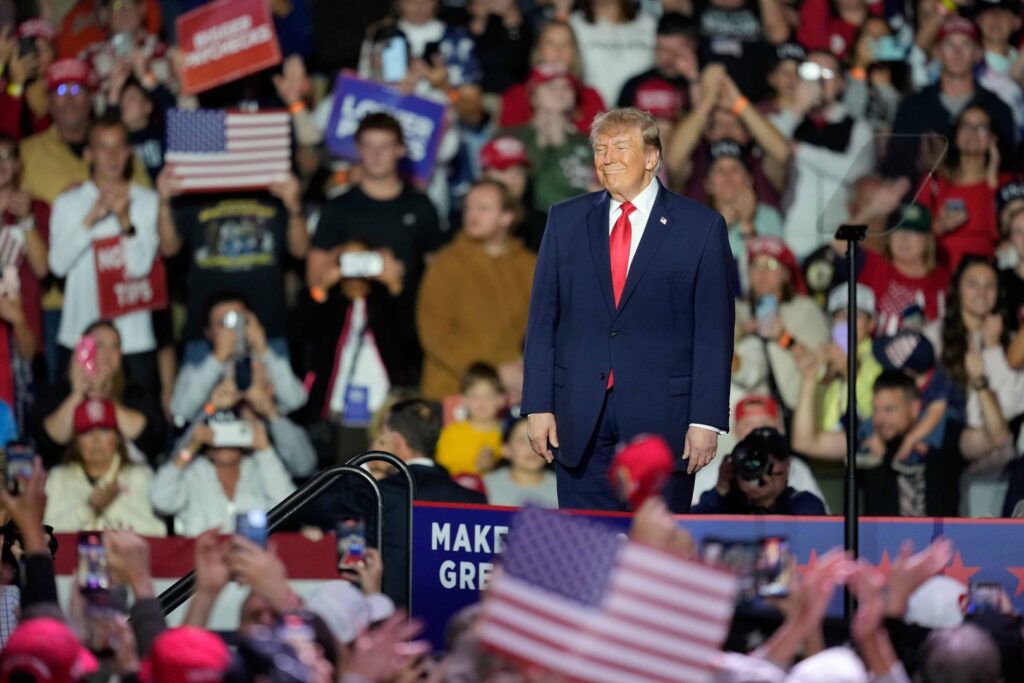
In a notable political development, US President Donald Trump extended an invitation to Michigan Democrat Haley Stevens to join the Republican Party. This invitation came after Stevens publicly endorsed Republican candidate Mike Rogers in a recent election, a move that surprised many political observers.
Haley Stevens, a Democrat representing Michigan, has gained attention for her bipartisan approach and willingness to cross party lines on certain issues. Her endorsement of Mike Rogers, a Republican, signaled a rare moment of collaboration between the two major parties in a highly polarized political environment.
President Trump praised Stevens for her endorsement, highlighting it as an example of leadership that prioritizes the interests of constituents over strict party loyalty. Trump’s comments were seen as an attempt to encourage more Democrats to consider aligning with the Republican Party, especially in key swing states like Michigan.
Political analysts believe that Stevens’ endorsement and Trump’s subsequent invitation could have implications for the upcoming elections. It may inspire other moderate Democrats who feel alienated by the current direction of their party to explore new political affiliations.
The invitation also underscores the ongoing efforts by the Republican Party to broaden its appeal and attract voters from diverse political backgrounds. Michigan, a pivotal state in national elections, has been a battleground for both parties, making Stevens’ endorsement particularly significant.
While Stevens has yet to respond publicly to Trump’s invitation, her recent actions suggest a pragmatic approach to politics that prioritizes effective governance and bipartisan cooperation. Her decision to endorse a Republican candidate was based on shared policy goals and a commitment to addressing the needs of Michigan residents.
This event highlights the fluid nature of party affiliations in the current political climate, where ideological shifts and changing voter priorities often lead to unexpected alliances. It also reflects a growing trend of politicians seeking to transcend traditional party boundaries to better serve their constituencies.
As the political landscape continues to evolve, the invitation from President Trump to Haley Stevens may serve as a catalyst for further dialogue and potential realignment within both major parties. Observers will be closely watching Stevens’ response and the wider impact on Michigan’s political dynamics.
In summary, President Donald Trump’s invitation to Michigan Democrat Haley Stevens to join the Republican Party, following her endorsement of Republican Mike Rogers, marks a significant moment in American politics. It exemplifies a move towards greater bipartisanship and strategic realignment in a contested electoral environment.