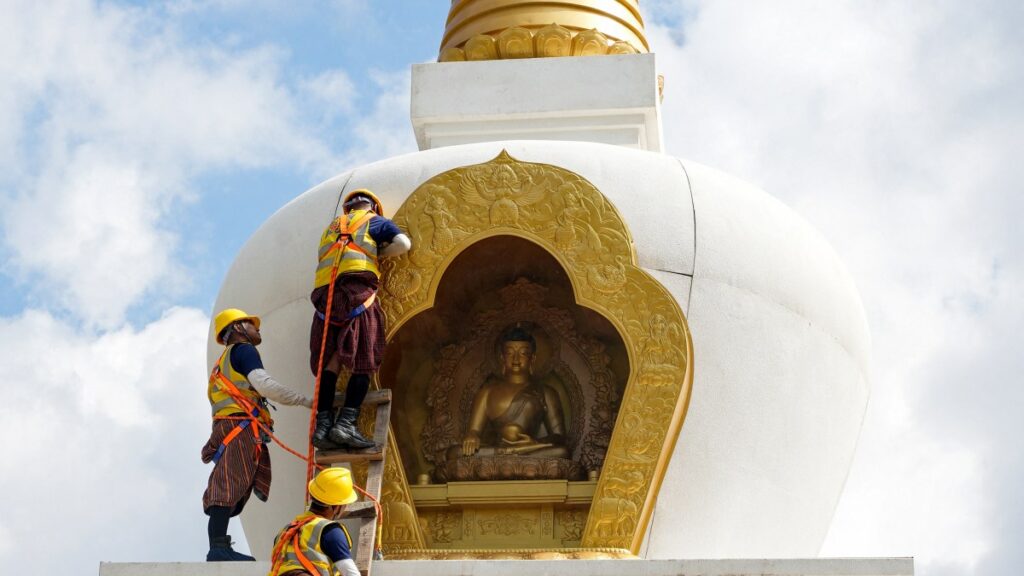
Bhutan is undertaking an ambitious and culturally significant project to build a ‘mindfulness’ city, incorporating 108 Buddhist stupas as a centerpiece for spiritual and economic revival. This initiative aims to foster mindfulness and meditation while promoting economic growth in the region.
The country of Bhutan, known for its emphasis on Gross National Happiness and environmental sustainability, is investing in this city to create a unique urban space that resonates with its cultural heritage and contemporary economic needs. The construction of 108 stupas—a sacred number in Buddhism representing spiritual milestones—is a monumental task involving tens of thousands of workers.
These stupas are not only religious symbols but also serve as architectural marvels intended to attract tourists, scholars, and practitioners of meditation and mindfulness from around the world. By doing so, Bhutan hopes to boost its tourism industry and create new jobs, especially for the younger generation.
One of the key objectives of this project is to encourage Bhutanese youth to remain in their homeland by providing them with meaningful opportunities grounded in cultural pride and modern economic prospects. The mindfulness city is designed to be a hub for wellness, meditation retreats, cultural events, and entrepreneurial ventures that merge tradition with innovation.
The government and local communities have collaborated closely, ensuring that the project aligns with Bhutan’s values of harmony with nature and preserving Buddhist teachings. The mindfulness city plans to integrate green technologies and sustainable urban planning to minimize environmental impact.
By incorporating mindfulness practice into urban living, the city aims to improve mental well-being and foster a balanced lifestyle for its residents and visitors. The 108 stupas act as focal points for meditation, reflection, and community gatherings, reinforcing the spiritual atmosphere of the city.
This visionary project reflects Bhutan’s broader strategy to maintain its unique identity while pursuing economic development. The mindfulness city is seen as a model for other nations seeking to blend cultural preservation with modernization.
As construction progresses, the site has already become a symbol of national pride and unity, drawing support from various sectors of society. The project exemplifies Bhutan’s innovative approach to growth, one that nurtures both body and soul, and aims to set a global example in mindful urban development.
In summary, Bhutan’s building of 108 Buddhist stupas for its ‘mindfulness’ city represents a fusion of spiritual tradition and forward-looking economic strategy, offering hope for sustainable growth while deepening the country’s cultural roots and providing new opportunities for young people to thrive at home.