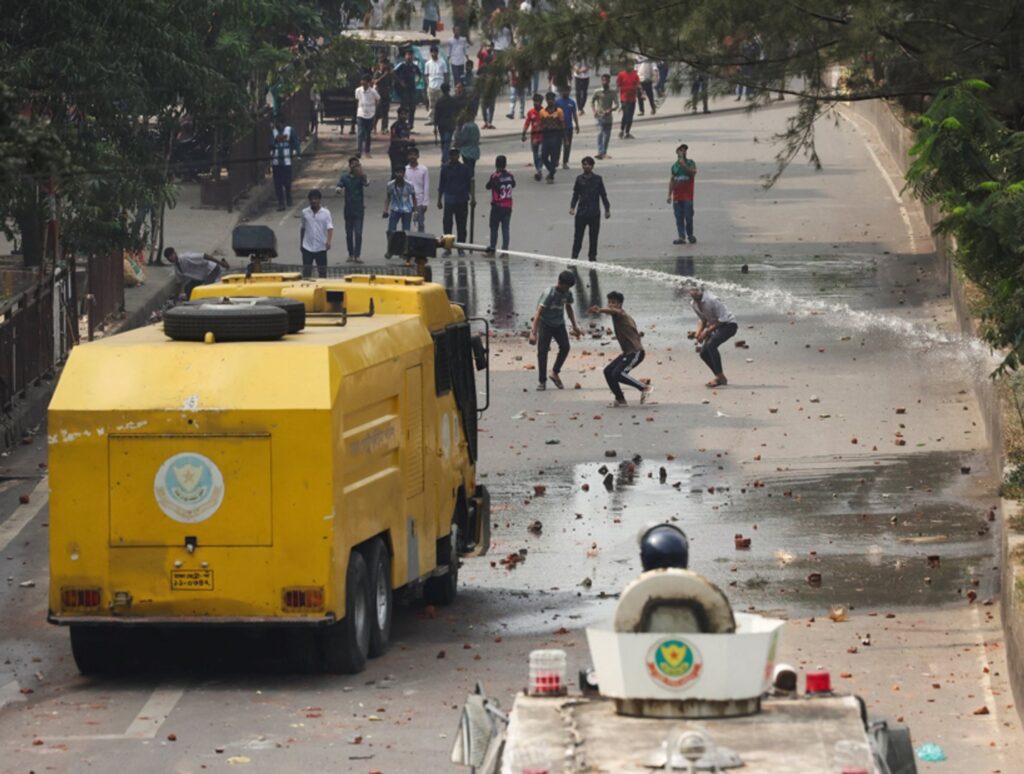
In the capital city of Dhaka, Bangladesh, dozens of garment workers engaged in violent clashes with police during protests protesting low wages. The workers expressed deep frustration over what they consider insufficient pay despite the industry’s significant contribution to the country’s economy. Bangladesh’s garment sector is one of the largest in the world, employing millions and driving substantial export revenue. However, wage levels have long been a point of contention with workers demanding better living wages to meet increasing costs of living. During the protests, workers gathered in large numbers and confronted law enforcement, leading to skirmishes and heightened tensions. Police attempted to disperse the protesters using measures that included baton charges and tear gas, which escalated the situation. The protest highlights ongoing labor discontent in the industry, with workers calling on factory owners and the government to implement fair wage policies and improve labor rights. Labor unions and rights groups have backed the protests, citing the need for systematic reforms to ensure workers receive adequate compensation and safe working conditions. Authorities have promised to look into the wage issue, but so far no concrete steps have been announced to address workers’ demands. The government faces pressure both domestically and internationally to uphold labor standards in the sector that forms a backbone of Bangladesh’s economy. The episode is a reminder of the persistent socioeconomic challenges faced by millions of garment workers, many of whom live near or below the poverty line despite their vital economic roles. As tensions remain high, stakeholders call for dialogue and lasting solutions to prevent future unrest and secure the welfare of Bangladesh’s vast garment workforce.