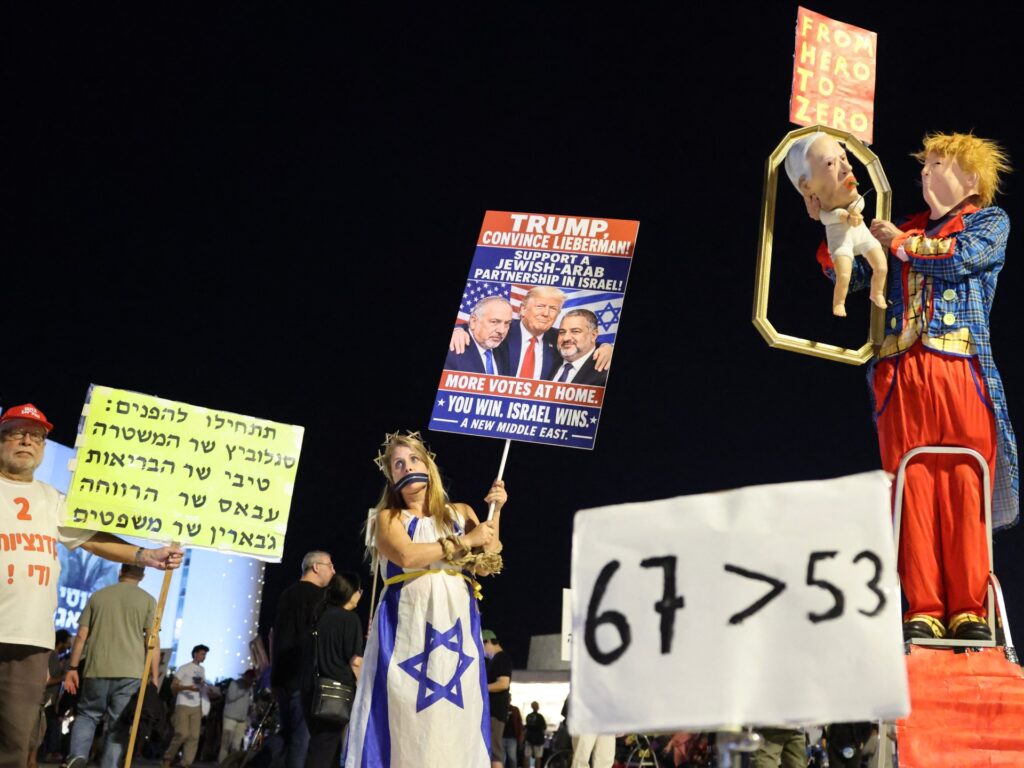
In a significant political demonstration, thousands of protesters gathered in Israel demanding the removal of Prime Minister Benjamin Netanyahu. The rally was primarily focused on urging the implementation of a political deal proposed by Benny Gantz and former army chief Gadi Eisenkot, which seeks to forge a cooperative government including Arab parties. The supporters of this deal argue that it is essential for ensuring stability, promoting peace, and moving Israel forward.
Participants in the rally expressed their frustration with Netanyahu’s leadership, highlighting issues such as corruption allegations, ongoing judicial reforms, and perceived failures in addressing domestic and security challenges. Many protesters believe that a new coalition government that includes Arab representation would provide a more inclusive and peaceful direction for the country.
In direct opposition to the rally, a counterprotest took place with Netanyahu supporters vehemently rejecting the idea of a government formed with Arab parties. These counterprotesters chanted slogans emphasizing their stance that Israel should not be governed alongside what they called ‘terrorists.’ They view any alliance with Arab parties as a threat to national security and sovereignty.
The tension between these opposing factions underscores the deep political and societal divisions currently prevalent in Israel. The debate over the future government continues to dominate headlines as electoral deadlock persists and the political landscape remains uncertain.
The proposed deal by Eisenkot and Gantz represents a rare attempt at cross-community collaboration, aiming to bridge longstanding divides between Jewish and Arab citizens of Israel. Supporters argue that inclusion of Arab parties is not only democratic but necessary for advancing peace and national unity.
Critics, however, accuse Netanyahu and his allies of stoking fears to maintain power by framing Arab parties as extremist threats. This strategy has heightened polarization and made political compromise more difficult.
The rallies are part of a broader wave of public engagement in Israeli politics, reflecting widespread dissatisfaction with the status quo. Analysts suggest that the coming weeks will be critical in determining whether a new government can be formed or if further elections will be necessary.
As the nation watches closely, the calls for change grow louder among those advocating the Eisenkot-Arab deal, while Netanyahu loyalists hold firm to their vision of Israel’s future. The outcome of this political struggle will have profound implications for Israel’s democracy, security, and social cohesion.