At a recent campaign rally, former President Donald Trump made a controversial statement urging voters to send Michigan’s gubernatorial candidate Abdul El-Sayed “back to where he came from.” This remark has sparked significant backlash and debate across the political spectrum.
Abdul El-Sayed, a physician and public health expert, is running for governor in Michigan, aiming to bring progressive change to the state. Trump’s comment appears to be directed at El-Sayed’s background, which has been a topic in the campaign narrative.
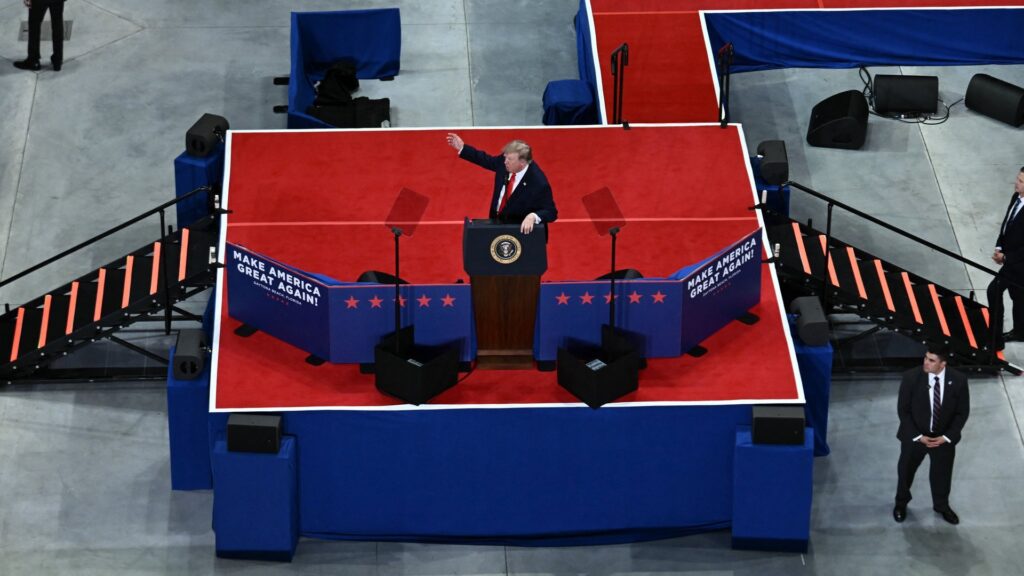
Trump’s rally speech, delivered in front of a large crowd of supporters, was marked by pointed attacks on his political opponents. The statement about El-Sayed was seen by many as racially charged and exclusionary, given the phrasing is often associated with xenophobic rhetoric.
Supporters of Trump have argued that the comment was a critique of El-Sayed’s policies and political stance rather than his ethnicity or background. They contend that it was framed as a call to reject undesirable political candidates.
Conversely, critics have condemned the statement as divisive and inappropriate for a political leader. Civil rights groups and political analysts have expressed concern that such rhetoric exacerbates social tensions and undermines the inclusive values many Americans hold dear.
The incident has renewed discussions about the role of language in political campaigns and the boundaries of acceptable discourse. It highlights ongoing challenges in American politics concerning identity, immigration, and the nature of political debate.
In response to the backlash, some Trump allies defended the statement as part of a robust campaign strategy to energize the base, emphasizing competitive politics over tone.
El-Sayed, for his part, responded by reaffirming his commitment to serving all Michiganders and condemning divisive language. He has called for a campaign focused on issues like healthcare, education, and economic opportunity.
Political commentators note that the Michigan gubernatorial race is heating up, with El-Sayed representing a progressive alternative to the more conservative Republican candidates. The rhetoric employed by Trump and others may influence voter sentiment in the upcoming election.
This latest episode underscores the increasingly polarized nature of political discourse in the United States. It raises questions about how political figures communicate with the public and the impact of their words on community cohesion.
As the campaign continues, voters and political observers alike will be watching how candidates address each other and the electorate, balancing passion with respect.
The broader implications of Trump’s remarks could extend beyond the Michigan race, potentially affecting national conversations about race, identity, and belonging in American society.
In conclusion, the episode serves as a potent reminder of the power of language in politics and the responsibility of leaders to promote unity and civility, even amid fierce competition.