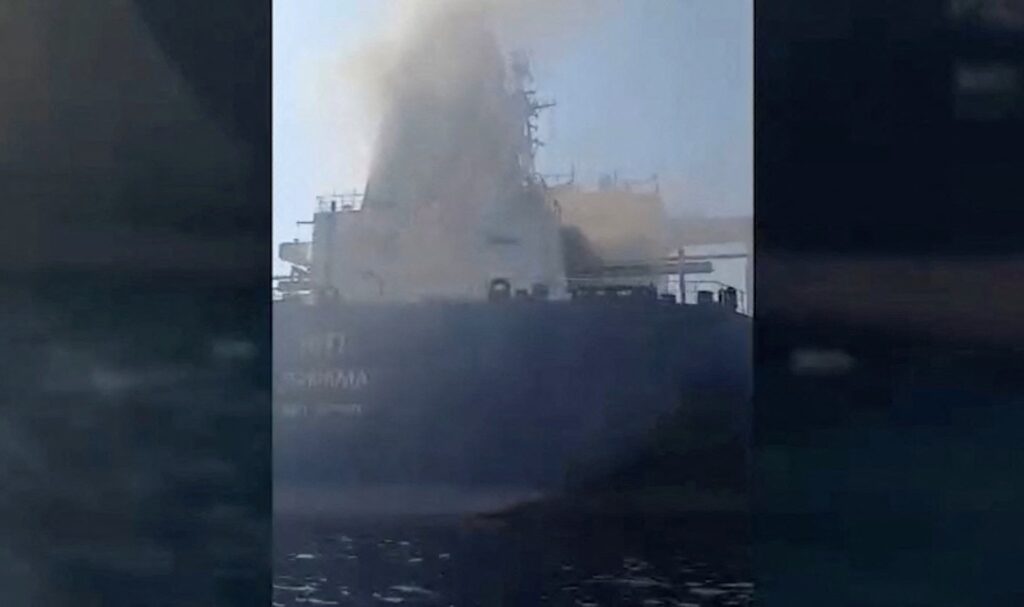
Tensions in the Strait of Hormuz escalated sharply as the Islamic Revolutionary Guard Corps (IRGC) reported that four oil tankers were hit in the strategic waterway, a critical artery for global oil shipments. This latest incident highlights the growing volatility in the region amidst ongoing conflict involving Iran.
The strikes on the tankers occurred in a heavily navigated maritime corridor that links the Persian Gulf with the Gulf of Oman and the Arabian Sea. The Strait of Hormuz is crucial for the transport of a significant percentage of the world’s petroleum, and disruptions here have wide-reaching implications for global energy markets.
The IRGC, Iran’s elite military force, confirmed the attack, describing it as a calculated response to what it perceives as hostile actions against Iran. The exact nature of the damage to the vessels and whether there were casualties are yet to be fully disclosed.
In parallel to this development, former U.S. President Donald Trump provided a rare commentary, expressing confidence that the conflict involving Iran will “get wrapped up soon.” Trump’s statement reflects a belief that diplomatic or military resolutions will move quickly though specific details on possible resolutions were not provided.
The context of these attacks connects to the broader geopolitical struggle involving Iran, the United States, and allied nations. Sanctions, military posturing, and diplomatic confrontations have all played roles in escalating tensions over recent months.
Global markets reacted nervously to the news of the tanker strikes. Oil prices experienced fluctuations as traders assessed the risk of prolonged disruption to the supply chain. Analysts warn that continued instability in the region could lead to more significant spikes in energy costs internationally.
Diplomatic efforts to de-escalate the situation have intensified, with calls from various countries urging restraint and dialogue. The United Nations and multiple international bodies have reiterated the importance of maintaining open sea lanes and avoiding actions that could ignite broader conflict.
Security measures in the Gulf are expected to be heightened as regional navies, alongside international partners, monitor shipping routes for further threats. The situation demands careful attention, given the potential for miscalculations that could rapidly escalate into more severe confrontations.
This incident in the Strait of Hormuz serves as a stark reminder of the fragile stability in the Middle East and the ongoing risks posed to global energy security. Stakeholders worldwide are watching closely for developments that might signal the conflict’s resolution or its deepening turmoil.
As the world awaits responses and solutions, the impact of these attacks reverberates throughout political, economic, and security domains, underscoring the need for urgent, effective diplomatic engagement to foster peace and stability in the region.