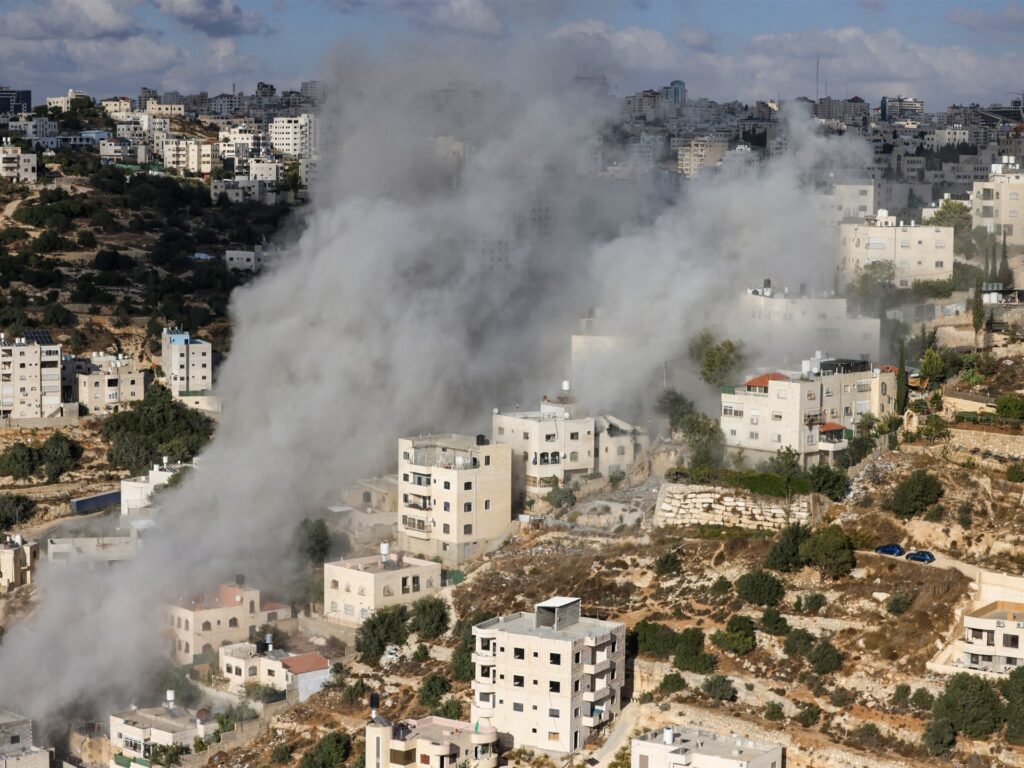
In recent developments, Israeli forces have demolished several homes belonging to Palestinians accused of carrying out an attack on Israeli soldiers. This move is part of a broader strategy by Israel to respond to and deter attacks by targeting the residences of those believed to be responsible or connected to such incidents.
The demolitions have taken place in areas with significant Palestinian populations, including neighborhoods in Hebron, a city with a complex and often tense mix of Israeli and Palestinian communities. Following the demolitions, Israeli troops have detained at least 12 Palestinians near the now-destroyed homes. These operations have contributed to an already dire humanitarian situation in the region.
The impacts of these actions are far-reaching. Nearly 5,000 Palestinians remain displaced in Hebron neighborhoods as a result of the demolitions and ongoing conflicts. The displacement has strained local resources and heightened tensions between Israeli authorities and Palestinian residents.
Home demolitions as a tactic have long been controversial and widely criticized by international organizations and human rights groups. Critics argue that such measures violate international law by collectively punishing families and communities for the actions of individuals, while supporters claim that these demolitions serve as an effective deterrent against future attacks.
The unrest in Hebron reflects the broader Israeli-Palestinian conflict, which has been marked by cycles of violence and retaliation for decades. The situation remains volatile, with security forces increasing their presence to prevent further attacks, while Palestinians face increasing hardships due to displacement and military operations in their neighborhoods.
Human rights advocates continue to call for a reassessment of Israeli policies regarding home demolitions and urge the international community to engage more actively in seeking peaceful solutions. Meanwhile, displaced families struggle to find stability amidst ongoing uncertainty.
As the conflict persists, the humanitarian toll grows, underscoring the urgent need for renewed efforts towards dialogue and reconciliation in the region. The situation in Hebron serves as a poignant example of the human cost of this prolonged conflict, highlighting the complexities and challenges faced by those living amidst contested territories and ongoing violence.