In a landmark decision, the Swiss Supreme Court has upheld the 20-year prison sentence of Alieu Kosiah, a former Liberian rebel commander convicted of war crimes and crimes against humanity. Kosiah was found guilty of killing civilians and unarmed soldiers during Liberia’s brutal civil war, as well as ordering lootings and other serious offenses.
The verdict marks a significant moment in international justice, emphasizing the principle of accountability for atrocities committed during armed conflicts. Alieu Kosiah’s conviction was groundbreaking, as it was one of the first instances where a national court in a third country prosecuted a former combatant for war crimes committed outside its borders under the principle of universal jurisdiction.
Kosiah, once a commander of the United Liberation Movement of Liberia for Democracy (ULIMO), was indicted for his role in atrocities committed between 1993 and 1995 during Liberia’s first civil war. Investigations revealed that Kosiah was directly involved in ordering summary executions and orchestrating widespread pillaging in territories under his control.
The trial, held in Switzerland, drew attention due to the complexities of prosecuting crimes that occurred far from Swiss soil. Still, the court maintained its position that serious violations of international humanitarian law can be prosecuted regardless of where they took place or the nationality of the accused, reinforcing the tenets of universal jurisdiction.
Human rights organizations lauded the verdict. Amnesty International and other advocacy groups highlighted the importance of this ruling in serving as a deterrent for other perpetrators of war crimes who might otherwise feel shielded by the passage of time or lack of jurisdictional reach.
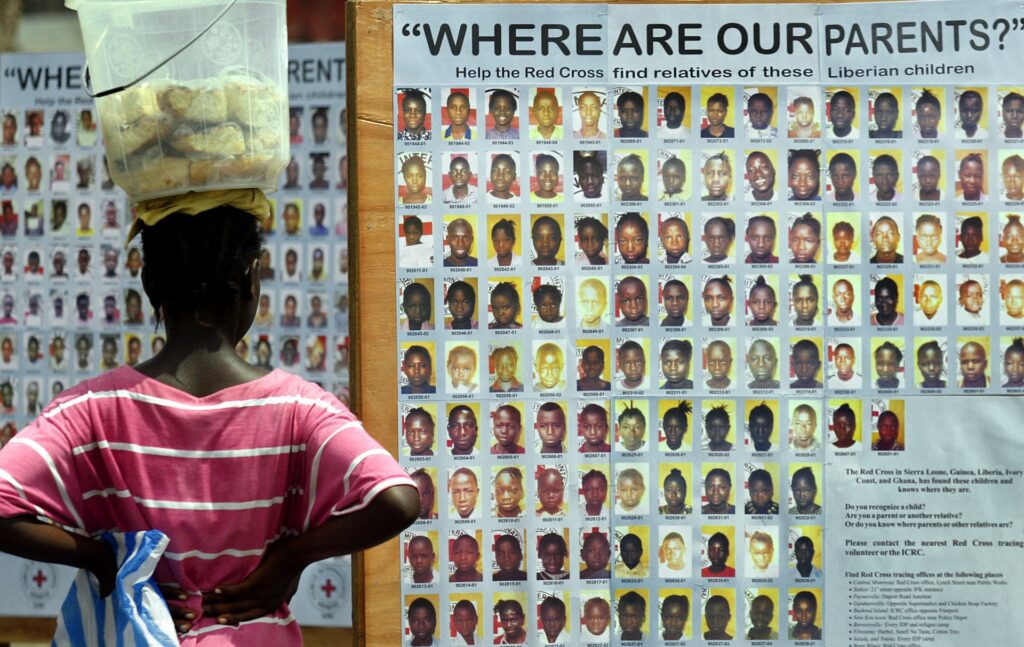
Liberia’s civil wars from 1989 to 2003 were characterized by extreme violence, including mass killings, forced displacement, and systematic brutality. Thousands of civilians were victims of abuses perpetrated by various armed factions, including ULIMO.
The Swiss court’s decision has rekindled discussions on the necessity of international cooperation to bring justice to victims of war crimes and crimes against humanity worldwide. It underscores the international community’s role in supporting local and international courts to prosecute offenders and uphold international law.
Alieu Kosiah was arrested in Switzerland in 2014 after survivors and human rights groups brought forward evidence against him. His trial culminated years of advocacy and investigations, eventually resulting in his conviction in 2021. The Supreme Court’s recent ruling solidifies that conviction, denying any appeals to overturn the sentence.
The decision also carries symbolic importance for Liberia’s ongoing recovery and reconciliation process. By affirming accountability for past war crimes, it provides a measure of justice for victims and a formal acknowledgment of the atrocities suffered during the tumultuous period.
Experts note that Kosiah’s case could serve as a precedent encouraging other countries to adopt similar measures to prosecute war criminals residing within their territories. It exemplifies how national courts can contribute to global justice efforts even when international courts have limited capacity or jurisdiction.
Kosiah’s 20-year sentence is expected to be served in Switzerland, and prison authorities have confirmed that he will face strict conditions due to the gravity of his crimes.
As the world watches, this decision by the Swiss Supreme Court sends a clear message: perpetrators of war crimes and crimes against humanity will be held accountable, no matter how much time has passed or where they seek refuge.
The ruling therefore represents a significant step forward in the global fight against impunity and a strong affirmation of the rule of law in international criminal justice.