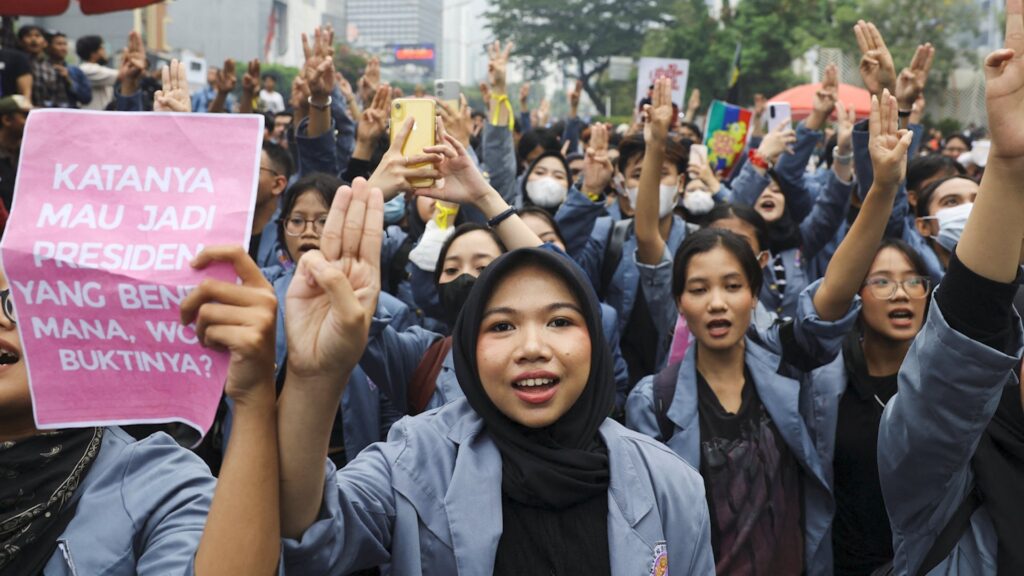
Hundreds of Indonesian students staged a protest demanding urgent government action to address the escalating forest fires and the rising cost of living. The students expressed their frustration with what they see as inadequate government response to the environmental and economic challenges facing the nation.
Across Indonesia, wildfires have become an annual issue, causing widespread environmental damage and impacting public health due to toxic smoke and haze. The fires, often linked to illegal land clearing practices, have destroyed thousands of hectares of forest and agricultural land, threatening biodiversity and contributing to climate change.
Protesters demanded stricter enforcement of laws against illegal land clearing and better support for sustainable land management practices. They also called for greater transparency and accountability from government officials tasked with disaster response and environmental protection.
In addition to environmental concerns, the students highlighted the financial strain caused by rising costs of basic goods and services. Inflation has led to increased prices for food, transportation, and education, placing additional burdens on families and students alike.
The protesters urged the government to implement policies aimed at economic relief, such as subsidies for essential commodities, improved public transportation, and measures to stabilize the education sector fees.
This wave of protests reflects growing youth activism in Indonesia, as students become more vocal about climate change and economic justice. Experts note that this movement could influence future policy decisions, pushing the government to prioritize sustainable development and social welfare.
Government representatives have acknowledged the concerns raised by the students, stating that efforts are underway to improve fire prevention measures and control inflation. Officials have promised to engage in dialogue with student groups to find collaborative solutions.
Nevertheless, protesters insist that immediate and substantial actions are necessary to prevent further environmental degradation and economic hardships.
The Indonesian student protests highlight the intersection of environmental and economic issues in the country, signaling a demand for comprehensive reforms that address both sustainability and affordability for its citizens. As the situation develops, attention remains on how the government will respond to the pressing demands of its youth and citizens concerned about Indonesia’s future.