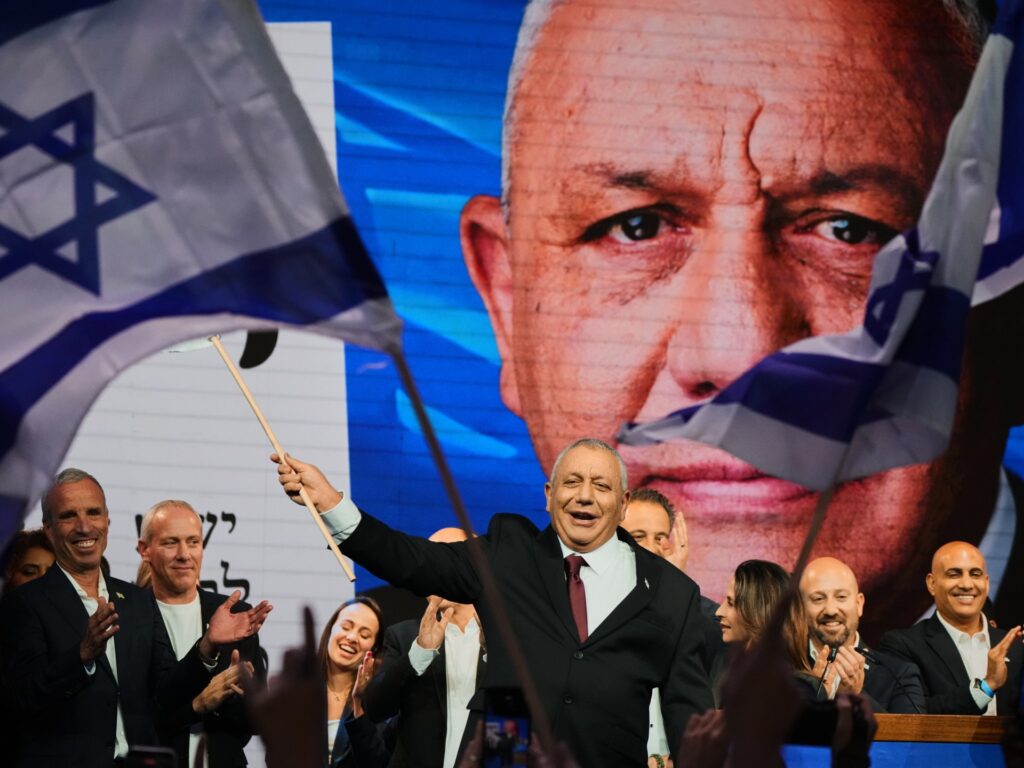
The upcoming Israeli election has drawn significant attention to the potential role of Arab parties in influencing the formation of the next government. Exit polls have suggested that if Benny Gantz’s bloc, led by the Blue and White party and former IDF Chief of Staff Gabi Eisenkot, were to secure a coalition with Arab parties, they could potentially unseat the long-standing incumbent, Prime Minister Benjamin Netanyahu, popularly known as Bibi.
Despite this projection, there are substantial reasons why Arab parties may not ultimately become the decisive ‘kingmakers’ in this critical election. The political landscape in Israel is complex, with multiple factors influencing coalition formations and government stability.
Firstly, the Arab parties themselves are a diverse and sometimes fragmented group. The Joint List, primarily an alliance of Arab-majority parties, does not always present a monolithic stance, often differing on key issues ranging from social policies to foreign affairs. This internal diversity makes unified support for any coalition less predictable.
Moreover, Arab parties have traditionally been marginalized in Israeli politics and have encountered skepticism from Jewish-majority parties, especially those on the right. This mistrust might limit the willingness of centrist or right-leaning factions to engage in negotiations with Arab parties, even if election results make such partnerships mathematically attractive.
The Jewish majority’s view on Arab parties and the broader Arab minority’s role in government remains a sensitive and contentious issue. National security concerns, complex historical narratives, and security-related distrust often hinder collaboration.
Another pivotal issue is the ideological positioning of Arab parties. Many Arab representatives prioritize civil rights, ending occupation, and socio-economic equity, which may conflict with the policies or political priorities of other coalition members.
Furthermore, Gantz’s bloc faces the challenge of uniting diverse Jewish parties to form a stable coalition without over-relying on Arab parties. The difficulty in forming a broad Jewish coalition could diminish the influence Arab parties wield in government formation.
Exit polls provide a snapshot but cannot capture all post-election negotiations, personal political ambitions, and strategic shifts. The announcement of Eisenkot’s involvement in Gantz’s bloc signals a concerted effort to broaden appeal, yet it remains uncertain if this can translate into a majority coalition capable of governing.
In addition, Netanyahu and his Likud party have been resilient players, adept at coalition-building and political maneuvering. Netanyahu’s ability to form alternative alliances may reduce the dependence on Arab parties for a government majority.
Additionally, the political atmosphere in Israel includes security incidents, diplomatic developments, and public sentiment on governance that can rapidly shift the coalition dynamics.
The Arab parties’ potential influence must also be understood within the context of broader geopolitical considerations, including relations with Palestinians, neighboring Arab countries, and international actors. These dimensions add layers of complexity to the coalition calculus.
In conclusion, while Arab parties could theoretically serve as kingmakers if the election results create a hung parliament, various political, social, and strategic impediments likely prevent them from assuming this role decisively. The diverse nature of both Arab and Jewish political landscapes, historical mistrust, nationalist concerns, and Netanyahu’s enduring political skill all contribute to a scenario where Arab parties’ influence, although important, may be more limited than exit poll projections suggest. Israeli voters and observers await the final formation of the government with keen interest, recognizing the fluidity of the political process beyond mere numbers on election night.