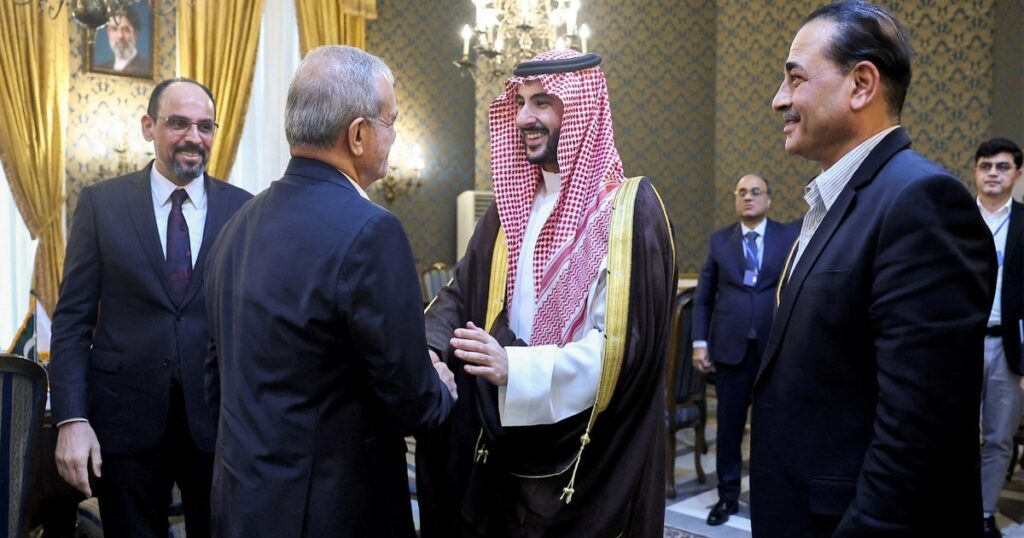
In recent months, there has been growing speculation about the possibility of a regional security pact between the Gulf Cooperation Council (GCC) countries and Iran. Given the complex geopolitical dynamics of the Middle East, such an alliance could have profound implications for regional stability and international relations.
The GCC, comprising Saudi Arabia, the United Arab Emirates, Kuwait, Qatar, Bahrain, and Oman, has long been wary of Iran’s regional ambitions. Historically, tensions have run high due to ideological, sectarian, and strategic rivalries. Yet, the escalating conflicts in the region, including Yemen’s ongoing civil war and issues related to maritime security in the Persian Gulf, have underscored the need for dialogue and cooperation.
Observers note that recent diplomatic engagements, including informal talks and multilateral meetings, indicate a mutual recognition of the importance of reducing tensions. The pursuit of a regional security framework could be seen as an attempt to institutionalize these efforts and create mechanisms for conflict prevention.
However, significant hurdles remain. Divergent geopolitical interests, mutual suspicions, and differing threat perceptions among GCC members and Iran pose challenges to any lasting agreement. For instance, Iran’s support for various non-state actors and militia groups in the region continues to be a red line for many GCC nations.
Additionally, regional security is intricately linked to broader global powers’ involvement. The United States and other Western countries have vested interests in the region, influencing the strategic calculus of both the GCC countries and Iran.
Despite these challenges, there are pragmatic reasons for considering a security pact. A stable security architecture could facilitate economic development, attract foreign investment, and improve the overall security environment for all involved parties.
Yet, analysts remain cautious. They emphasize that while diplomatic thawing is promising, the durability of any agreement depends on addressing core issues such as mutual recognition, arms control, and mechanisms for dispute resolution.
In conclusion, while GCC countries and Iran appear to be exploring avenues for enhanced regional security cooperation, the path towards a comprehensive security pact is fraught with complexities. The current diplomatic momentum, though encouraging, may not be sufficient to establish a long-lasting framework without substantial compromises and trust-building measures among all stakeholders.