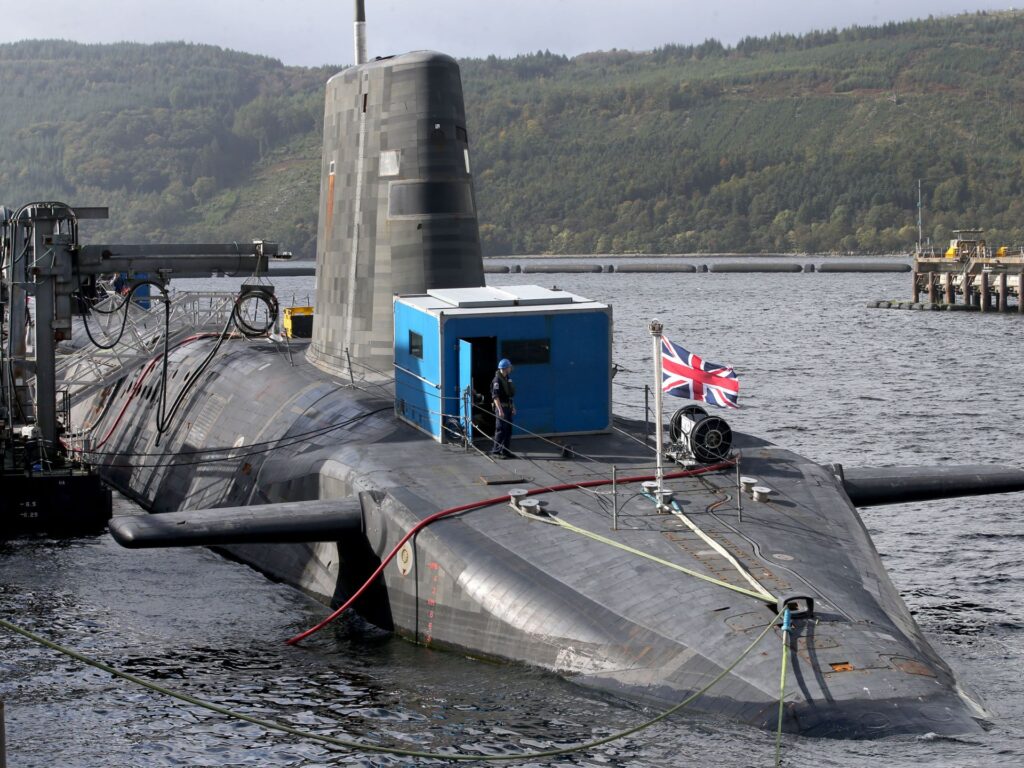
In an unprecedented move marking a significant milestone in the UK’s strategic defense, three of the country’s four Vanguard-class nuclear deterrent submarines are currently deployed at sea simultaneously. This deployment represents the first time in years that such a large portion of the UK’s nuclear deterrent fleet has operated at the same time, underlining both the capability and readiness of the Royal Navy’s undersea deterrent force.
The Vanguard-class submarines, each equipped with Trident nuclear missiles, form the backbone of the UK’s nuclear deterrent strategy. Their primary role is to provide a continuous at-sea deterrent (CASD), a posture designed to ensure that the UK can maintain a retaliatory strike capability at all times. This strategy is based on deterrence by ensuring that any potential adversary knows that a credible and undisputed nuclear response can be launched in the event of a nuclear attack.
Having three submarines at sea simultaneously amplifies this deterrent capability significantly. Traditionally, the Royal Navy maintains one submarine at sea at all times, with others undergoing maintenance or training. The current deployment exceeds this norm, reflecting heightened strategic vigilance amid evolving global security challenges.
The decision to have three Vanguard-class submarines on patrol is informed by various factors including geopolitical tensions, the necessity to demonstrate strength and resolve, and the importance of reassuring allies. This operational tempo not only showcases the technological and logistical capabilities of the Royal Navy but also highlights the strategic importance afforded to nuclear deterrence as a vital component of national security.
These submarines operate as stealthy, hard-to-detect platforms capable of remaining submerged for extended periods, enhancing their survivability against any potential first strike. This endurance and stealth capability ensure that at least one submarine remains undetected at all times, ready to deliver a retaliatory nuclear strike if necessary.
The deployment also signals the UK’s commitment to maintaining its nuclear deterrent despite international pressures and the evolving nature of global security threats. It serves as a reminder of the UK’s nuclear policy, which relies on maintaining a credible minimum deterrent to protect national interests and uphold international security.
Critics of the nuclear deterrent program often question the cost and ethical implications; however, proponents argue that such deterrence is essential in preventing nuclear conflict. The visibility of three Vanguard-class submarines at sea underscores the seriousness with which the UK government approaches this balance.
In conclusion, the simultaneous deployment of three Vanguard-class submarines marks a significant chapter in the UK’s defense strategy. It symbolizes the robustness and readiness of the nation’s nuclear deterrent, reassures allies, and serves as a pointed message to potential adversaries that the UK remains vigilant and prepared to defend its sovereignty and interests at all costs.