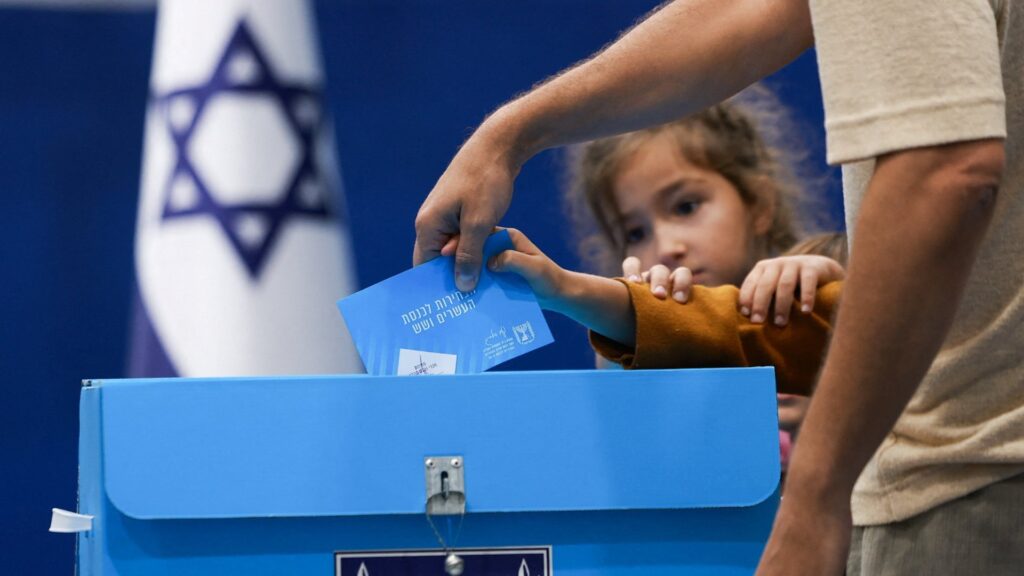
On a crucial day, Israelis have begun casting their votes in a pivotal election that could determine the future political landscape of the country. Incumbent Prime Minister Benjamin Netanyahu is facing serious challenges in what is seen as a struggle for his political survival. His main opponent, former military chief Gadi Eisenkot, has entered the political arena amid a deeply divided nation.
This election comes at a time of intense debate and concern over ongoing conflicts in Gaza and the looming threat of Iran’s regional ambitions. The Israeli public is increasingly divided on how to handle these complex security issues, with Netanyahu’s approach seeing both staunch support and fierce criticism.
Netanyahu has long been a dominant figure in Israeli politics but recent years have seen his position weaken amid legal battles and political isolation. The prime minister faces allegations that have alienated some traditional allies, and the emerging rivalry with Eisenkot underscores the growing fracturing within Israeli society.
Eisenkot, known for his military leadership as the former Chief of Staff of the Israel Defense Forces, is campaigning on a platform emphasizing security and pragmatic diplomacy. His entry into politics represents a new chapter and challenges Netanyahu’s long-standing hold on power.
Voters are also deeply concerned about internal divisions, economic issues, and the overall direction of the country. The diverse political landscape reflects a growing fragmentation, with neither side able to claim overwhelming dominance.
Internationally, Israel’s election is closely watched, as it impacts the dynamics in the Middle East, particularly in reference to the conflict with Gaza and tensions with Iran. Many observers agree that the outcome will influence the country’s foreign policy stance for years to come.
As polling stations open across Israel, the nation awaits the results that could reshape the government and potentially alter the course of Israeli and regional politics. The election encapsulates a high-stakes battle, not only for Netanyahu’s political fate but for Israel’s broader strategic future.