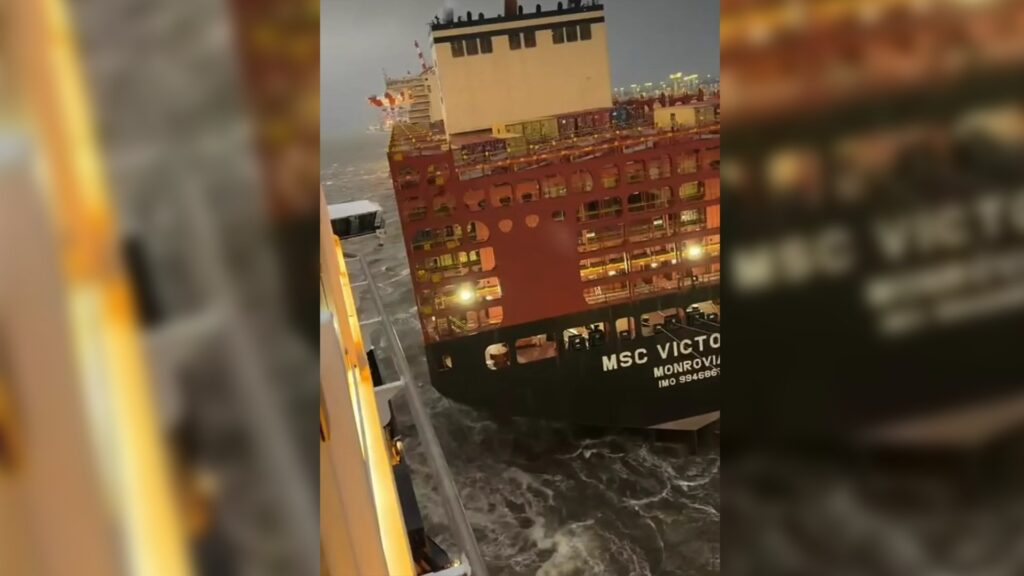
During a severe storm, a cruise ship captain is under investigation following a collision with two container ships in German waters. The incident occurred as strong winds and turbulent weather conditions challenged navigation and ship control.
According to early reports, the cruise liner was navigating through a busy shipping lane when it lost stability due to the fierce storm. The vessel subsequently crashed into two container ships, causing damage and raising alarms about maritime safety protocols during extreme weather.
German authorities quickly responded to the incident, dispatching police and maritime safety officials to investigate the circumstances leading to the collision. The captain of the cruise ship is the primary focus of the investigation, with officials examining whether negligence or error in judgment contributed to the accident.
Preliminary assessments revealed the storm’s intensity was significant, with winds strong enough to affect large ships’ maneuverability. Maritime experts have noted that such weather conditions require vigilant control and precise navigation to prevent accidents.
Cruise ships, often carrying hundreds or thousands of passengers, face unique challenges in storm scenarios. Ensuring passenger safety while managing the ship’s course amid harsh weather demands experienced leadership and adherence to safety regulations.
The container ships involved in the collision also suffered damages, though no immediate casualties were reported. Port authorities have been monitoring the situation to prevent environmental hazards such as oil spills or cargo loss.
Investigators are collecting data from ship logs, weather reports, and onboard communication to piece together the sequence of events. Radar recordings and eyewitness accounts from other vessels in the vicinity will also contribute to understanding the incident.
The investigation aims to determine the cause of the collision and establish whether all necessary precautions were taken by the captain and the crew. German maritime law mandates strict protocols for navigating under adverse weather conditions, and breaches can result in legal action.
In addition to legal implications, the incident raises questions about maritime safety standards during increasingly unpredictable weather patterns attributed to climate change. Authorities may consider reviewing regulations to enhance preparedness and response to such emergencies.
Passengers aboard the cruise ship experienced distress but have been reported safe. The cruise line has expressed cooperation with investigators and has pledged to review safety procedures to prevent future incidents.
This event serves as a reminder of the challenges faced at sea, especially as commercial and passenger ships traverse perilous routes amid changing climatic conditions. Enhanced training, advanced technology, and stringent regulations are critical to safeguarding lives and cargo in turbulent waters.
The ongoing investigation will shed light on how to better manage maritime operations during storms and contribute valuable insights to maritime safety practices worldwide.