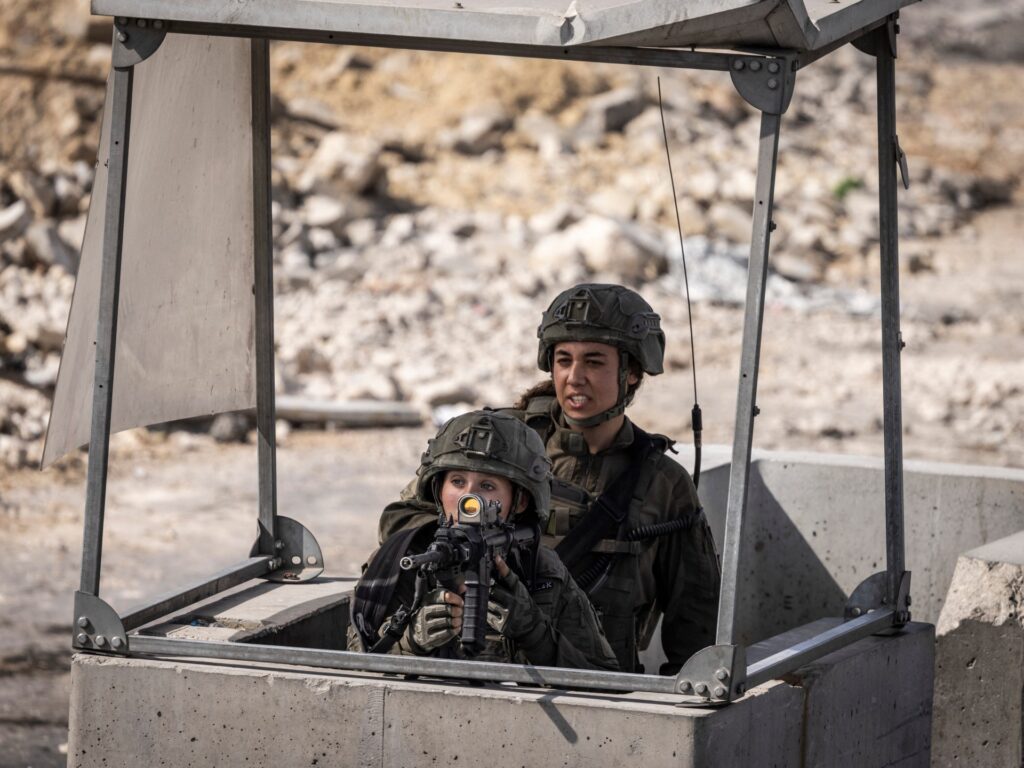
As Israel’s election campaign drew to a close, the West Bank found itself increasingly under siege, marking a significant escalation in the ongoing tensions in the region. Israeli authorities sealed off key areas in the West Bank, asserting tighter control that has deeply affected daily life for Palestinians. One of the most striking developments was the evacuation of parts of Hebron, a city known for its historical and political significance. The move to empty these areas represents a sharp intensification of pressure on Palestinian residents, many of whom faced sudden displacement amid the heightened security measures.
The crackdown extended beyond the West Bank, with Gaza also experiencing increased restrictions. Israel’s campaign to tighten its grip on Gaza has seen a series of actions designed to limit movement and control resources, further exacerbating the humanitarian challenges faced by the population there.
These developments coincided with a tense electoral period in Israel, where political campaigns often mobilize nationalist sentiments linked to territorial control and security policies. The closure of the West Bank and the intensification of control measures in both the West Bank and Gaza appear synchronized with the political strategies of some Israeli parties seeking to appeal to hardline constituencies.
The sealing of the West Bank has not only disrupted the movement of Palestinians but also impeded access to essential services and economic activities, causing widespread hardship. Checkpoints and roadblocks proliferated, transforming what was once a fragile coexistence into an almost complete isolation of Palestinian communities.
In Hebron, one of the largest cities in the West Bank, the emptying of certain neighborhoods has led to a significant reduction in civilian presence, fueling fears among Palestinians about permanent changes to the city’s demographic and political landscape. The evacuation orders have been met with international concern, with human rights organizations calling for restraint and adherence to international law.
In Gaza, the tightening of the siege translated into stricter controls over goods, movement, and communications, intensifying the enclave’s isolation. This has led to increased humanitarian needs, with shortages of medical supplies, food, and other essentials becoming more acute.
These security measures come amid ongoing peace process stagnation, where prospects for dialogue between Israelis and Palestinians remain bleak. The current situation underscores the deepening divide and the erosion of trust necessary for any meaningful negotiation.
Observers note that the timing of these escalations, aligned with Israeli elections, reflects the intertwining of domestic political agendas with security policies that heavily impact Palestinian lives. The political discourse within Israel has increasingly positioned the control of Palestinian territories as a central issue, often at the expense of broader peace initiatives.
The international community has expressed concern over the developments, urging all parties to avoid actions that could inflame tensions and lead to further violence. Calls for renewed dialogue and protection of civilian populations have been persistent, yet progress remains elusive.
For Palestinians living under these heightened restrictions, the period has been marked by uncertainty and fear. The closure of the West Bank and the siege on Gaza have disrupted education, healthcare, and economic livelihoods, deepening the humanitarian crisis.
The situation in Hebron has also spotlighted the challenges of coexistence in a city divided by both physical and political barriers. The forced emptying of neighborhoods raises questions about the future governance and demographic makeup of the city.
Meanwhile, in Gaza, the protracted siege has led to an urgent call for international assistance to alleviate suffering and support basic infrastructure.
As Israel continues to navigate its political transition, the future of the occupied Palestinian territories remains fraught with complexity and tension. The events during this election period may well set the tone for what lies ahead in the Israeli-Palestinian conflict.
The heightened militarization and political rhetoric contribute to an environment where the prospects for peace are increasingly overshadowed by security concerns and territorial disputes. The ongoing closures and evacuations represent not just tactical moves but strategic shifts with long-term implications.
In conclusion, the closing days of the Israeli election campaign have been marked by an intensified siege on the West Bank and Gaza, reflecting the intricate link between Israeli domestic politics and the management of the Palestinian territories. The ramifications of these actions will likely resonate beyond the immediate electoral cycle, influencing the broader dynamics of the conflict and the lives of millions in the region.