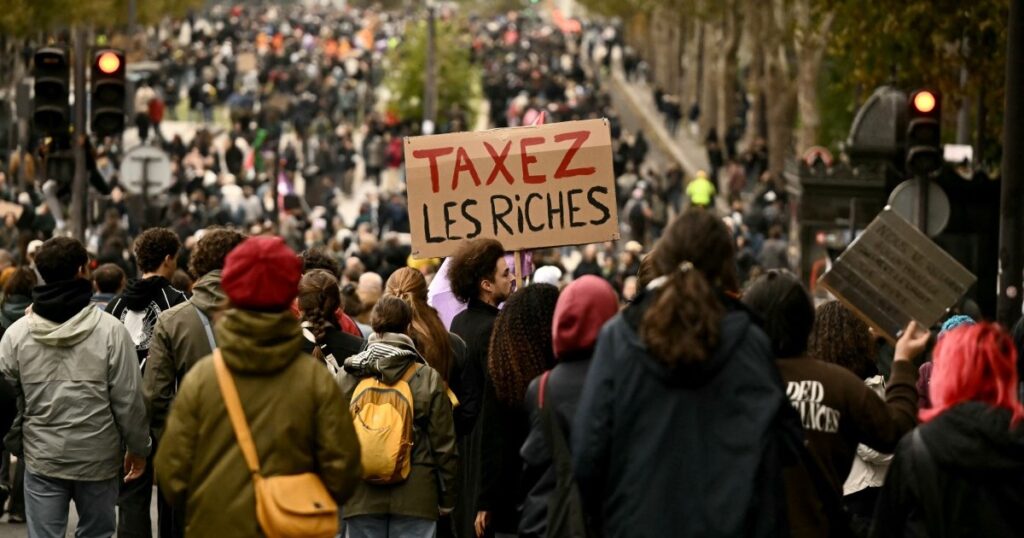
France has been facing significant challenges in responding to the demands of student protesters who are calling for increased spending on education and social services. The protests reflect deep concerns among students about the state of public education, the quality and accessibility of social services, and broader social inequalities.
At the heart of the issue is the government’s fiscal situation. France is currently grappling with a fiscal crisis, which limits its ability to allocate additional funds to education and social welfare programs. The government’s budget constraints mean that while it acknowledges the importance of investing in education and social services, it struggles to find the necessary resources without exacerbating public debt or cutting funds from other critical areas.
Students argue that investment in education and social services is crucial for the country’s long-term economic health and social cohesion. They emphasize that quality education is a right and a fundamental building block for social mobility, economic opportunity, and innovation.
However, the government’s position is complex. Economic pressures, including a need to comply with European Union fiscal rules and manage a rising national debt, have forced policymakers into difficult decisions. Additionally, there are competing demands for public spending in other sectors, such as healthcare, defense, and infrastructure, which complicate budget allocations.
The protests have highlighted a broader debate in France about priorities in public spending and the role of government in addressing social inequalities. While many French citizens sympathize with the students’ cause, there is also recognition of the practical constraints faced by the government.
Efforts to negotiate between student representatives and officials have been ongoing, but progress is slow. The government has made some commitments to targeted investments and reforms, yet these measures are often seen as insufficient by protesters.
Furthermore, the protests have raised questions about the effectiveness of public policy in Europe’s bigger economic context, where austerity measures and fiscal discipline frequently limit social spending.
In summary, France’s struggle to meet students’ demands stems from a combination of genuine fiscal limitations and broader economic challenges. Balancing the urgent call for social investment with fiscal responsibility remains a complex and contentious issue in French politics. The ongoing tension illustrates the difficulties democratic governments face in reconciling public expectations with economic realities, particularly during periods of financial strain.