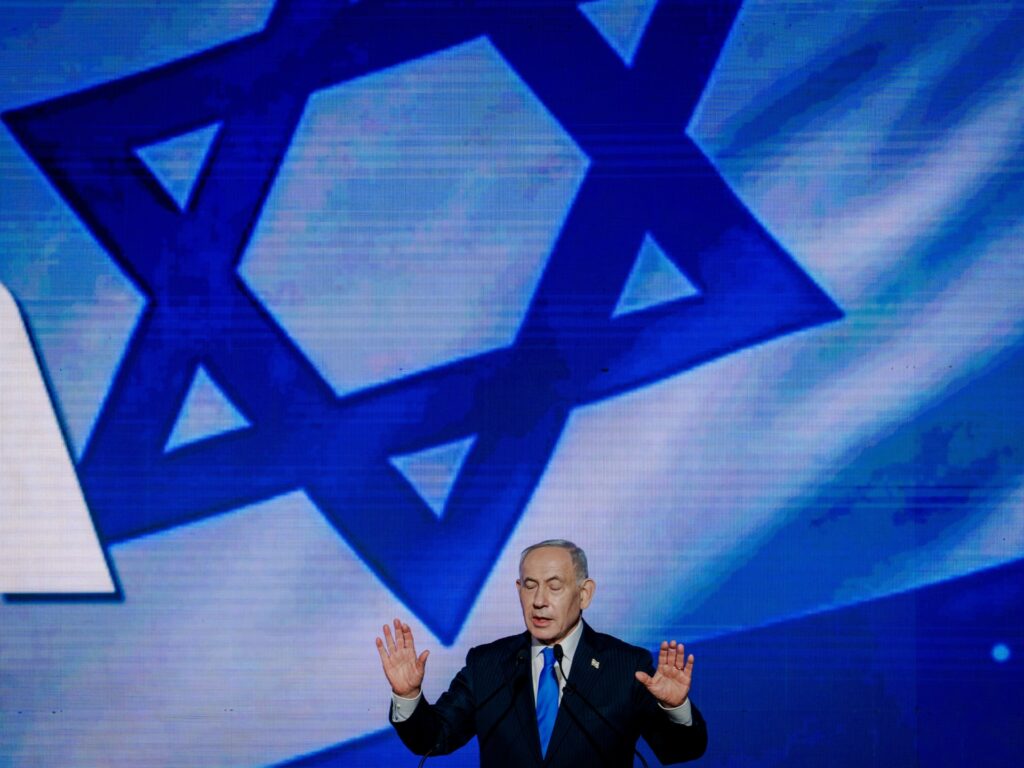
Israel is preparing for a pivotal election marked by a significant shift to the right in the political landscape. This election is seen as a critical moment for the country, as it will determine the future direction of its government and its policies. The current political climate is dominated by a far-right alliance led by Benjamin Netanyahu, who is seeking to extend his rule. Netanyahu, a seasoned political figure, aims to maintain his grip on power by rallying support from voters who favor a more conservative and right-wing approach to governance.
The election campaign has been characterized by intense competition between Netanyahu’s far-right alliance and a predominantly right-wing bloc that also seeks to influence the country’s future. This bloc, while not as far to the right as Netanyahu’s coalition, shares many similar ideological views, creating a dynamic but polarized political environment. The stakes are high as Israel faces numerous challenges, including security concerns, economic pressures, and complex regional relations.
Netanyahu’s campaign strategy focuses on national security and economic stability, resonating with voters who prioritize these issues. His alliance’s platform includes tougher measures on security, a strong stance on counterterrorism, and policies aimed at economic growth and innovation. However, critics argue that the far-right shift could lead to increased tensions both domestically and internationally, potentially undermining democratic institutions and exacerbating social divides.
The opposing right-wing bloc emphasizes a more moderate approach, advocating for cautious policy-making and dialogue while still maintaining a firm stance on security. This bloc appeals to voters who are concerned about the implications of a far-right government but remain committed to conservative values.
As election day approaches, political analysts highlight the importance of voter turnout and the potential for surprising shifts in voter allegiance. The election results will not only shape the next government but also impact Israel’s position on the global stage. International observers are closely monitoring the election, aware that the outcome could influence peace efforts, regional alliances, and the broader geopolitical landscape.
The election presents a broader reflection of global trends towards right-wing politics, with Israel’s unique geopolitical context adding layers of complexity. The nation’s democratic process is under intense scrutiny as citizens weigh the benefits and risks of shifting further right in their leadership. Regardless of the outcome, the election is expected to usher in a new chapter for Israeli politics, emphasizing the evolving nature of its society and the challenges it faces in a rapidly changing world.