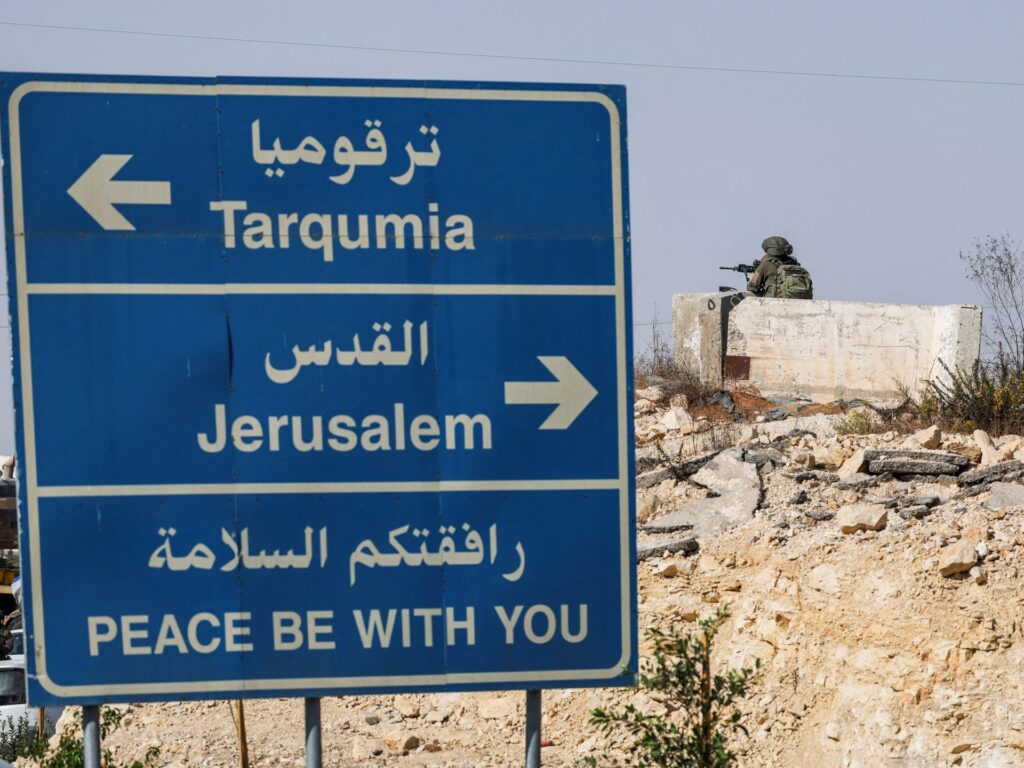
Israel has announced the closure of all land crossings with the occupied West Bank in conjunction with its forthcoming general election scheduled for Tuesday. This move comes amid heightened security concerns and a lockdown imposed on Hebron, one of the largest cities in the West Bank.
The decision to seal off access points to the West Bank reflects Israel’s precautionary measures to maintain order during the politically sensitive period of national elections. The closures are expected to impact the movement of Palestinians within the region as well as Israeli settlers and employees who typically transit between the West Bank and Israel.
Hebron, known for its historical and religious significance, has experienced escalating tensions and occasional violence in recent months. The lockdown aims to control unrest and prevent escalation during the election period. Security forces have been deployed in increased numbers to enforce the closure and maintain stability.
The general election, a critical event for Israel, has prompted heightened alertness across all borders and conflict-prone zones. Authorities emphasize that the closure of West Bank crossings is a temporary measure aligned with security protocols tied to the electoral process.
This development may further complicate the already strained relations between Israel and the Palestinian territories. Restrictions on movement have long been a contentious issue impacting daily life, economic activity, and the broader peace process.
Human rights organizations and Palestinian officials have voiced concerns regarding the potential humanitarian and economic impacts of such closures. They warn that the disruption to the flow of goods, access to medical facilities, and communication could exacerbate hardship faced by Palestinians in the West Bank.
Israel, however, cites the necessity of ensuring safety and security for all citizens during the election. The government’s spokesperson highlighted that the measures are planned to be lifted promptly after the successful completion of voting.
International observers are watching closely, given the sensitive nature of the election period and the fragile peace dynamics. They advocate for minimal disruption and call for dialogue to prevent any escalation.
As the election day approaches, residents in Hebron and the wider West Bank face uncertainty regarding travel and daily life. The closure of crossings symbolizes a broader challenge in balancing electoral security measures with the rights and freedoms of the population under occupation.
The situation remains fluid, and updates from both Israeli authorities and Palestinian representatives are awaited to gauge the impact and duration of the closures and lockdowns more precisely.
In summary, the closure of West Bank crossings by Israel during its general election and the lockdown in Hebron underscore the complex intersection of political processes, security concerns, and longstanding territorial conflicts in the region. The outcome of these measures will likely influence the socio-political landscape in the immediate term and beyond.