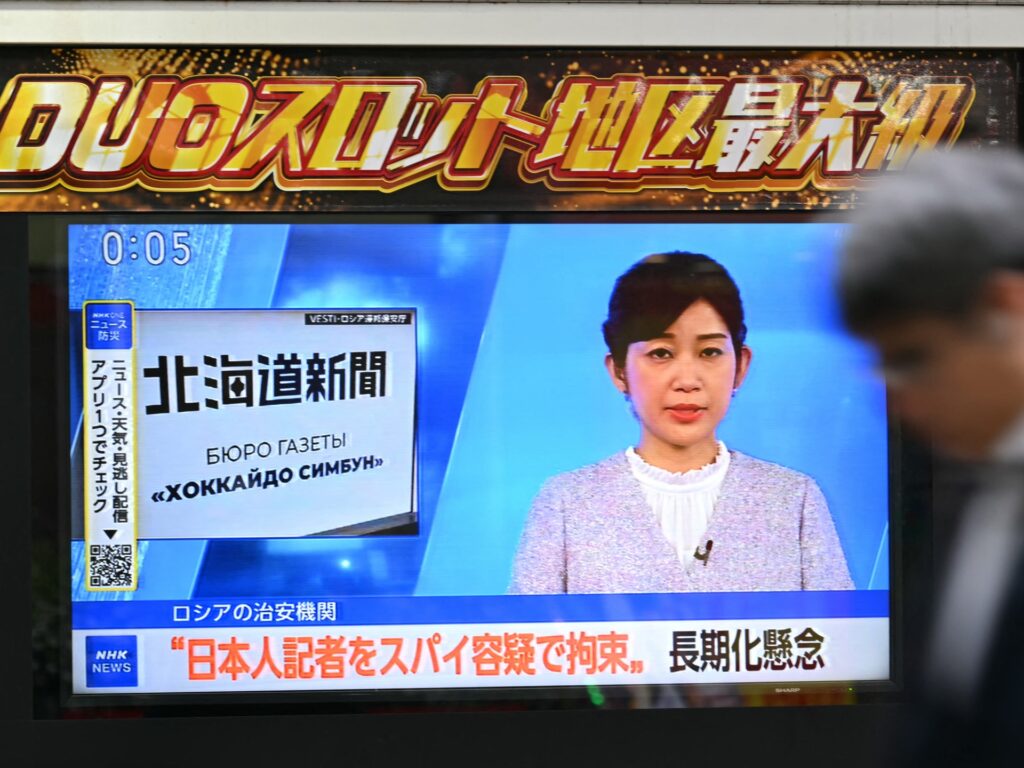
The recent arrest of Japanese journalist Imai Yuki on Sakhalin Island by Russia’s Federal Security Service (FSB) is escalating tensions between Japan and Russia. Imai was detained on allegations of spying on Russian defense capabilities, a claim that has added fuel to already strained relations.
Imai Yuki, known for her investigative work, was reportedly gathering information that the Russian authorities consider sensitive to national security. The FSB accused her of espionage, which Russia takes very seriously amid ongoing geopolitical uncertainties.
Sakhalin Island, close to Japan and a site of disputed territorial claims, has long been a symbolic and strategic location in Russia-Japan diplomatic relations. The arrest at such a location highlights the fragile nature of peace and dialogue between the two nations.
Japan has expressed deep concern over the arrest, demanding clarity and the immediate release of Imai. Tokyo views this action as disproportionate and fears it could undermine diplomatic efforts and exacerbate existing tensions over territorial disputes, particularly concerning the Kuril Islands.
Analysts suggest that Japan’s scrutiny of Russian military activities might have been perceived as a threat by Moscow, prompting a hardline response from the Russian security agencies. The incident has sparked debates in Japan about the risks journalists face in reporting from sensitive regions.
International observers are closely watching the situation, as the arrest could complicate Russia-Japan relations further, impacting broader regional security and cooperation frameworks.
This event is also a reminder of the delicate balance in intelligence and journalism, where the pursuit of truth can sometimes tread dangerously close to accusations of espionage, especially in geopolitically sensitive hotspots.
Both nations are now in a tense standoff, with diplomatic channels working to deescalate the situation. However, the arrest has undoubtedly intensified rivalry and suspicion, raising questions about future interactions and the security environment in Northeast Asia.
The global community continues to call for restraint and dialogue, hoping to prevent the incident from spiraling into a more serious diplomatic crisis. The episode serves as a critical juncture for Japan and Russia, emphasizing the need for cautious diplomacy and respect for journalistic freedom in conflict-prone regions.