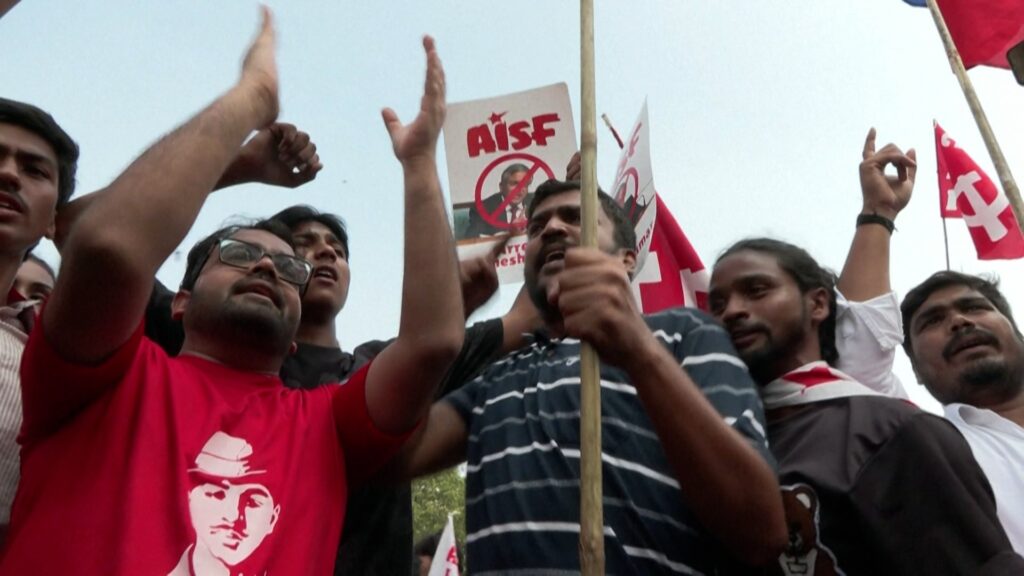
Recent changes to India’s voter list have ignited a new wave of protests in the Indian capital, New Delhi. The revision of the voter rolls, which is a regular exercise conducted to update eligible voters, has stirred controversy this time around, leading to public outcry and demonstrations.
The voter list revision process involves adding newly eligible voters and removing names of those who have died or are otherwise ineligible. However, the latest update has raised suspicions and concerns among various political groups and citizens about the accuracy and fairness of the changes made.
Critics argue that the voter list changes might disenfranchise certain sections of the population, particularly marginalized communities, by excluding eligible voters or improperly categorizing their information. This has led to claims of potential manipulation for political gain, heightening tensions in the region.
Protesters have taken to the streets to demand transparency and accountability from the Election Commission of India, which oversees the electoral roll updating process. Demonstrations have been marked by calls for an independent audit of the voter list to ensure that the electoral process remains free and fair.
The election authorities have defended their actions, stating that the revisions were conducted according to established guidelines and procedures. They emphasize that the objective is to maintain an accurate and current voter database to uphold the integrity of elections.
Political leaders from various parties have added to the discourse, with some supporting the protests as a means to protect voting rights, while others caution against the disruption of democratic processes through unrest.
The controversy has attracted national and international attention, highlighting the crucial role of transparent electoral systems in sustaining democracy. Analysts suggest that addressing the concerns of disenfranchised voters and improving communication about the revision process could help ease tensions.
Civil society organizations have stepped forward offering to collaborate with election authorities to review the voter list changes and assist in outreach efforts to affected communities.
India’s democracy depends heavily on the inclusivity and accuracy of its voter list. As the country prepares for upcoming elections, ensuring that every eligible voter is accurately registered is paramount to reflecting the true voice of the people.
The ongoing protests underscore the importance of vigilance and active participation in democratic processes. As authorities and citizens navigate this challenge, the hopes remain high that solutions will emerge to strengthen electoral confidence and uphold democratic ideals in India.