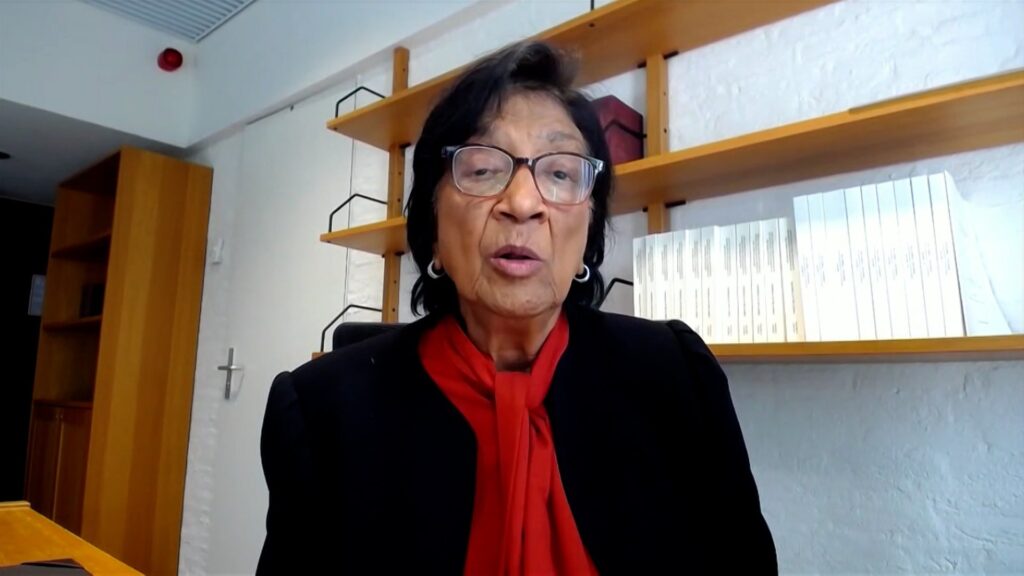
Nobel Peace Prize laureate Navi Pillay has voiced strong criticism of the United States’ decision to impose sanctions on the International Criminal Court (ICC). Pillay described the sanctions as “totally unfair,” emphasizing their negative implications for international justice and accountability. The sanctions, which were announced recently, target ICC officials involved in investigations that the US opposes, particularly relating to cases where the US has interests or personnel potentially implicated. Pillay highlighted that the ICC plays a vital role in prosecuting serious crimes such as genocide, war crimes, and crimes against humanity, serving as a crucial mechanism for global justice where national courts fail to act.
She argued that the US sanctions undermine the court’s independence and send a troubling message to other nations and international bodies about the tolerance for justice mechanisms. The punitive measures reportedly include travel bans and asset freezes against ICC personnel, raising concerns among human rights advocates. Many international legal experts and human rights organizations have echoed Pillay’s sentiments, asserting that these sanctions threaten to weaken international criminal law enforcement.
The context of these sanctions is rooted in the US administration’s stance on ICC investigations involving American military personnel and allies, particularly in conflict zones like Afghanistan. The US government has maintained that the ICC lacks jurisdiction over US nationals and views the court’s probe as politically motivated. However, critics argue that such unilateral punitive actions by a major global power jeopardize the effectiveness of multilateral institutions designed to uphold international law.
Pillay, who served as the United Nations High Commissioner for Human Rights, underscored the importance of supporting international courts to ensure justice for victims of heinous crimes worldwide. She called on the US and other countries to respect the ICC’s mandate and facilitate its work rather than obstruct it. The dispute highlights ongoing tensions between national sovereignty concerns and the pursuit of international justice mechanisms.
The international community is watching closely as this confrontation unfolds, concerned about the broader implications for global human rights protections and accountability. Pillay’s condemnation echoes a growing call for solidarity with the ICC to preserve its role amid geopolitical pressures. The US sanctions incident has sparked debates about the future of international judicial cooperation and the need to reinforce the independence and authority of institutions like the ICC to maintain global peace and justice.