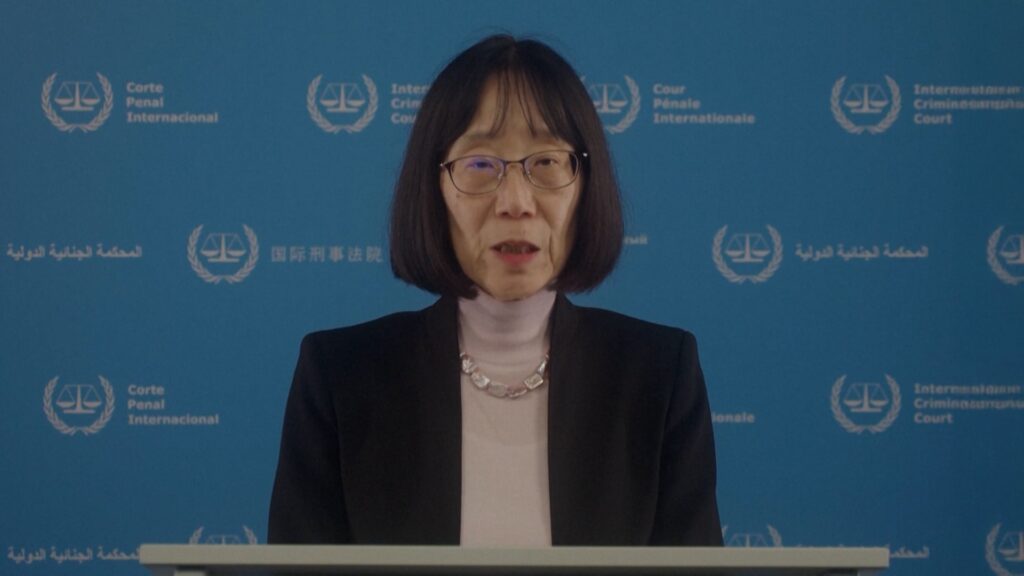
International Criminal Court (ICC) President Tomoko Akane has publicly criticized recent sanctions imposed by the United States, describing them as an ‘attack against sovereign states.’ This strong rebuke comes after the U.S. implemented sanctions it claims are intended to ‘defend sovereignty.’
The sanctions targeted the ICC in response to its investigations and legal actions that involve U.S. personnel and allies, particularly concerning alleged war crimes and other serious crimes. The ICC, as a judicial institution, maintains its mandate to pursue justice and accountability under international law, which it views as essential to preserving global peace and security.
President Akane emphasized the importance of respecting international institutions and their role in upholding the rule of law. She argued that imposing sanctions on the ICC undermines the court’s ability to function independently and effectively, potentially setting a dangerous precedent for international justice.
The U.S. has argued that these sanctions are necessary to protect its personnel and interests against what it sees as overreach by the ICC. However, critics, including human rights organizations and many international legal experts, view the sanctions as an attempt to shield perpetrators of serious crimes from accountability.
Akane’s response highlighted the tension between national sovereignty and the enforcement of international law. While sovereign states maintain the right to self-governance, the ICC operates on the principle that certain crimes, such as genocide, war crimes, and crimes against humanity, are of concern to the entire international community and should be subject to legal scrutiny beyond national borders.
The ICC President called on all countries, including the U.S., to support the court’s mission rather than hinder it through punitive measures. She underscored the need for collaboration and dialogue to strengthen international justice mechanisms rather than weaken them.
This confrontation has sparked broader debate about the role and authority of international judicial bodies in relation to powerful nations. The situation illustrates the challenges faced by global institutions striving to uphold justice amid competing national interests.
As the ICC continues its work, the international community watches closely to see how these tensions will evolve and affect the future of international law enforcement and the protection of human rights worldwide.
In summary, ICC President Tomoko Akane’s condemnation of the U.S. sanctions underscores a pivotal conflict between defending perceived national sovereignty and ensuring accountability for grave international crimes. The outcome of this dispute will have significant implications for the rule of law and justice on a global scale.