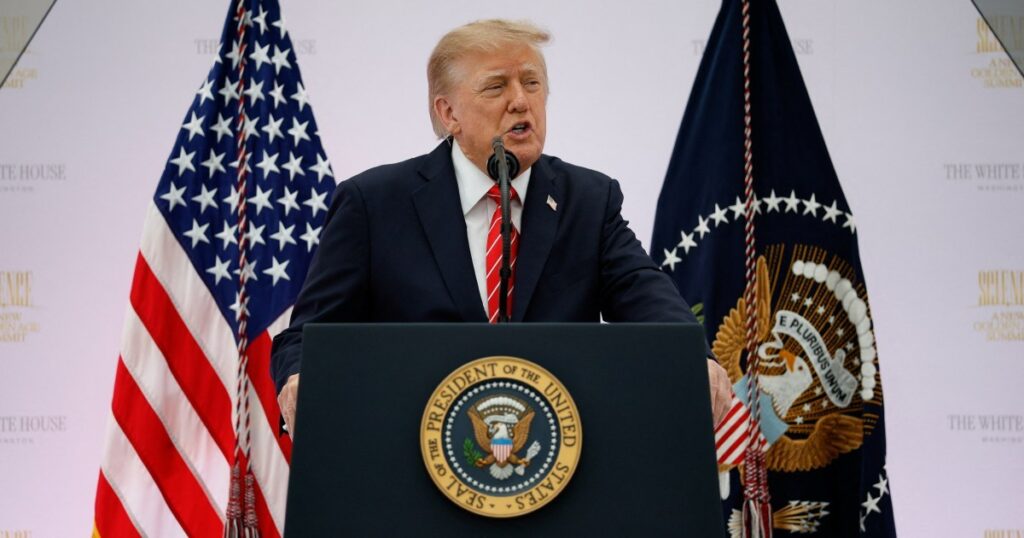
Recent reports from US media outlets have sparked widespread speculation regarding former President Donald Trump’s stance on potential military action against Iran. These reports claim that Trump might be contemplating air strikes or other forms of aggression against Iran before the upcoming midterm elections. However, Trump himself has unequivocally ruled out these possibilities, stating that he does not intend to engage in military conflict ahead of the vote.
This speculation comes in the context of heightened tensions between the US and Iran, which have been ongoing for several years. During Trump’s presidency, the US adopted a notably hardline stance towards Iran, including the withdrawal from the Iran nuclear deal and the imposition of severe economic sanctions. The assassination of Iranian General Qassem Soleimani in January 2020 further escalated tensions.
With the midterms approaching, US media reports have suggested that Trump might see striking Iran as a way to solidify political support among certain voter blocks by presenting a tough approach to national security and foreign policy. Such an aggressive move might appeal to his base and swaying undecided voters potentially by displaying strength and decisiveness on the world stage.
Despite these reports, Trump’s own statements have been clear. He has downplayed any possibility of engaging in military action against Iran before the elections, emphasizing the risks and costs associated with war. He has also indicated that he prefers to focus on domestic issues and political campaigns rather than foreign entanglements.
The issue remains highly sensitive given the delicate geopolitical balance in the Middle East. Serious military action against Iran could provoke severe retaliatory measures, destabilizing the already volatile region and potentially drawing in the US in a prolonged conflict.
Analysts note that while Trump is known for his unpredictable and often provocative rhetoric, the actual decision to launch military strikes involves complex considerations including input from the Pentagon, intelligence agencies, and international partners. This limits the probability of impulsive military action purely for political gain.
Furthermore, current US administration officials and military leaders have signaled caution, underscoring the importance of diplomatic solutions and the risks of escalation. This suggests the likelihood of any immediate pre-midterm US strike on Iran remains low despite media speculation.
In summary, while media reports suggest the possibility of Trump contemplating military action against Iran as a tactic before the midterm elections, there is no definitive evidence of such plans being concretely pursued. Trump himself has denied intentions to initiate such conflict before the vote, focusing instead on political campaigning.
The international community anxiously watches these developments, hoping for stability and peaceful resolution rather than renewed conflict in an already fragile region. The situation remains dynamic and subject to change based on evolving political calculations and on-ground realities.