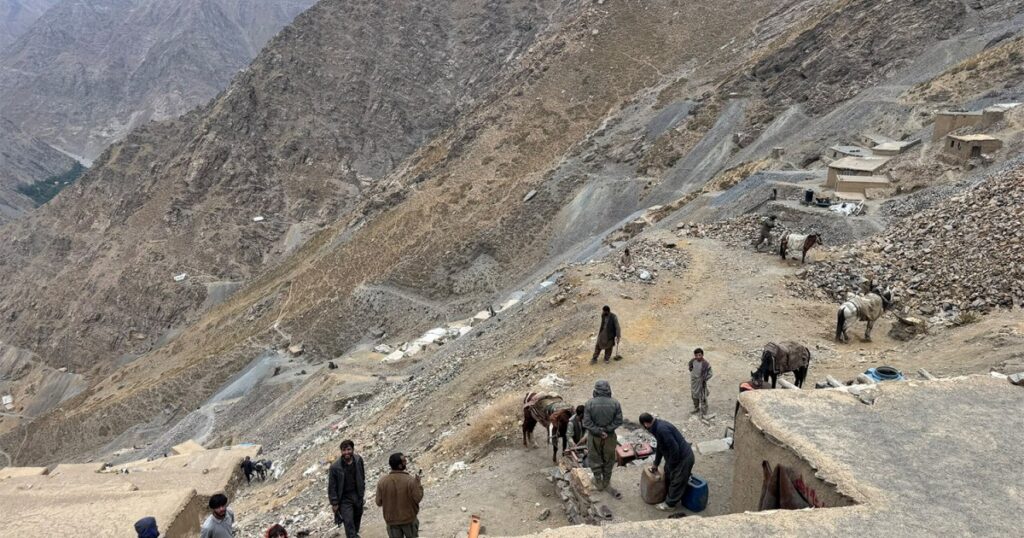
In the rugged valleys of Panjshir, Afghanistan, emerald miners face daunting challenges while extracting some of the world’s most precious gemstones. Despite relying on basic, often rudimentary tools, these miners have captivated the attention of buyers from around the globe, highlighting the unique allure of Afghan emeralds.
The emerald mining industry in Panjshir is characterized by its physically demanding environment. Miners often scale steep, rocky terrain under extreme weather conditions. Safety measures are minimal, and the absence of modern equipment means that the extraction process is labor-intensive and dangerous.
Miners typically use simple hand tools such as hammers, chisels, and makeshift picks, which limits both the quantity and speed of emerald production. Yet, these limitations have not diminished the quality or desirability of the stones unearthed in this remote region.
Afghanistan’s emeralds are renowned for their deep green hue and exceptional clarity, qualities that have made them highly sought-after in international gemstone markets. The stones’ rarity and quality command premium prices, providing a vital source of income for local communities.
Despite their global appeal, emerald miners in Panjshir face numerous obstacles. The lack of investment in mining infrastructure inhibits the industry’s growth potential. Additionally, ongoing political instability and security concerns restrict access to markets and increase operational risks.
Efforts to improve conditions include training programs to teach safer mining practices and workshops aimed at enhancing the miners’ understanding of gemstone quality grading. Some initiatives also encourage the formation of cooperative groups to strengthen bargaining power with buyers.
The global demand for emeralds has created opportunities for Panjshir’s miners, with traders and collectors visiting the region to directly purchase stones. However, intermediaries often dominate the supply chain, leading to reduced earnings for the miners themselves.
With increased international attention, there is hope that investments will flow into the region, fostering technological upgrades and better support for miners. Such developments could enhance productivity and improve livelihoods, while preserving the cultural heritage tied to emerald mining in Afghanistan.
For now, the miners continue to work under harsh conditions with minimal tools, driven by the allure of emeralds. Their perseverance amidst adversity is a testament to human resilience and the enduring value of Afghanistan’s precious stones on the world stage.
The emeralds from Panjshir symbolize hope and opportunity for many, representing not just natural beauty but a beacon for economic development in a region rich in resources but poor in infrastructure.
As global buyers remain fascinated by these precious stones, the story of Panjshir’s emerald miners continues to unfold – a narrative of struggle, aspiration, and the timeless quest for prosperity through nature’s treasures.