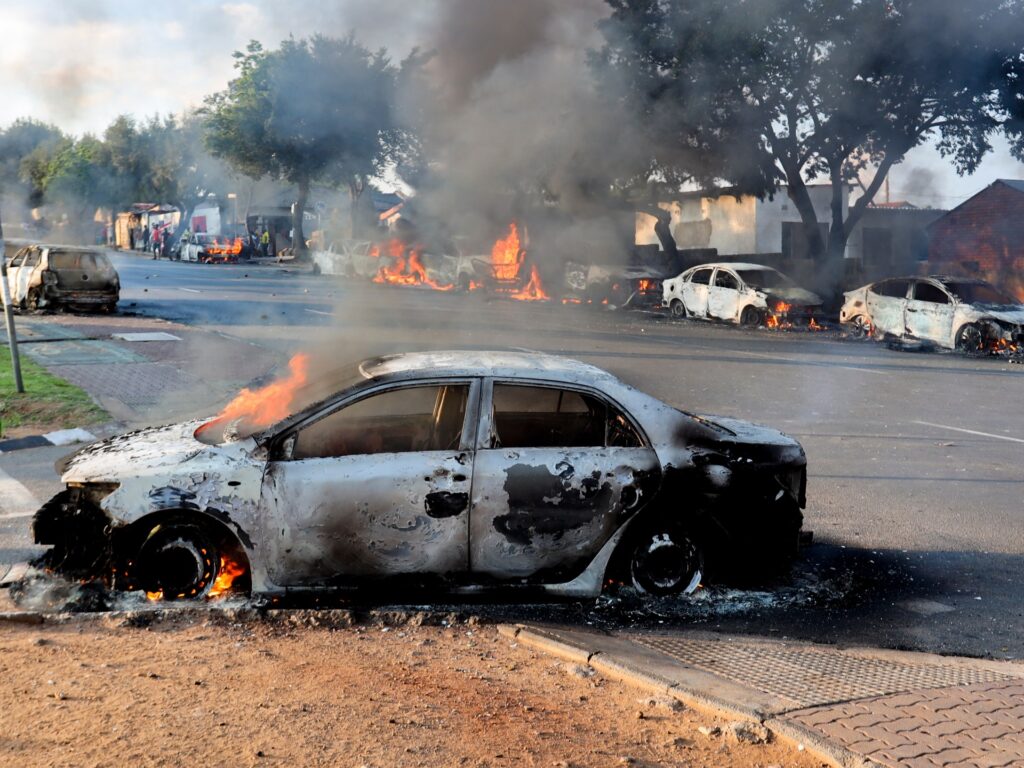
South Africa has recently witnessed a surge in violent protests triggered by widespread anger over a controversial asylum ruling. The unrest has been particularly intense in Johannesburg’s Soweto township and the coastal city of Durban, where protesters have torched several cars and forced many foreign-run businesses to shut down.
The protests erupted following an announcement related to asylum policies that many locals felt unfairly impacted their communities, stoking resentment towards foreign nationals living and working in South Africa. Demonstrators accused the government of neglecting their needs and claimed that foreign migrants were taking jobs and resources.
In Soweto, the violent scenes included burning vehicles, barricades erected on streets, and clashes between protesters and law enforcement officials. The police have struggled to contain the situation as more groups join the demonstrations.
Similarly, in Durban, business districts saw many foreign-owned shops closing early to avoid damage, as fear of looting and arson swept through the city. Authorities have warned that any acts of vigilante violence would be met with strong measures to maintain order.
The government has called for calm and urged all parties to engage in dialogue to address the underlying social and economic grievances. Officials emphasized the importance of protecting the rights of all residents, including asylum seekers and migrants, while also addressing the concerns of local citizens.
Human rights organizations have condemned the attacks on foreign-owned businesses and called for solidarity and respect for all individuals, regardless of nationality. They have warned that such violence only deepens divisions and exacerbates social tensions.
Experts note that South Africa’s complex socio-economic challenges, including high unemployment and poverty, often fuel xenophobic sentiments that can quickly turn violent. They stress the need for inclusive policies that promote coexistence and equitable resource distribution.
As the situation remains volatile, security forces continue patrolling affected areas. Community leaders and civil society activists are working to mediate and promote peaceful resolutions to prevent further escalation.
This latest wave of protests highlights ongoing struggles in South Africa to balance the rights and welfare of its citizens with those of foreign nationals seeking asylum. How the government manages this delicate situation will be crucial for maintaining social harmony and stability in the coming weeks.