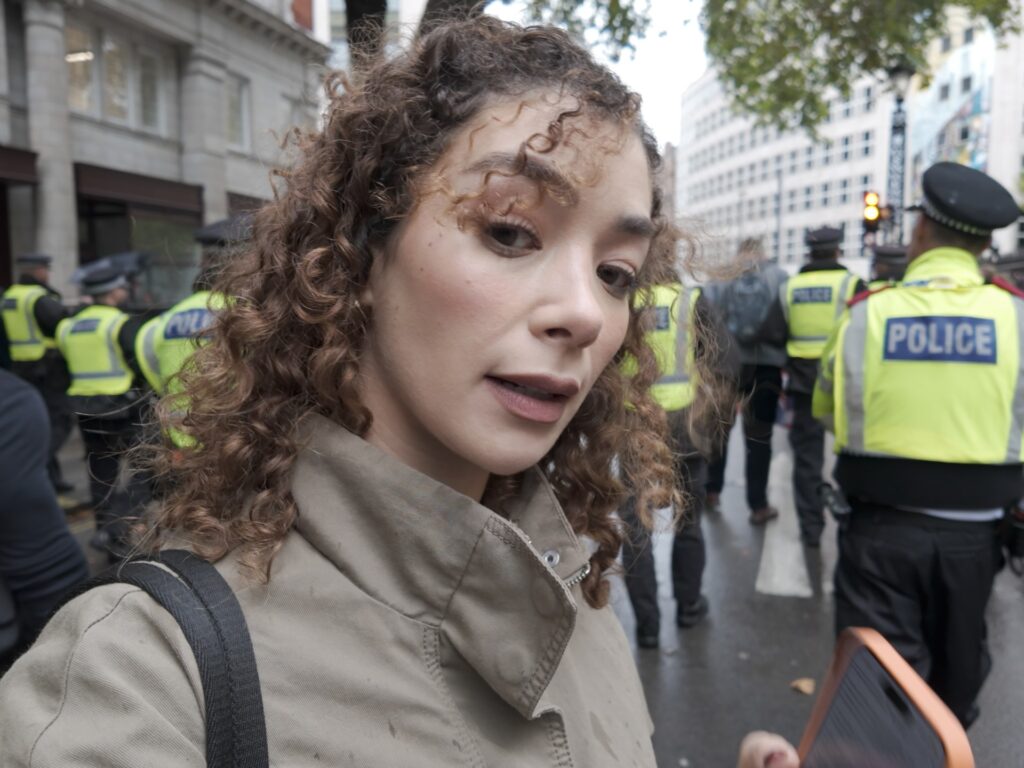
On October 7, pro-Palestine university groups held a march through the streets of London, commemorating the anniversary of a significant event related to the Palestinian cause. Despite calls from police authorities urging organizers to postpone the event for safety and security reasons, the demonstrators proceeded with their planned march.
The rally drew a diverse crowd of students and supporters from various universities across London, all unified in their support for Palestine. The participants carried banners, flags, and placards bearing messages advocating for Palestinian rights and justice. The march was both a political demonstration and an expression of solidarity with the Palestinian people.
Police presence was notable around the route to monitor the event and maintain public order. Authorities had concerns about the potential for clashes or disturbances, given the sensitive nature of the issue and previous tensions at similar events. However, the march remained largely peaceful, with demonstrators expressing their views vocally but without significant incidents reported.
The October 7 date holds symbolic importance for Palestinian solidarity groups, often marking anniversaries of key moments in the ongoing conflict or specific campaigns aimed at raising awareness. University groups have increasingly become active in such demonstrations, reflecting a wider engagement among young people with international human rights and political struggles.
Opposition voices, including some local community members and political figures, criticized the decision to hold the march amid heightened tensions. They argued that such gatherings could exacerbate divisions and urged for dialogue and calm instead. Nonetheless, the march proceeded, demonstrating the strong commitment of these students to their cause.
Organizers stated that the march was intended to be a peaceful demonstration to highlight the plight of Palestinians under occupation and to call for international support and action. They emphasized the importance of freedom of expression and the right to protest as fundamental democratic principles.
In addition to the march, university groups have planned several other activities around the anniversary, including panel discussions, film screenings, and educational campaigns to inform the public about the Palestinian issue from their perspective.
This event fits within a larger global context where pro-Palestine activism has grown, particularly on campuses and among youth, challenging traditional narratives and advocating for Palestinian rights on international platforms.
The police request to postpone the march, while not heeded, underscores the challenges law enforcement faces in balancing the rights to assembly with public safety. The largely peaceful turnout may serve as a positive example of how contentious issues can be expressed without violence when managed responsibly by all parties involved.
In conclusion, the October 7 pro-Palestine march in London by university groups is a significant demonstration of youth activism and political engagement. Despite warnings and challenges, the participants succeeded in voicing their message, contributing to the ongoing global dialogue about the Israeli-Palestinian conflict.